Saturday, July 05, 2008

22. Scapa Ferry by Antony Bridges


The cover style and blurb "qoute" made me think this was going to be a WWII nautical adventure book, which it is, in a sense. But I thought it was going to be a fictional story about a single adventurous enterprise. It doesn't say it's a true story anywhere, but I'm pretty sure it's actually a real-life account. It's about a guy who loved sailing and wanted to join the navy, but because of a slightly bum leg, was not able to. Instead he set out, with his wife, to contribute however he could, which he found out was to set up a charter boat to ferry supplies back and forth across the Scarpa Firth, a treacherous piece of sea between the northern tip of Scotland and the Orkney Islands. The British were building a naval base there at the beginning part of the war (if you look at a map, you can see that the Orkneys are strategically very important) and getting supplies to keep the construction moving was difficult due to lack of resources, skilled manpower (everybody was being sent to fight) and lack of mobilization of existing local freight and fishing vessels.

So this guy and his wife buy a small sailboat, make their way up the coast (dangerous in itself), deal with the bureaucracy of the British government and military (even though they were trying to help, they keep getting stopped for not having the right paperwork) and set themselves up to take dynamite and blasting caps between Scranton Scrabster and Lynness and a few other points. It's really more of a chronicle.

What it really is, is some hardcore sailing porn. And because of that, I'm putting this one in the mail immediately to Jarrett, owner of the Redwing. I suspect this will keep his mast upright long into the night. For me, it was really tough going in the first half because I barely understood half of what was going on, there is so much specific vocabulary. There are of course tons of things on the boat that are named and not described. There are also actions of the boat and weather behaviours. I slowly picked up some stuff and there was enough characterization and funny human anecdotes along the way, that I stuck through. There also is a ton of geography, and I did have to take some google maps research breaks to figure out where they were, though there also were some cool little maps and diagrams in the book itself. By the second half, once they get established in Scranton, the story and struggles of their daily lives came to the forefront and I really got into it.

See, one of the things I love about these British adventure authors from the 60s and 70s is their attitude. It's that classic stiff-upper-lip, let's be sensible and not cause a big fuss but do what we have to do attitude that is so lacking in everything and everyone around me these days. Though not being a fictional adventure, this book is full of that attitude. At one point, early in the book, his wife loses the top of her left index finger in the middle of a harrowing attempt to untangle their anchor from another boat in a bad storm. She doesn't even mention it until they get out of the situation and then it's simply and quietly bandaged. Later, he mentions that he realizes it was quite lucky to only be her finger, that the whipping cable could have badly injured or even killed her. But there is no unnecessary histrionics or drama and his wife's stoicism only reminds him of what a good egg she is.

I struggled through the first half, but it ended being worth it. A very satisfying read which reinforced some of my own personal values.

Monday, June 30, 2008

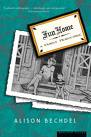
21. Fun Home by Alison Bechdel

Fun Home pictureMy sister strongly recommended this graphic novel to me and judging by the high-level accolades on the cover, she is not alone. This was the hot comic of the year and I completely missed it. It's the biography of a girl growing up in rural Pennsylvania in the 60sand 70s. Her father is gay and she figures out pretty quickly that she is too. Their relationship is complex and difficult. The book is structured in a very complex way as well, as Bechdel jumps back and forth in time, revealing different things here and there, going back to already revealed incidents and adding layers of understanding to them. It makes for a very fulfilling read because by the time you get to the end of it, you really get the "ah, yes" sensation where everything comes together in a rich and real way. The ending isn't necessarily happy. The family difficulties are not solved or absolved, but you as the reader get a sense of really understanding the situation, even being a part of it. This is why sometimes comics are better than books.
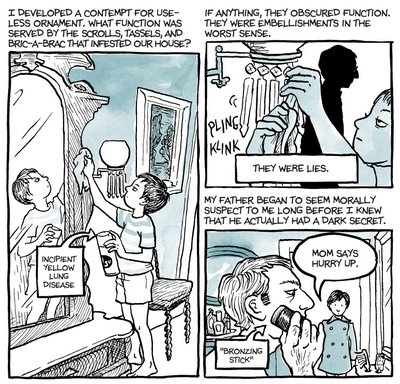
Despite my appreciation of the structure, the subject matter is not the most endearing to me. It's very academic and intellectual, with heavy references to Proust and Joyce. If you had studied them, I imagine the book would have even more depth, but I don't have so much time for that kind of literature of melancholy. The same goes for the struggles of the young lesbian, several of which I experienced first hand in liberal arts school (most whom lasted a few years before the inevitable defection to heterosexual marriage and procreation). In this case, the struggle seems genuine, but it just doesn't interest me all that much (compared to say something interesting and straight like one man trying to shoot or stab another man). But those are my personal preferences and should not detract in any way from what is a really engrossing and satisfying graphic novel.
Fun Home picture

Sunday, June 29, 2008

20. Trunk Music by Michael Connelly

Trunk Music picture
Grabbed this thick paperback for a loonie at the thrift store near our house. Michael Connolly delivers solid procedurals based on a career as a crime journalist in Los Angeles. He knows his stuff and spends most of the time on the crime and the investigation. This leads to lots of good interaction with a range of mostly dark and corrupted characters (in and out of the force) and excellent locales.

Here, Harry Bosch, the LAPD detective who is effective but generally in trouble with the brass investigates the murder of a succesful B-movie producer. He is found in the trunk of his Rolls with a single bullet hole in the back of his head. The trail is long and windy, passing the wife, his stripper girlfriend, the mob, the FBI and a few others. It's mostly solid and enjoyable. There is a section where Bosch hooks up with a past love that I found a bit forced and thus distracting, especially since her presence was used as a minor red herring. But it's a small part and the rest of the book chugs along. Perfect for a train ride to Toronto.

Wednesday, June 25, 2008

19. The Prestige by Christopher Priest

The Prestige picture

I am not a big fan of the unreliable narrative or whatever it's called. Christopher Priest writes such enjoyable prose (I might call it modern Victorian, or would that be post-modern?) and his stories so engaging that I excuse him. But it was tough reading this book, because I was constantly weighing my suspicions of the narrative against the very narratively solld (and clever) screenplay of the movie version of The Prestige. It's almost always tough following a movie with the book, but it was especially distracting for me in this case as there are some significant mysteries in the movie that are fully resolved. The story in the book has a lot of differences and I kept wondering whether Priest was going to resolve the mysteries in the book. I had this constant concern in the corner of my vision most of the time I was reading.

All that individual context aside, the story is a really cool one. It's the narrative of a career-long rivalry between two Victorian stage magicians, framed by their modern-day ancestors who stumble upon each other and try to solve the various mysteries their legacies left behind. The world of Victorian stage magic is so richly drawn and the pursuit of the two rivals careers so enjoyable that this part of the book is worth the read alone. The twists, tricks and mysteries Priest perpetrates on the reader (which are not anywhere near as open to interpretation as The Separation thus making The Prestige a much more satisfying read for unsophisticated empiricists like me) are extremely well-crafted (not unlike the stage props the magicians use) and move this book from good to great. Priest is a smart fucking guy and he does his work. I'd love to read about his technique because the structure of his books is so solid, from the whole down to the smallest detail. The Prestige could be annotated (not profusely; maybe a note or two every few pages). It would make for a very interesting read because you know that Priest hides little clues in the tiniest details. Sometimes they are facts in the narrative themselves. Other times, they are textual tricks in the grammar or use of certain words. These "annotables" do not get in the way of the narrative. They just add to the depth of the experience and the feeling that you are in the hands of a real craftsmen. I really enjoyed the movie, but you should definitely read the book first.

Monday, June 23, 2008

18. The Possessors by John Christopher

The Possessors Island picture

That's right, we're all John Christopher, all the time here at Olmansfifty. Actually and sadly, this is the last John Christopher book (at least in english) in the Bibliotheque Nationale. There is a mystery of his written under a pseudonym that is stored off-site and which I have ordered as well. I'll scour the tattered remains of the english library system in Montreal, but my initial searches were fruitless. He also hasn't shown up in used book stores here or Toronto. Even the tripod trilogy is not all that easy to find.

The Possessors is the story of a group of people snowed into a Swiss ski lodge in the early 60s, who are slowly taken over by an alien parasite. It starts off in a very similar way to Sweeney's Island, with a group of mostly British bourgeoisie. It looked like Christopher was going to savage them in a similar way and I was a bit concerned that we were heading into repetitive territory. Both The Possessors and Sweeney's Island were published within a year of each other. Happily, The Possessors veers away from such a similar theme of social critique (which was good in Sweeney's Island, good enough that I didn't need it a second time) and heads towards a straight-up alien invasion thriller. And it was a really good one. A nice balance of character-driven behaviour and general efficiency. People who made mistakes did so because it made sense based on who they were, not just because they were stupid. The stakes are high and the challenges higher, so you are sweating for the protagonists. And they figure out the general outline of the situation quickly enough without spending a lot of useless time not believing. Tight and gripping, The Possessors is a great little novel of alien invasion. Snag it if you find it.

Saturday, May 31, 2008

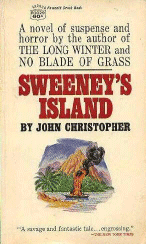
17. Sweeney's Island by John Christopher

Sweeney's Island pictureFrom the few biographical snippets I've read about John Christopher, he was a very prolific writer in the early part of his career. It really was a career for him and until the success of the Tripods trilogy, he had to write as much as possible. He cranked out several books a year, in several genres. He also never did any rewriting beyond the first chapter, supposedly. I don't know, his books read pretty well to me. Sweeney's Island is one of those, written in 1964. It's about a group of London bourgeois hangers-on of a very wealthy and connected guy named Sweeney. During one of his cocktail parties, Sweeney asks them to stay after where he proposes an impromptu trip on a new yacht he has just bought. He has clearly planned this very carefully, knowing that each of them either is dependent on his future generosity or is free enough to be able to just take off for a few weeks of ocean paradise.
However, it becomes apparent that Sweeney's plans are a little more elaborate than that when the ship ends up going into untrafficked routes far into the Pacific and then stops at an uninhabited tropical island far from any shipping lanes. Well, seemingly uninhabited. There are signs of previous habitation and even surprisingly organized agriculture. A constant cloud hangs over the islands larger two peaks, hiding it from view and there are other disturbing signs which I won't reveal.

The core of this book is about the people, the power and personality struggles that arise among them. Normally, I am not so interested in that path being emphasized but Christopher takes things to a pretty awesome extreme here. Shit gets really twisted. In some ways, this is very much like a Lord of the Flies with adults. Or more specifically, Lord of the Flies with british bourgeois adults from the mid-60s, a social group that Christopher rips to pieces in this book. Very satisfying.

I really enjoyed this book. The element of isolation and the social hierarchy reshaping itself once released from the strictures of authority and civilized society put this very much in the Post-Apocalyptic tradition, even though there isn't actually an apocalypse. Even if that genre isn't interesting to you, this is still a really entertaining and enjoyable book. It's turned up the intensity of my appreciation of John Christopher. I was at first only interested in checking out his PA books, but now I'm grabbing anything I can get my hands on.

Monday, May 26, 2008

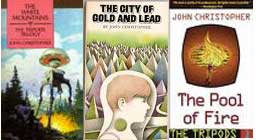
14, 15, 16 The Tripods Trilogy by John Christopher

The Tripods trilogy picture

Got these through the 50 books network. Jarrett found the first one and sent it on to the Lantzvillager, who passed it on to me with the second one as well. I found the third (in a special reprint with a new forward from the author) at the bibliotheque nationale. I am compressing all 3 in one post because my two predecessors did a better job than I in providing the overview of the plot of each book. In short, it is the story of a young man brought up in a post War of the Worlds earth, where humans are kept docile by a "capping" ceremony done to them when they reach puberty. Giant metal tripods patrol pastoral and sparsely-populated human lands. The young man avoids the capping and discovers a cell of rebels. He joins them and works to take down the alien oppressors.

I found these books to be fast, a bit shallow, but thoroughly enjoyable. I think the lack of depth is actually the lack of "boring stuff" that most 13-year old boys would not find interesting. In that view, these books are extremely tightly structured. It does get richer, though. I found Christopher's portrayal of the aliens nuanced. At first, you hate them, but you also get enough of a glimpse of them that you can't hate them. Since their behaviour very much reflects our own human colonization (of other humans and animals), you can't ultimately hate them without hating humans. Christopher is smart like that. He doesn't let his readers off easy, which is great for adolescent boys who just want to kick some alien ass (though there is a good amount of that as well).

The period where the heroes are in the alien city is quite disturbing and frightening as well. It's all been quite well thought through. The other thing I enjoyed was the pastoral nature of the world. The lack of technology and competition for resources kind of makes the alien-controlled earth a medieval fantasy land, which Christopher does a great job of describing. He throws out enticing details like food in a market stall or modes of dress that efficiently add richness to the atmosphere.

These really are fantastic books and I strongly recommend them for anyone looking for a gift for a young reader (probably better skewed towards the males).

Lantzvillager's review of the first and second books (I guess he hasn't finished the trilogy yet!)

Jarrett's review of the first, second and third books

Wednesday, May 21, 2008

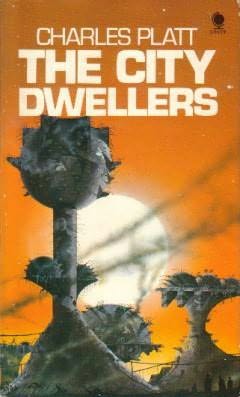
13. The City Dwellers by Charles Platt

City Dwellers pictureFound this one at a crazy, disheveled used bookshop way out on Mont-Royal. In the basement floor they had a few bins of english books, mostly crap from the late 80s and 90s, but I found this old british sci-fi book. It was thin and nicely yellowed, perfect for my travels to come. I didn't really know much going in, beyond that it was about characters in growing and dieing cities and it had some nice written language at the beginning.
The uniting story line is the concept of our future world becoming completely dominated by cities and the human race slowly dying out because of them. For unknown reasons, we stop reproducing. There are four parts, each one at least a generation after the previous. The first story is about a hyper-decadent rock star trying to find meaning. The second about a pair of hipster artists who have fled the city, only to have it (in the form of their decadent friends) come to them (with news about the forced devacuations as the cities die). The third is in the rundown ruins of the crumbling cities where only a few cling to tradition and the rest run around destroying things. The final chapter is a dystopia of a few running humans surviving off the empty cities, while teeny enclaves of mostly men hunt down any women they can find to reproduce with.

It's an interesting read and, though the central conceit of humans stopping reproducing (if only) due to some kind of urban malaise and special surrender is a bit far flung, I found that it held some interesting conjectures and ideas. The situations were cool and the characters engaging, but because it was more like 4 novellas strung over a greater concept, it lacked the overall narrative that would have made me really loved it. Cool find, though.

Friday, May 16, 2008

12. Night Walker by Donald Hamilton

Bad Company pictureI have toyed with Donald Hamilton in the past. It was a reading encounter with great promise that led to a real deflating letdown. He is best known for the popular Matt Helm series of manly paperbacks found in drugstore racks in the 60s and 70s. His early books were also said to be a big influence on the Parker books (written by Donald Westlake under the nom de plume Richard Stark), otherwise known as the best crime books ever. There were one or two books in particular whose titles I forget that I did read and they really did kick ass. I was so psyched because Hamilton had written so much more and they are so easy to find. I even had hope that the Matt Helm series might be competent. Unfortunately, something happened to Hamilton along the way and the other books I read by him had lost the tight, cold intelligence that had attracted Westlake. They were, instead, pandering to the audience (obvious macho tropes) and, far worse, demonstrated inefficient and emotional character behaviour. So I had to let the other Hamilton books on my on deck shelf and let go of that relationship.
I found Night Walker in a box of paperback discards that Lantzvillager was trying to get rid of (though there were many attractive covers there, they didn't quite reach the high standards of his paperback collection shelf). This looked like it might have come from the early Hamilton and I needed a book for the flight home, so I gave it a whirl (I think Lantzvillager was hoping I'd take more than one book).

It's about a Navy officer after the war on his way back to the base after leave. He is really reluctant to go back. His reluctance is given temptation as he gets a lift from a friendly salesman, who then knocks him out and leaves him for dead in the burning wreck of the car. He also leaves him his identity for some reason. Our narrator finds this out when he wakes up in a hospital room. He decides to take on the identity and see what happens. It's an interesting moral situation with an intriguing set-up and I got caught up in it.

In the end, it is a decent read. It reminded me a lot of a non-Travis McGee John D. MacDonald novel, in the setting, the situation and the nature of the ultimate antagonist. I'll put early Donald Hamilton back on the list of books that won't be too painful to read on the plane.

(Note: the edition I got is the original, not the Hard Case crime reprint. I just couldn't find the image online and didn't have time to scan it. Hard Case Crime is doing great work in any case.)

Sunday, May 11, 2008

11. Bad Company by Liza Cody

Bad Company pictureI picked this one up at the Kitsilano branch of the great Pulp Fiction bookstore in Vancouver. The British packaging caught my eye and the blurbs made it sound like it might have the right stuff. The protagonist is a female private investigator in contemporary London. Bad Company might not have been the best place to start since the heroine spends the whole time kidnapped, but it was an entertaining and well-written read nonetheless. The London underworld is richly portrayed and the lowlifes, from the stupid, inexperienced thugs who pull off the kidnapping to the serious hard and well-dressed ones who are trying to stop them as well fit well into the British empirical mold. The ending was a bit anti-climactic, but I think realistic. I'll be keeping an eye open for other Liza Cody books.
Friday, May 09, 2008

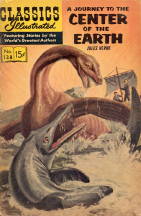
10. Journey to the Centre of the Earth by Jules Verne

Journey to the Centre of the Earth picture

Again, a really cheap buy. I probably should have done my research first (actually probably should have sucked it up and read the original in french) because I'm pretty positive this is one of the many badly-translated, brutally chopped english versions of Verne's books. His books were translated as children's books and had a lot of their heart removed from them. It was only recently that proper, faithful translations had been released and I'm pretty sure this wasn't one of them.

It was still an interesting book that moved forward very steadily and intriguingly. It is taken from the perspective of a young man who follows his scientist uncle to discover the centre of the earth. There is a lot of traveling and not a lot of conflict, but the voyage is quite fantastic and the ideas imaginative, so you get caught up in it. I think I owe Verne a second, proper read.

Wednesday, May 07, 2008

9. A Story of Days to Come by H.G. Wells

A Story of Days to Come pictureThis is a short (as many of his novels are) H.G. Wells novel that I found somewhere while traveling. It has a hilariously wrong yet accurate cover of a man and woman fighting off a dog in some ruins. It's wrong because though this scene actually happened, the picture looks like a Vallejo-esque barbaric fantasy. In the book, it is two wimpy future city-dwellers who, dissatisfied with modern life, make out for the country. At one point, they do get attacked by dogs, but the scene emphasizes how hopelessly unprepared they are for life outside of the city. I really should have scanned that cover, but I left it in the free bookshelf in the laundry room of my mom's apartment. Somebody took it so maybe it got read again, which would make it worth it.
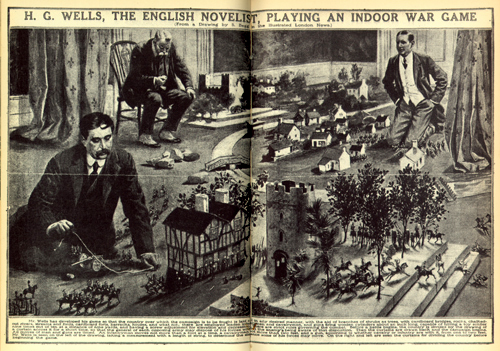

The plot follows a young couple who fall in love. The woman had been promised to a rich but unattractive industrialist, but she is in love with the idealistic young man and chooses him instead. The industrialist goes about ruining the young man. It takes place in a future where the countryside has been almost entirely abandoned by humans. Agriculture and fuels are produced by automatic machines and everyone lives in vast cities, with an extreme social and economic hierarchy. The story is a romance but also a condemnation of man's separation from nature and the skills of survival. It is also an opportunity for Wells to do all kinds of interesting speculation on technology, the future and how it will affect human society.

It's a fun, quick read, with some crazy ideas. Wells was a man of his time but beyond it as well. The class structures in the book are strongly Victorian but still don't seem wildly off (though one could argue that nothing has really changed for us since the Victorian age in terms of class). The tech is much farther off course, though much more the fun for it. One cool conception he had is a giant ring of moving platforms inside the city. The rings on the inside and outside move at 5 miles per hour. Each consecutive inner ring moves at 5 mph faster so that by the time you get to the middlemost ring, you are moving at 70 miles per hour. You can step from ring to ring quite easily because the difference between each ring is easily manageable, thus allowing you to move short or long distances quite quickly.

H.G. Wells is as cool as Evil Spock:

Wednesday, March 05, 2008

In honour and gratitude...

We interrupt the regular review of books for a moment of silence to remember and thank the man who gave us the tools to step into the books themselves, be the characters and live in those worlds. Thank you, Gary, you gave me a whole hell of a lot. May you rest in peace and roll well on that great table in the sky.

Gary Gygax picture

Gary Gygax 1938-2008

Globe & Mail obit

Wednesday, February 27, 2008

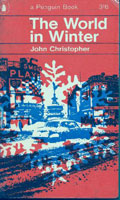
8. The World in Winter by John Christopher

The World in Winter picture

I went through a lot of mild ups and downs with this book. I think that I approached it believing I had Christopher pegged and I think that was a mistake. The premise of this post-apocalyptic book is that the world gets colder and colder until the previously powerful northern countries crumble and the equatorial nations become the new powerhouses. But I'm already getting ahead of myself, because the first section of the book is much more personal and limited in scope. It's about a tv producer and his relationship with another couple (of which the husband has an affair with the protagonist's wife). It's here that I felt like we were going to be spending a lot of time in that weird 60s british guy sexual anxiety zone.

Fortunately, the book veers off and ends up going in a lot of interesting directions. It proceeds to show the life of expat europeans in Africa who have suddenly become second-class citizens (that's putting it mildly; they are actually desperate refugees, forced to begging, prostitution and servitude). This is really fascinating and I would love to see a longer and more in-depth treatment of this kind of reversal of class and power in the world.

The third section than becomes an adventure, where a team of Nigerians try to go back to frozen London and claim it for themselves. They take hovercrafts and follow a similar route across the English Channel that the hero of a Wrinkle in the Skin took on foot when it was waterless.

Because of the three-part structure, a World in Winter is less focused than a Wrinkle in the Skin and you get less detail of the kind us PA fanatics look for. But it also keeps the book moving along and the reader intrigued. I was very satisfied in the end.

Here's MtBenson's take (with a good storyline summary).

Here's a link with some other cool editions of the paperback.

Wednesday, February 20, 2008

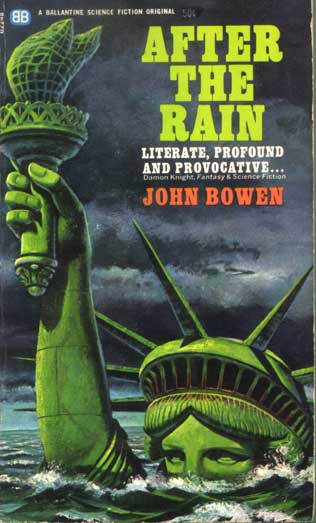
7. After the Rain by John Bowen

After the Rain picture

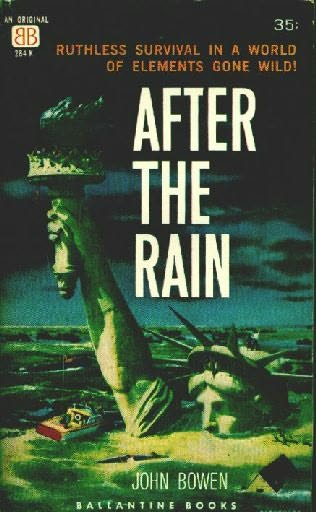
After the Rain picture


[For you paperback geeks out there, the image on the top is the version I found, a reprint from '65. The one on the bottom I found at the Fantastic Fiction page for the book and I suspect is the original cover. I find it interesting how thematically close they are, almost identical, yet they hired an artist to redo it. Why? And where are all these artists today?]


From the back cover:

The British are a hardy island people. At least two aspects of this country are world-renowned - the astonishing number of high calibre writers they produce, and their climate. AFTER THE RAIN is an impressive combination of both. In fact, Angus Wilson says: "If you like cataclysmic novels John Bowen's AFTER THE RAIN is as exciting as any deluge you can hope to find: but if you think deluges are too trivial, John Bowen has a surprise for you: his novel turns out to be satire of the first order."

I share this blurb with you, dear readers, because I found it gives an interesting peek into the marketing and mindset around this kind of sci-fi when it was published. The paperback I found is a reprint from 1965 (the book was originally published in 1959). I guess even back then the british authors had a certain reputation for writing "cataclysmic novels" (the latter is also an interesting term; I wonder when "post-apocalyptic" came about?).

If you haven't figured it out already, the cataclysm in this case is a non-stop, worldwide rainfall that soon floods the entire planet. The incessant rain and society's reaction to it is over quite quickly and most of the story takes place on a raft. Here the hero and a young girl he had met before join up with another group who have a full stock of Glub, an all-purpose food substitute. They are led by a guy called Arthur who first is the only one to demonstrate will and leadership. He then decides to become a god, then the head priest of that god. There is a lot of anxiety over the young girl hooking up with the simple bodybuilder guy on the boat (again with the 60s british sexual inadequacy; what was up with these guys!?).

As you can perhaps sense, After the Rain, falls into the allegorical category of PA literature. It takes a little while to get there and there is some humour and tragedy along the way (and a very good and disturbing scene of a mountaintop refugee camp from the rain), but the primary mission of the book seems to be about society and religion and how man may start over. Once again, this book made me think of Earth Abides. It skims along very similar themes. I kind of got into the book, in the end, because the characters were interesting and I wanted to see where it would all go. It also has a good sense of humour. I would have preffered a truly gritty and detailed look at what would happen to our world if it never stopped raining. We have enough allegory in the world today. When it comes to the end of it, I want details!

I did very much agree with the ending, which had the seemingly dull-witted bodybuilder kill the Arthur-god for going too far. It was a triumph of practicality and simple morality over excessive theorizing. Too bad the author didn't make the same choice at the beginning.

Here, I found a quote by him, where he admits as much, "My second novel, After the Rain, began as an attempt to do for science fiction what Michael Innes had done for the detective story: I failed in this attempt because I soon became more interested in the ideas with which I was dealing than in the form, and anyway made many scientific errors."

He had a fairly prolific career in television, including writing a screen adaptation of Patricia Highsmith's A Dog's Ransom! I would love to get my hands on that. His biography can be found here (and it's where I found his quote as well).

Here's Lantzvillager's review, with a very different and cool cover.

Monday, February 11, 2008

6. Alas, Babylon by Pat Frank

Alas, Bablyon pictureOne more classic in the PA genre, Alas, Babylon falls into the short-term category, where the novel follows the events of the cataclysm itself and the immediate aftermath. In this case, it is a very realistic Cold War nuclear exchange. In some ways, Alas, Babylon is more of a Cold War novel than a true Post-Apocalyptic novel. Though in content it is in every way an "after" novel and a really good one, I suspect that the primary goal of the writer was to address what many considered a very real possibility of the time rather than to explore an alternate future of our collapsed society.
It all takes place in a very small town in Florida. The protagonist is a young lawyer and Korean War vet from an old local and upper class family. He is a bit down and unmotivated, taking out a lot of women and drinking bourbon in his coffee every morning. His brother is a high-ranking intelligence officer and he sends him a coded message that basically says the shit is going to hit the fan. Within a day, the hero in a disorganized scramble tries to prepare for the oncoming nuclear war. He also must take in his brother's wife and two kids.

The preparations and the small town's reaction to his change in behaviour are portrayed in some detail. The theme is this guy trying to get his head around what he has to do and realizing how much of his life and the lives of those around him is totally dependent on the civilized technological infrastructure. The town is portrayed as being even more clueless than him. A black family lives on his land and they are shown to be the most resourceful because they have been kept at such a low level relative to the white society. They know how to fish, farm, get clean water from the aquafer, cook local flora and fauna.

When the bombs do hit, it's quite exciting and really well done. You see it all from the protagonist's eyes, from a distance because there are no direct hits near the town. This isn't a case of total and sudden chaos, because the town stays intact. But radio and television service stops as do incoming deliveries. The first thing to really go is the local economy. I will stop going into geeky detail here, because a lot of the pleasure of the book is watching it all come apart. It really is very thoughtfully done.

Of all the other PA books I've read, Alas, Babylon makes me think of Earth Abides the most. Both are from an American perspective, from very similar times. The major difference is the timescales. But they are saying similar things. Our society rests on a very large and fragile framework. Though this book has greater faith in our human and American traditions, suggesting that with work and organization we can bring them back.

There was one thing that struck me was how incredibly removed from nature the people of this town in Florida are. They sound worse than we are today. For example: "Before The Day, except in hunting, or in war, a five- or ten-mile walk would have been unthinkable." Really? I find that surprising. Also, a woman says that they are going to have to go back to the "old-fashioned" way of feeding babies, breastfeeding. I know that they were insane about their doctors in the 50s, but I assumed most people still breast fed.

An excellent book. I strongly recommend it.

Here is Mt. Benson's better written review. We look at it with very similar perspectives, but I think his point that Pat Frank "doesn't question whether a codified society will survive; he wants to assure us that it will take a firm hand to guide us there" is well made and does differentiate Alas, Babylon from the more final Earth Abides.

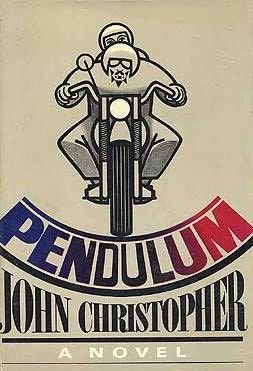
5. Pendulum by John Christopher

Pendulum picture

I was about 3/4 of the way through another book that I lost while visiting Buzby for a weekend. He kindly lent me Pendulum by John Christopher (in a beautiful first edition hardback), who is warming up to be the author of the 1st quarter of '08 among our group of bloggers. I was trying to avoid reading the same genre, or author without a break in between, but I realize now I had no significant reason for doing so. I'm feeling pretty post-apocalytpic and feeling pretty John Christopher these days, so I may well start the White Mountain trilogy after this.

Pendulum is really a classic example of early 60s english apocalyptic anxiety. It has the great combo of the fear of social chaos and sexual violation. The apocalypse is gradual here, economic collapse combined with an overly powerful youth culture. As England falls apart, the youth grow stronger and stronger. It starts out with student protests, but accelerates as the "yobs", working class youth, turn to violence and robbery. In time, civil infrastructure collapses entirely and cities and towns are controlled locally by gangs on motorcycles and scooters.

The protagonists are a family living outside a university town. The book focuses particularly on the patriarch, a succesful developer and his sister-in-law, who is having an affair with a pretentious professor and supporter of the students. Christopher emphasizes her psychological development, particularly in regards to men. It's all done through the lens of the early 60s, and Britain and I can't tell if the portrayal is true. It is interesting and though she is annoyingly forgiving, the men around her are portrayed quite critically through her eyes.

It's too early for me to say if this is an obsession with Christopher, but one of the strong themes in Pendulum that also shows up in A Wrinkle in the Skin is rape and how women are subject to sexual violation once the protective structures of society are gone. This threat is always hovering around in Pendulum, subtle but very disturbing and it creates a lot of tension as things go bad. I'm not quite sure what to make of it, because you sense that Christopher may lack some distance himself from the issue. It seems to threaten him as a man, perhaps.

Another thing that I think is worth discussing in Post-Apocalyptic literature is how the time frame is handled. Does the book deal with the disaster and immediate aftermath or does it go for the longer view, like Earth Abides. At first, I thought Pendulum was going to be very immediate, but it actually leaps ahead several times. It made the novel deeper for me and it allowed Christopher to take the social degradation to a very interesting place. The youths and their wild behaviour is portrayed through the eyes of educated, upper-middle class males for the most part and thus gives the book a very conservative tone. But the way the story develops moves the book beyond just being a caution against youth left idle and too strong.

A really interesting book and an excellent addition to the stable.

Wednesday, February 06, 2008

4. Conquistador by S.M. Stirling

Conquistador pictureMt. Benson turned me on to this author. I suspect he has a contingency of nerdy fans who like his combo of cool ideas, detailed technical specifications and manly action. Conquistador is about a WWII vet who accidently opens a gate to another dimension in the basement of his Oakland phone in the late '40s. He goes through it. 70 years later, in a near-future bay area, a forest ranger discovers an impossible california condor in a bust on some endangered species smugglers. He follows up on the case, eventually discovering a complex conspiracy. It turns out the vet has discovered an alternate dimension where colonization never took place. He slowly builds up an empire there. His empire is having it's own political problems and they are spilling back out into our world. The alternate dimension is an ecological paradise, never having been touched by progress. The forest ranger, who is the protagonist gets caught up in their war.

The set-up is cool because the whole thing takes place in northern California, in both worlds. And Stirling has done his research. So you get stinky, crowded, polluted, modern Bay Area juxtaposed with the untouched version. It's not totally untouched, though, as the newcomers bring with them the same kind of diseases the original colonists brought, with the same effect on the native populations. They also have an old-school white male mentality and maintain a society that reflects that. It's hard to tell where Stirling stands on this issue. Sometimes you get the sense he is being critical of it, but other times there is a conservatism there that one often finds in the nerd world.

And speaking of nerdy, this book is definitely for the geeks. There is an excessive attention to detail and an exaggerated emphasis on the main hero's manliness. The two paragraph, detailed description of his weightlifting routine was a great example of where the author was trying desperately to let us know that he knows all about weightlifting by telling us about things that a real weightlifter doesn't even pay attention to. But hey, I'm a geek myself and I mostly appreciated the attention to detail. I'm getting older, though, and I have less time. Stirling is just pushing it. I imagine if the details went a little longer, I might not have had the patience to make it through the end.

As it was, though, it was an enjoyable read with a really cool setup. I think I'll probably get around to his post-apocalyptic trilogy because if he applies the same kind of attention to a world without engines, it could be quite interesting.

Friday, January 11, 2008

3. Blood is the New Black by Valerie Stivers

Blood is the New Black pictureI must enter this review by letting everyone know that the author is a friend of mine. She's closer to my sister, but we've hung out enough that my objectivity may be in question!
Blood is the new Black (great title, btw) is another iteration of the vampire mythos, this time taking place in the corporate hallways of a major fashion magazine. The hero of the book is a practical but very fashion-conscious young woman who gets an opportunity to intern at an elite fashion magazine in Manhattan before her final year of med school. Though style is clearly in her genes, she has chosen a more pragmatic path after her mother, an up and coming designer herself, abandoned the family for the life of haute couture and sophisticated partying. She is reluctant to take the internship, but finally does.

Of course, things are immediately weird at the magazine. It's a difficult tension because we all know that her bosses are going to be vampires. The suspense and enjoyment comes from the manner in which this vampire myth manifests itself (which is quite well done) and from figuring out who and who isn't a vampire (not so well done). It's an enjoyable and quick read. One sympathizes with the main character and you can really feel the stress of being in such a job even if the nasty bitches that ran the place weren't vampires. The plot moves forward well, though the internal thinking style I found a bit chatty, but I think this probably accurately reflects the constant noise and confusion that goes around in women's heads. One problem I had were the constant references to specific types and brands of clothes that people are wearing. These were very specific. It made it so I couldn't really figure out what anybody looked like. Can't blame the book, though, as this is probably appropriate for the intended audience. I imagine this must be what it's like when my sister reads a Mack Bolan novel.

The manifestation of the vampire myth in the modern, fashion world is fantastic. It cleverly integrates all the vampire clichés, updates some of them and wittily critiques high fashion. This is a bit of a spoiler, but it goes so far to explain how the vampires were responsible for changing our appreciation of the feminine form from the robust, curvy figure of the 19th century to the emaciated, dried out look of today (which fits much more the vampire aesthetic, obviously). There is a lot of this and it is quite enjoyable.

All in all, Blood is the New Black is a good read, which I think will be particularly enjoyed by vampire fans and young, stylish women.

Thursday, January 03, 2008

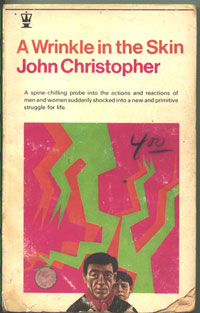
2. A Wrinkle in the Skin by John Christopher

A Wrinkle in the Skin pictureI confused John Christopher with Christopher Priest when I picked this up. No harm done since both are great writers of around the same age and touching upon very similar genres. John Christopher is best known for his children's sci-fi books, like The Tripods trilogy which we read and loved in elementary school. I see that he has a very long career as an adult sci-fi writer before that, as well as just being very prolific under a bunch of other pseudonyms as well.
A Wrinkle in the skin (reviewed earlier at Mt. Benson) is actually at the tale end of his adult writings. It explores (and perhaps concludes) similar areas as No Blade of Grass. It's about a widower who lives on the island of Guernsey (a British Crown Dependency in the channel, closer to Normandy) growing tomatoes. There is talk of terrible earthquakes around the globe and within 5 pages the narrator is in one. But this is a mega, mega earthquake. I don't want to give away how big it is, but I was quite surprised at certain points. The story is about him making his way back to Sussex to find his daughter who was at school there. Along the way he struggles with the dangers of the new, ruined world. The chief danger, as usual, is other humans.

I found this book to be a page-turner. I was anxious to find out what would happen next and there is a strong feeling of threat throughout. His descriptions of the devastation are vivid and captivating. Also, the hero is cool. He's removed and semi-competent. There is none of the writers' crutches of frustratingly stupid behaviour. I was so enjoying the post-apocalyptic scenario that I didn't realize that I was also becoming caught up in the emotional journey of the hero and his relationships with the other survivors around him. I ended up finding the book very satisfying overall.

An excellent addition to the post-war British PA genre. Note the scanned cover of the edition I found.

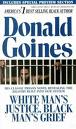
1. White Man's Justice, Black Man's Grief by Donald Goines

white man's justice, black man's grief pictureDonald Goines was a black author who wrote novels about black life in America in the 70s. While his books are clearly fiction, he experienced and saw most of what he wrote about. And those things are rough. I don't know how they were published at the time, but they are currently released by Holloway Press, an LA publishing house that specializes in black literature. You can often find them for pretty cheap in used bookstores. Goines is a great writer. His plots can be a bit obviously structured and his style employs techniques frowned upon by "literary" types (he often tells rather than shows), but shit happens in his books and he makes it seem real and immediate. And he pulls no punches. It borders on the sensationalistic, but never goes over because you believe it when you are reading it. I warn you though, there is some seriously harsh shit in his books.
Knowing this, I was particularly hesitant to pick up White Man's Justice, Black Man's Grief because it all takes place in prison. My fears were well-founded as there are some extremely disturbing scenes of male rape (shit that I hadn't even conceived of, which is bad). But the story is primarily concerned with the hero, who gets thrown in the county jail for possession of a concealed weapon, and two friends he makes, a white guy and a younger black guy. They join together because of a shared ethos of honour and together they handle the challenges of power and materials that go on in the county jail. The general theme of the book is that if you are black, you are screwed in the U.S. justice system. I doubt things have changed all that much since this was written in the early '70s.

A quick and enjoyable read, though if you're squeamish, I'd recommend picking up one of Goines books where the rape and violence takes place on the streets of the ghetto, rather than in the prison cell (though why this is less disturbing, I'm not really sure).

Monday, December 31, 2007

2007 wrap-up

Self-Criticism look back at '07
Well, a really pathetic finish to what started out as a torrid year of reading. I do have some very good excuses, but ultimately, despite them, I think had I just focused a little more and spent less time noodling around on the internet I could have easily gotten the 50. My excuses were that I was in school full time and the final semester was really busy, with a group project to graduate. Everybody seems to agree that group projects are always a nightmare and this was no exception. On top of that, there was a last-minute real estate Step to Maturity in December. So reasonable excuses, but still, if I had spent those 10-20 minutes just reading instead of arguing on some obscure forum the role of narrative in roleplaying games, I probably would easily have reached my goal.

This year, though, I really did get some great reading done. I finished the awesome (though sadly not truly completed) Amtrak series. I got into George Pelecanos, a great find and got a taste of Dennis Lehane and Michael Connelly, also very promising. I read some must-read sci-fi authors, like Theodore Sturgeon, Robert Charles Wilson, Tim Powers and Arthur C. Clarke. And I found a few gens here and there, like the Wreck of the Dumaru, Among Madmen and Conquest in California. Finally, it was a big year for me for Christopher Priest and Chuck Palahniuk, both of whose writing has given me a lot of enjoyment. The truth is that, despite the crumbling of civil society and the general idiocy level of most of the population of the developed world, there are still tons of great books out there and great authors still producing excellent writing and story. I am thankful for their hard and creative work.

Congrats to Others
Kudos to Print is Dead, who just kicked some serious ass this year. Not only did he read 62 books, but he also brought in a wide range of titles, introducing me to some sci-fi authors I hadn't heard of, as well as keeping me up to date on some interesting graphic novels. Honorable mention to June 23rd, with a solid 27 and to the steady MtBensonReport, who pulled through a tough and distracting year with some interesting titles (though with his all-time low of 15 books read, he's definitely going to get some good draft picks this year). Another Honorable Mention to LeBraconnier, a newcomer who started off strong, but had a quiet 4th quarter as he worked towards bringing a new reader into the world. And finally, I can't end this year without recognizing Meezly's strong showing. She's becoming a pretty impressive used bookstore patron herself these days, coming out with an armload of titles I've never heard of.

Looking Ahead
As for next year, I am shooting again for 50. I'll be working fulltime, but no more school (assuming I pass all my classes in the final semester). So it should be doable. We have a strong new addition to the meme, Doc Holaday, who has already posted a bunch of interesting books to read from his own past and looks, based on past productivity I have seen from him in other cultural contexts, to be quite strong. Finally, I hope we can see more from Buzby this year, who brought a lot of excellent non-fiction to the table in 2006. He has a good excuse for his no-show in 07 (another new reader on its way), but I think he will be able to step it up this year.

Good luck on '08 everybody! Let's do this!

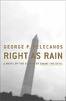
46. Right as Rain by John Pelecanos

Right as Rain picture

A very solid and enjoyable effort. Many of the themes that were present in the Washington Quartet are here in this book, but it being a one-shot allowed me to just get into the story. Pelecano has a strong voice and consistent themes (relationships between black and white men, men trying to get their life back together, inner city economic failure) and I suspect that they may get a bit repetitive. However, so far this hasn't happened for me. One reason is that I agree with his themes. He's clearly an American who is proud of his country, but who is outraged by what has happened to it. He sympathizes with the underdog and the downtrodden and he has clearly seen enough of that to know that's often where the real, hardworking and proud America still exists. Another reason is that his characters, the main and the secondary ones, are cool and entertaining. The main guys are badasses in the right, subtle way and he has all kinds of rich secondary characters, like redneck meth farmers and corrupt cops.

I'm a fan of Pelecanos, but I'm going to space out reading his books. Maybe one every 6 months, maximum.

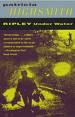
45. Ripley Under Water by Patricia Highsmith

Ripley Under Water picture

This is the 4th book in the fantastic Ripley series. I actually was suprised to see that there are 5 books in the series. I've been avoiding the Ripley series in the last couple of years, just because I have gotten so much pleasure from her stand-alone books. But I found this in a used bookstore in Berkeley for a decent price and figured it was about time to catch up with everyone's favorite civilized sociopath (or is he?).

This novel revisits the guilt of Ripley's past crimes as an American couple moves into his small french town and start intimating that they know what he's done. This moves into a campaign of subtle and not-so-subtle harrassment that forces Ripley to react. You definitely need to have read the previous Ripley books to enjoy and follow this one. There were at times so many reference catch-ups and backstory explanations that it got a bit annoying. I think it was a while between this and the last one and Highsmith was either reminding herself or her editor made her do it.

Despite these small interruptions from the flow, the book is really engaging. At this point, you've kind of come full circle with Ripley. As a reader, you are totally rooting for him (at least I was), though Highsmith still does a fantastic job of making you feel slightly uncomfortable with this. His opponent seems just as psychotic as Ripley, but he's uncivilized about it, so you hate him. It's hilariously ironic to read Ripley's thoughts about the antagonist and his wife and how abnormal and psychotic he thinks they must be.

The whole Ripley series is a study of morality. She pushes the boundaries of what is acceptable, taking the reader along with Ripley in his love of fine foods, good music, pleasant conversation and the french countryside as well as his penchance for a little murder or corpse-hiding when these things become necessary.

What is weird to me is how when the first Ripley movie came out, there was this big flurry of "re-discovering" Highsmith, with lengthy articles in (where else) the tiresome New Yorker. As if her literary legacy had completely vanished. But her books were being constantly published in the 80s and 90s and you can still find tons of used copies in non-movie branded versions. I suspect that the mystery-reading community (especially in England) has always considered her to be a mainstay. It's just that suddenly money in the form of a big movie found her and now "real" literary critics have decided that she has now surpassed the lowly depths of her genre and is allowed to be elevated to their lofty heights.

If you have never read any Highsmith, you definitely should. As I say, her books can be found in decent quantities in most used bookstores. If you are going to read the Ripleys, start at the beginning. They are a greater commitment, but definitely worth it. But any of her other books are just as rewarding and sometimes much darker and more disturbing.

Here is the order of the Ripley books:

The Talented Mr. Ripley (1955)
Ripley Under Ground (1970)
Ripley's Game (1974)
The Boy Who Followed Ripley (1980)
Ripley Under Water (1991)

Holy disaster! I see that I made a terrible error. Ripley Under Water is the last in the series! I assumed that it was the penultimate one based on the listing I found inside two books. Wow. That screws me up. Now I am going to have to scramble to read The Boy Who Followed Ripley and then try and fold it under the last one in my brain. Not easy to do, people. This is what you get when you just buy books willy-nilly without a plan.

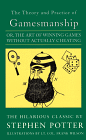
44. Gamesmanship by Stephen Potter

gamesmanship picture

My dad recommended this to me. He told me that when he was at UBC in the 50s, Stephen Potter came to do a lecture. He described him as a small, unassuming looking man who spoke very quietly and soberly, but by the end my dad laughed so hard that his ribs hurt.

It's a manual on how to defeat your opponent without actually being skilled at a sport or cheating. The games are british popular sports from the early middle of the 20th century: lawn tennis, croquet, billiards, golf. It's a very slim manual, with a few hilarious diagrams and instructions on how to have the more sympathetic injury, or how to create an inflated reputation. The humour is sometimes very dry and couched in very different cultural mores, but the spirit is the same today and this book will appeal to anyone with a competitive spirit. I laughed out loud many times and I will definitely use some of the techniques here.

He also has a book called Lifemanship that I definitely want to read.

I recommend it highly.

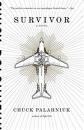
43. Survivor by Chuck Palahniuk

survivor picture
I've read enough of Palahniuk's books, that I am starting to get a sense of his style. Sometimes there is too much style in his writing. It becomes clever and precious. However, he so far has always laid his style on a solid foundation of story. Things happen in interesting ways in Palahniuk's books. This is certainly the case with Survivor, where I enjoyed most of the ride, but at times felt a bit like I was plodding through the repetitive parts to find out what happened next. In the end, it won me over. This book has some really crazy ideas in it and pretty imaginative over-the-top stuff goes down. It's worth a read.

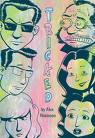
42. Tricked by Alex Robinson

tricked picture
I really don't know anything about the context of this graphic novel. I just found it in the english section of the comic book wing at the bibliotheque nationale. It had a nice, solid line style and what looked like an engaging storyline from the few snippets I skimmed.

The story follows six characters in their individual threads. They all take place in or around a major midwestern city (Chicago?) and as the narrative progresses, you start to see the gradually increasing connections between the threads. Each story is intriguing and the characters interesting. And the payoff was, at least for me, satisfying.

A good read. Pick it up if you see it at your local comic shop or library.

Sunday, December 02, 2007

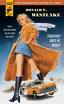
41. Somebody Owes Me Money

somebody picture

I read this book actually about a month ago and completely forgot about it. It had been in my on deck lineup for a while (possibly through the Mt. Benson report). I'm a huge Westlake fan, particularily his Parker books under the Richard Stark Pseudonym. His earlier novels often show little flashes of the granite hardness and cynical criminal knowledge of that incomparable series, so I always like to read them. Somebody Owes Me Money was much more in the light vein, with a lot of emphasis on the life of a humble NYC cabbie and gambler. It was wrapped around a not that intriguing mystery and the kind of clever idea that the murdered guy was the protagonist's bookie who owed him on a big win. In order to get paid, the hero has to solve the mystery. It passed the time. Got me to #41.

In looking for a picture for this book, I'm a little surprised to discover that Hard Case Crime is re-publishing it. I'm not sure it merits it. But I'm glad for any extra money that gets into Westlake's pocket. He deserves it. The copy I read is an old Signet paperback from 1971.

Friday, November 16, 2007

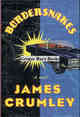
40. Bordersnakes by James Crumley

Bordersnakes picture

Well I really fell off the trail these last couple months. I blame roleplaying games. Way too many cool freebies to download. Though there is reading and story in these publications, I tend to not read them from beginning to end and rarely complete them. If I did, I might consider counting them here. Worse, they contribute to my internet-driven inability to concentrate on one thing for extended periods of time. So realizing that I'm getting near the finish line (and that Print is Dead is clearly on the way to taking this year's championship), I'm pushing myself to get back in gear.

This colourful-covered, easy-reading crime book from 1996 looked to be a good place to start. I picked it up at the only english language used bookstore east of McGill, S.W. Welch's. The owner, who reads a wide range of crime books himself (and likes the Parker books), said that Crumley's books were pretty good and well known. I was a little surprised I'd never crossed the paths of detectives Milodragovitch and Shugrue before.

I think I jumped in late in the series. The two detectives have split up and are out of the game, but get back together to right individual wrongs. The plot becomes very complex, revealing that these wrongs are wrapped up in their pasts and may be connected. I'm being deliberately vague here because it was all kind of complex and at times a bit confusing. Crumley is one of those crime writers who makes little leaps of logic and expects his readers to follow along. I'm too lazy to do that, especially when I didn't have much invested in the characters. I think jumping in at the end of these two characters' stories was a factor here. But not entirely.

This book is very violent and sometimes over the top. I like violence and excess, but I don't like sadism and excess for shock. Bordersnakes walked a thin line. The first half is really a fun ride, with the two of them driving all over texas and mixing it up with a range of freaks, criminals and weirdos. But it gets darker and nastier and less realistic in the second half, while plummeting into the darker sides of the characters themselves. For me, this went too far into self-indulgence for me and got really nasty, with a very detailed and horrific exposition of a rape scene. It was just too much. The fact of it was enough. The detail felt pornographic and indulgent. The author lost me at that point.

I'll keep an eye out for the earlier books and if I find them cheap and am stuck in an airport or something, I may pick them up. I suspect the earlier books may have been cleaner and tighter and less extreme. Bordersnakes moves fast and there is lots of good action, so it was a good way to ease back into the 50 book race.

Saturday, September 22, 2007

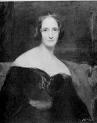
39. Frankenstein or the Modern Prometheus by Mary Shelley

Mary Shelley pictureI read this once before, the beautifully drawn Bernie Wrightson edition, but I don't remember it well. I was probably too young to get through the early Victorian (or is it pre-Victorian and what was that period called?) language. Now, however, I thrive on the stuff.
Frankenstein is an amazing book, especially considering the stage in literature that it was written. I imagine that readers in the early 19th century must have been quite horrified by the scenes when the monster appears. In terms of the horrific things he does, punches really aren't pulled. All the loved ones get killed, innocent children and women included. Also, the monster is not slow and shambling. He's super fast and dextrous, jumping out of windows and climbing up rocky bluffs with ease.

My take on this book is that it is a condemnation of humanity. I suspect my own position on this pathetic species is colouring that interpretation. But she does a good job of showing us humanity's selfishness and cruelty through the eyes of an outsider and she portrays Dr. Frankenstein as at best morally equivocating and possibly even the bad guy of the story. You really do sympathize with the monster.

Friday, August 31, 2007

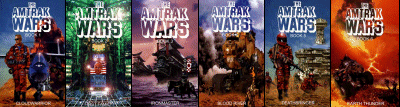
34-38. books 2-6 of the Amtrak Wars

Amtrak Series picture
Oooh, sneak attack! You weren't expecting that Carrot (though this didn't give me the lead I was hoping for, I am in the race still).

The mountain man of Mount Benson found the rest of the Amtrak War Series which I received as a very welcome surprise in the mail a couple months ago. I've been working my way through them (not much work really). I had devoured the first one and was really looking forward to continuing the series. In many ways, the set-up in the Amtrak Wars is my ideal post-apocalyptic setting. It's far in the future (1,000 years) but still has connections to the past. There is tons of unknown and mystery set up at the beginning that really hooks the fan of exploration of the unkown in me.

The themes underlying the series is also very 80s. It's the fascistic near-1984 society versus the primitive plainspeople, who are kind of rock and roll (with names named after rock bands and midwestern cities). Plus an entire post-apocalyptic feudal Japanese society that shuns electricity. It has a frank tone and pulls no punches, with the violence and sex. Sometimes this makes it feel a tad cheap, but more often it's entertaining and reminds you how precious and careful we have become with our genre writing.

Ultimately, the series moves more towards the conflict between the three major powers in this wasteland North America. The protaganists are heroes who have special powers and are clearly marked for world-changing destinies and their narrative path guides the political conflicts. I got into this, but after the third book, most of the mysteries of the world are revealed. They are pretty cool, but the series moves away from exploration, which I missed a bit.

Also, and this is pretty major, it never fully concludes. It ends very open-ended, either because the author deliberately wanted it that way (as a reader you have enough info to speculate on your own) or because he grew tired. I've heard he is a bit of a recluse now and doesn't want to talk about The Amtrak Wars. It's too bad, because I would definitely be buying the next books if he were to do them.

Overall, a fantastic find and full of tons of ideas that I'll be stealing for future gaming. This would have blown my mind if I'd read it in my adolesecent years. I'm amazed it never popped up until now.

Wednesday, August 22, 2007

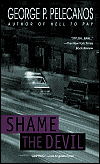
33. Shame the Devil by George P. Pelecanos

Shame the Devil pictureShame the Devil is the fourth book of the Washington Quartet. Here are my reviews of the first, second and third. I'll talk about this book on its own first and then briefly discuss the whole series. In Shame the Devil, the main protagonist, Dmitri Karras, is in his 40's, older and wiser and at the very beginning quite happy. This doesn't last long. I'm not going to tell you what happens, even though it's in the very first chapter, because if you start on the series, it will still be a spoiler for you. But his happiness is taken away from him and we fast forward a few years. The story now finds Dmitri slowly pulling his life back together when the cause of his downfall in the first place returns.
Shame the Devil weaves a semi-objective crime story, following the paths of two sociopathic, professional criminals, with a story of adulthood and recovery, with a tablespoon of revenge. Pelecanos books always move forward and his settings and characters are rich and engaging. Where the third book bogged down a bit, becoming too dark and too concerned with which song was being played or what kind of clothes people were wearing, here he seems to have found his balance again. It's a quick, entertaining and moving book. It redeemed the quartet in my eyes.

I think it's a bit erroneous to refer to these four books as "the Washington Quartet". I believe he has other books that take place in D.C. and characters here definitely show up in other lines of his. I believe that Nick Stefanos has his own series and he is one of the major characters here. I could be wrong. Nevertheless, the four books make a very satisfying story arc. They are realistic and the characters complex. And they definitely give me a great sense of a city that has abandoned its roots. I can see why Pelecanos got tapped to write for the Wire. This is good stuff and gives me some hope for our otherwise wasted generation.

Of the four, though, the first is still definitely my favorite.

Monday, July 30, 2007

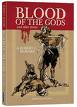
32. Blood of the Gods and Other Stories by Robert E. Howard

Wreck of the Dumaru pictureThe little book troll of Mount Benson gave me this book (for my birthday, I think) a couple years ago. I have been slowly reading it one story at a time in between novels. Howard's short stories are so turgid and dense that you don't want to read one right after the other. It's best to take each story as a little novella on it's own and get right into it.
These are all short stories that take place in and around Afghanistan, during the period of Great Game. Most of the stories feature El Borak, a wild Texan who long ago adopted the ways of the desert and mountain people. He respects their culture and lives among them, but he also has to lay the beat down on them often when their naturally savage ways come to the fore. He delivers the same treatment to Europeans of weak moral fibre who come to this land to exploit and plunder.

The final story stars Kirby O'Donnel, whose exploits I had quite enjoyed in another paperback I found that were just about him. Those took place on the docks of pre-war Shanghai and he was mainly a boxer and dockman. Here, Kirby is in the desert as well, I guess just part of a world-jumping sailors many adventures.

Great stuff all around. There is a reason Howard is considered a master today. He always delivers and it is cool to read his fierce, adventuresome writing in a different context than Hyboria.

This collection was put together by Girasol Collectibles, who have been reprinting Howard's works (as have some other publishers). It is really great to be able to finally read Howard's work on its own as well as to find all these other lost gems that he produced.

Tuesday, July 03, 2007

31. The Wreck of the Dumaru by Lowell Thomas (actually Fritz Harmon)

Wreck of the Dumaru pictureI found this book at the local thrift store. The sub-title is "A Story of Cannibalism in an Open Boat" and it has real pictures of a cool old freighter as well as the old salts who were on her. It's an old book, yellowed pages, dust jacket long since gone, part of the "Lowell Thomas Adventure Library". I learned later that Lowell Thomas was a promoter, radio announcer and general publicity guy who was very well known in the 20s, 30s and 40s. He is credited for making famous the story of Lawrence of Arabia. I put this in context because it was weird to me that he is credited as the author of this story, considering that he only wrote the first chapter and the rest was written by Fred Harmon, the guy who actually lived the story. It's funny, because the first chapter is really floridly written and almost discouraged me from continuing. Fortunately, the rest of the book is really clear and direct. As Thomas (slightly patronizingly) says "an extraordinary simplicity and graphic power, with that strength and reality which a man unschooled to writing and to literary artifice can achieve when the impressions of some fearful crisis have graven themselves on his brain."
The story is about a poorly and quickly built merchant ship, during the First World War. Most of the men on it were forced to be there, there only alternative to going to the trenches or in some cases jail. Once on, they found out that it was carrying a load of dynamite. It got caught in a lightning storm just off of Guam and blew up. The bulk of the story is one of the three life boats (actually two life boats and a raft), which was carrying almost twice its capacity (because the first life raft deserted) and had only a tin of biscuits and two gallons of water. They got caught at the first day of the tradewinds, which pushed them away from shore and ended up floating in the sea for 24 days. It got rough. Some went mad, over half just died and in the end there definitely was some cannibalism.

It turned out to be a great read. The author is clearly a straightforward guy but an observer and he spends the first chapter detailing the boat and then all the crazy misfits and castoffs that manned her. When we finally get to the lifeboat, you already know a lot of the characters well and you dread how they are going to behave under the pressure of surival. The narrative goes through it all in an engrossing, enjoyable but dreadful detail. When they do finally resort to eating one of the bodies, you are truly horrified, but also relieved because it actually ends up prolonging their lives and giving them enough energy to push on. But it is really disturbing. They strip the meat (what was left of it) from one of the guys thighs just after he dies, as he is lying there with his legs straight out in front of him. And they cook it in a tiny metal biscuit tin. It freaks you out!

I don't know if this book is around in any form other than a lucky find. But I am glad I found it. A great slice of sea life and an amazing story of survival and human behaviour.

[In searching for the cover of the book I have, I noticed that this story was published in 4 parts in Argosy magazine.]

Monday, June 25, 2007

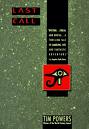
30. Last Call by Tim Powers

Last Call pictureI'm kind of surprised that I had never heard of Tim Powers before now. He's made his mark in sub-genres that interest me and yet his name hasn't come up until this year. It did come up because his books are considered to be one of the major inspirations for the tabletop RPG Unknown Armies. I've been playing in a campaign of this since the beginning of the year and was told that if I liked the setting, I should check out Tim Powers.
Last Call is a modern occult noir adventure. It takes place in the real world, but one in which not so far underneath the civilian surface, there is a world of powerful magic that is accessed and manipulated by gambling, consumption, drinking and a range of other very creative and bizarre ideas. I am not a big fan of "the occult" in fiction, generally because I find the aesthetic pretty limited. It's usually either brooding goth vampires, fruity new age suckers or post-hippy wiccans in loose fitting natural fibres. Last Call is totally the opposite. The people who practice the magic are criminals, low-lifes, alchoholic losers, the kind of characters you would expect to find in a Charles Willeford or Elmore Leonard book, except really weird. Actually, some of the characters in Carl Hiassen's book, minus the slight humour, would fit well in Tim Powers movies. But these guys are weird! There is an immensely fat man who is obsessed with maintaining the living vitality in his body, so he's constantly eating living things (like getting out of his car to munch an on aloe vera plant in the yard of the person he is spying on) and smearing his obese, tattooed body with ray-ban to keep the energy trapped inside of him. There are characters who have children and raise them just so they can take over their body when they get old. It's weird and dark.

The book opens with a boy who was destined to have his body taken over by his father (his older brother spent most of his time on their roof, acting as eyes for his father), but whose mother saves him at the last minute. We jump forward to the present, where the boy is now grown up and an alchoholic who the more he drinks, the more he is able to bring back a physical manifestation of his wife who died recently. However, crazy stuff starts happening to him and he learns that his father (whom he doesn't know and who is by now a very powerful practitioner) is gathering his magic to call all the bodies he controls (which he "bought" playing a special ancient card game at a certain time and date). After a certain point, the protagonist will lose control over himself and become another empty vessel that his father will use to extend his life. Things are much more complicated than that. There are many other important characters and wrinkles in the story line, but that is the central thread. It's actually quite epic in scale, ultimately, but the whole book is grounded in such a seedy, criminal world that it doesn't have an epic feel at all.

I really enjoyed Last Call. It had an anarchic feel in the pacing and behaviour of the characters. Powers comes up with some pretty amazing ideas and he is willing to push them to extreme ends. It took me a little while to get linked into to what exactly was going, just because there is so much detail to the magic and its effects, but once I got a sense of the structure of the world he is portraying, I really got into it. Cool stuff and I'll be keeping my open for other books by him.

Sunday, June 17, 2007

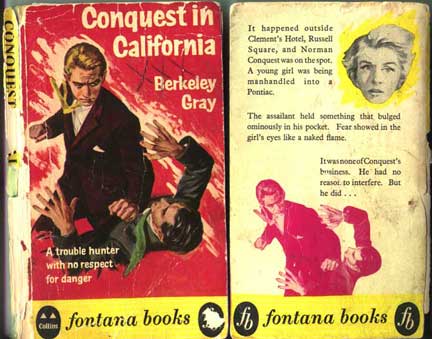
29. Conquest in California by Berkeley Gray

Conquest in California pictureMy reading consumption has dropped off considerably with the start of summer. Nice weather, gaming, weddings, etc. are making it hard for me to sit down and make good progress. Fortunately, I've had Conquest in California in my side pocket for the last couple weeks and have been stealing pages from it when I could.
I picked it up at an antiques store for a buck. As you can see, the cover alone is enough. I did a bit of internet research and discovered that Gray was a pseudonym for Edwy Searles Brooks, a journeyman British author who produced a massive amount of published work. Conquest was one of his later and more succesful series.

Norman Conquest (get it) is a young englishman of excellent character, wealthy and athletic. And fearless. He lives to get in scraps and have adventures. In this one, he rescues a young American girl (a blonde to which he is always attracted) from a threatening thug. This gets him caught up in a tale of small-town corruption in Clam City, California, where Conquest goes to show American thugs how its done and clean up the mess. There is a lot of not-so-subtle British pride here. I wouldn't go so far as to say it is anti-American, but you can tell that the writer and the intended audience have a bit of a chip on their shoulder. Lines like "Conquest swung his fist up with a short, outward jerk of the elbow and struck the American on the side of the jaw," give a good sense of where this book is coming from.

It was a fun read, particularly for the setting and the side characters. The plot is pretty straightforward and moves forward a bit too clunkily. There is a lot of repetition of exposition and a lot of the author telling us how awesome Norman Conquest is. Sometimes it is very effective, but generally you get the feeling that the whole thing could have been cut down a lot and the book would still have been entertaining.

I would check another one of these out if they come across my path. Check out these sweet covers!

Friday, May 25, 2007

28. Killing Mr. Griffin by Lois Duncan

Killing Mr. Griffin pictureI don't know if the name Lois Duncan rings a bell for you, but her books were all the rage when I was an adolescent back in the early 80s. She wrote teen horror novels that were genuinely freaky. I think they appealed to girls more and I have a vague memory of my sister getting them from the library and me reading them. She also wrote "I Know What You Did Last Summer" which got made into a series of teen horror flicks in the last few years.
Killing Mr. Griffin is about a group of high school students who get together to kidnap and scare a really severe english teacher. The tale is told mainly through the eyes of a square loser who gets coerced by the cool group because she won't be suspected. Of course, as suggested by the title, the plan goes too far and the teacher dies.

It's funny because before I started reading this book, I felt a bit cheap about it, like I shouldn't count it as one of my fifty because it wasn't that long and written for teens. But it actually took me a while to get into it. I'm just really not interested at all in the insecurities of teenages, especially girls. I wasn't when I was a teenager (not to say I didn't have them!) and I sure am not now. But once I got into the story, it went very quickly. It's well-written, clear and straightforward, though in a manner that one might associate with a book aimed at teenage girls (very direct emotional exposition). The characters are actually quite good. Each of the teens is slowly revealed, as well as the family around them. Their motivations make sense and nobody is really annoying or stupid. And the narrative moves forward. It's gripping. Though it all wraps up neatly, this almost seems like an afterthought, as everything really goes to shit in quite a nice way. You sense that Duncan prefers the chaos and impending doom to the happy ending.

What struck me most about this book is that it didn't pull any punches. The teens drink and smoke weed, without a big deal being made about it. Bad stuff happens and nobody is blamed. Duncan seems to be saying that bad shit can happen and it can be impossible to avoid. She doesn't waste any time moralizing or making her characters struggle with moral dilemmas. They make mistakes but you can see that it would have been almost impossible for them to do other wise. I have no idea what modern day realistic fiction teens are reading today, but I have this suspicion it is watered down and compromised with morals. I know that fantasy is back in a big way and it is too easy to avoid real harshness in that reality. Something about these teen books from the 70s were really hardcore, like Roger Cormack and SE Hinton (though she was really the one that started it all probably). I remember seeing them for order in those Arrow or whatever catalogues we used to get and feeling freaked out by their toughness and adulthood.

Monday, May 21, 2007

27. Shutter Island by Dennis Lehane

Shutter Island pictureI had heard about Dennis Lehane because he is also one of the writer's for the best television series ever "The Wire". The producers chose writers for that show from people who wrote succesful genre fiction local to the urban northeast. Dennis Lehane's area of expertise is Boston.
However, Shutter Island, actually takes place on a small island outside of Boston. So it doesn't draw too much on local flavour. The island is home to a prison for the criminally insane. It's 1948 and two U.S. Marshals have been sent to the island because one of the patients has escaped. Things are weird right from the start, particularly how nobody seems all that freaked out. They get much weirder.

I am not going to go into any detail because I would say this book is good enough to recommend and part of the pleasure of the read is figuring out what is going on. Sometimes when you don't know what kind of a book a book is, what boundaries are acceptable given the genre and setting, you can be critical while you are reading it and then realize 50 pages later that what was going on was actually quite cool. Now, I don't like a book where you finish and then look back and think that was actually kind of interesting (this is even worse with movies). I want to be entertained while I am reading it and if I am constantly critical then I am not being entertained.

Fortunately, this is not the case with Shutter Island. The characters are interesting, the dialogue gripping and the setting is fantastic. There is enough weirdness, action, intrigue and mystery to keep you hooked. There were some false spots and sometimes the writing was a bit too florid (a common problem even among the better American authors these days; sparsity, people, sparsity!). Overall, though, a great, quick read. Recommend it for the plane or the beach or a rainy day with nothing to do.

Friday, May 18, 2007

26. The Separation by Christopher Priest

The Separation pictureSince seeing The Prestige, I became aware that Christopher Priest's career is going stronger than ever. The library here actually had 4 hardback copies of The Separation and it seems to have gotten such rave reviews, yet it completely passed under the radar here in North America.
There is something about Priest's writing style that compells me and yet keeps me at a certain distance. I suspect that he is a very careful writer, crafting his sentences because his prose always has a slightly objective feel to it, as if the characters themselves are slightly removed from their own lives. I really like that because it avoids all the flowery adverbs and adjectives and excessive self-psychology of so many american authors (even good ones). On the other hand, it can sometimes make you feel not totally caught up in the book. Again, I suspect it is deliberate, because he is still very good at changing the voice when he changes narrators.

The Separation is a story where these kinds of details are very signficant, because not only does it jump around from narrator, it also appears to jump around in realities! The basic story is framed in a contemporary author who writes histories of the Second World War. He is researching an elusive individual who, from his research, appears to have been both a concientious objector and an RAF bomber pilot. The bulk of the book is then the narrative of these characters, who turn out to be twin brothers. We see their story through their eyes and through a few other characters around them, as well as some historical documents.

On the surface, they were both excellent athletes, who rowed for England in the 36 Olympics in Berlin and then fought over their differing positions on war. One became an objector and a Red Cross worker, the other an RAF bomber. Each gets involved in some way with the escape of Rudolph Hess in 1941 (who, in our world, split from Hitler and claimed he was trying to make peace with England and ended his life in prison in Nuremburg).

From what I've written so far, it all sounds very straightforward. What I haven't omitted is that the modern author is living in a time very different from our own. I won't go into any more detail because it is cool in the reading. And as you read the various narratives, things get even weirder. This is what makes this such a great book. The stories of the twins are absorbing and ultimately really moving, but it is also working at a much bigger level, where complex layers of alternating realities make the reader question what drives history forward and how certain decisions make change in the world. I don't know if I get entirely what Priest's goal was but this is a rich, complex and moral book that makes you question your own stand on war, without lacking entertainment.

It is also clear that Priest has done a great deal of research himself, both on the larger political developments of the Second World War as well as the more personal details of living under the blitz and piloting a bomber. This makes this book a great read for any WWII buffs as well as sci-fi fans. Probably the most impactful book I've read this year so far.

Tuesday, May 15, 2007

25. A Man of Affairs by John D. MacDonald

A Man of Affairs pictureThis is another of John D. MacDonald's non-Travis McGee books, dealing with business machinations and intrigue. I really enjoyed "A Key to the Suite" so I keep an eye open for these when they show up at used book stores. They are cheap, with cool covers and he has written quite a few. He does a good job of capturing the world of white male businessmen from the top to the bottom. And the corruption is there at every level. It takes different forms, but MacDonald does not hold back in showing that the evil and slime is inside the suit of the most sophisticated CEO as well as the tough who unloads the shrimp boat (and is handy with a gaff).

A Man of Affairs does not actually get so violent. It is more of a social drama. A group of people are invited to a private island in the Bahamas where they are being wooed to sell their shares to a shark-like investor (similar to the Gordon Gecko character, except 20 years earlier; just shows how little changes in the world of business). There are conflicts and sex and intrigue. It all centers around the one lower middle-class hardworking guy who has kept the company alive while its founder died. His ethical struggle, whether to accept the shark's tantalizing offer or fight him, is the center of the book.

Overall, this is good stuff and I am a big fan of MacDonald. But he loses me with the modern, romantic dialogue that goes on between the protagonist and his love interest. It's this really painful mix of early 60's white people lingo and what he considers post-feminism. So the women are frank, but coded, about sex in a way that is meant to be really adult and sophisticated but only reinforces the sexism of the period. And it is just annoying. This book has way, way too much of it. [insert quote here].

The ending was also all a bit pat. But it was still a good, quick airplane read with some great characters and descriptions and a bit of corporate tension.

Wednesday, May 09, 2007

24. The Dreaming Jewels by Theodore Sturgeon

The Dreaming Jewels pictureI actually read this book before the Jack Tatum autobiography. I somehow forgot it in my rush to get library books back on time. I found this one purely at random at the library. I have definitely heard the name Theodore Sturgeon before and I feel that somewhere it pops up in a Gilbert Shelton comic (can anyone verify this?).
The Dreaming Jewels is about an adopted boy who runs away from his totally abusive father. He hitches a ride with a bunch of midgets who happen to be a part of a carny. The only thing he brings with him is a jack-in-the-box doll (now smashed by his adopted father) with peculiar jewel eyes. As the story progresses, you see that the eyes and the boy are strangely connected. The narrative gets even deeper as the manager of the carny turns out to be a disgraced doctor who hates humanity and is obsessed with these strange jewels he once discovered.

This is a really interesting book, because it is a mix of two strong (and not well-respected) genres of the time it was written(1950): science fiction and crime. It is kind of half Charles Willeford half Andre Norton. There are seedy jazz clubs, carny love, corrupt local judges as well as telepathic powers, non-human intelligences and mad science. It's a combination that I really enjoyed, like my own personal genre peanut butter cup. Furthermore, this book went fast, the characters were interesting and well realized and there are some strong and moving themes about humanity and cruelty. I am definitely going to stay on the Theodore Sturgeon path.

23. They Call Me Assassin by Jack Tatum with Bill Kushner

The Call Me Assassin pictureI lived in Oakland, CA until I was 10 years old and I was a huge Raiders fan. John Matuszak actually lived up the block from us for a summer (these were very different times for professional athletes). I had the entire 1978 team in football cards and I went to the rally to keep the Raiders in Oakland. There I met many of the Raiders as well as the Raiderettes. My favorite player was the punter Ray Guy but I was pretty psyched to meet Jack Tatum, the infamous free safety. We shook my hands and I still remember how his huge hand completely enveloped mine. I was pretty psyched.
I found his book for fifty cents. Perfect plane reading. He talks a lot about his role on the team and his philosophy towards organized violence. Basically, he comes off as a very gentle, thoughtful person who knows his expertise and primary attributes are physical. So he uses them to the maximum within the rules allowed. He walks a thin line, sometimes sounding quite reasonable and other times quite scary. This contradiction is wrapped up quite nicely in this sentence: "I've used the word "kill" and when I'm hitting someone I really am trying to kill, but not like forever." The beginning and ending of the book go into this issue in some depth and ultimately, I kind of side with Tatum. You get the sense that the level of competition is so intense in the NFL that you have to be going for the kill or you'll lose your job.

The rest of the book follows his childhood in rural North Carolina and then urban (and rough) New Jersey, his college career and his first years with the Raiders. He also dedicates a chapter to rating his contemporaries, which brought back a lot of names and memories for me, particularily of that awesome Raiders team. They just don't build them like that anymore. Willie Brown, Fred Bilitnekoff, George Atkinson, Kenny Stabler, my man Cliff Branch.

There is one key passage that to me captures the old spirit of sports that seems totally lost today. In the last week of the 1976 season, the Raiders were guaranteed a spot in the playoffs. They had a final, meaningless to them, game against Cincinatti. The Bengals had been on a tear and if they won, they would make the playoffs and knock the Steelers out. The Steelers were Oakland's main rival, had knocked them out of the playoffs two years before and were still considered a much tougher opponent, despite losing control of their own regular season. Oakland could have let Cincinatti win and thus avoided the Steelers in the playoffs. Here is what Jack had to say about that:

When you honestly believe you are the best in any profession, you do not shy away from a challenge; you seek out the best of the competition to test your talents against. Sure, Cincinnati had the potential to "get lucky" and beat us, but it would be a most difficult task. As Oakland Raiders, my teammates and I had no need of any of the Steeler psychology to get us ready for the Bengals. To go on to win the Super Bowl without facing Pittsburgh again would have been a very shallow victory indeed. But to blast Cincinnati away and trample everyone who got in the way of our rush to become number one, well, that is what our motto "Pride and Poise" is all about. It's all a part of becoming a man and being called a professional. To hide from any player or team is cowardice. If I had felt the Raiders were going to lay down, I would have asked to sit this one out. Maybe I would have even asked to be traded. Never in my career have I ever approached a football game or anything with the thought of letting the other team win. When Monday night came along, I am proud to say that every member on the Raider team and staff went onto the field with a ruthless attitude toward the Bengals.

They ended up winning 34-21 and then went on to become Super Bowl champions.

Maybe the Mavs should have read that before tanking it against the Warriors in the final game of the regular season only to have the not-worthy Warriors slap them down and out in the first round.

Wednesday, May 02, 2007

22. Darwinia by Robert Charles Wilson

Darwinia picturePicked this one up on a total fluke. Meezly and I were in the sci-fi/fantasy section of la Bibliotheque Nationale (can you tell I am living well!:)) when this book caught her eye. She is a student of all things Darwinian (being highly evolved). She only glanced at it and put it back, but being in a very pulp/explorer phase right now I was intrigued by the cover, kept looking and decided to take it out. Plus, I had read The Chronoliths by the same author and was still interested in reading more of his work.

The whim was a good one as this turned out to be an excellent book. It follows the life of a young man born on the turn of the twentieth century. When he is 8 years old, he witnesses, as does the rest of the world, a strange light in the sky and the following total transformation of most of Europe into an entirely different ecology. The landmasses are the same, but the plant and animal life is totally alien and all the humans and their work is gone. The book then follows the protagonists exploration of this transformed continent and how the revelations of its origins change his life and the entire world.

It is, in effect, an alternate history. I was a little disappointed after the first half because I was hoping there would be more exploration and discovery of the crazy details of this alien world transposed upon earth. I was also hoping for more depth on the resurgence of creationism (because with such an obvious 'miracle' the theory of evolution becomes completely discounted but for a few heretics) and the conflicts that would arise from that. I suspect that this book would have been better served in a longer format, like a trilogy, because the questions it poses and the story possibilities it creates are vast.

On the other hand, I appreciated that the actual source of the transformation and the great story behind it is fully explained and justified. I won't say more beyond that it is big picture science fiction (reminded me a lot of some of Zelazny's ideas). I am actually glad that it was kept to one single book, even though I felt some things were skipped or rushed over. As I have said many times, I have neither the will nor the time to get into long series and trilogies, so Darwinia served me well.

A rich and satisfying read, with a gripping story and some very cool concepts. Recommended.