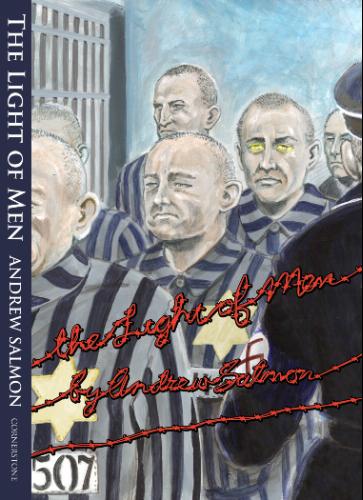
 I was inspired to choose this as my 50 Book Club choice by Doc's review. After my review goes up, a few other 50-bookers will be putting up their reviews and we will have a discussion about it in the comments section below.
[Here is the Mount Benson Report review.
Here is the review at the University of Crumbolst.
Here is Redwing's review at The June 23rd Project.]
I am therefore going to review this book in two parts. The first part will be the standard kind of review I would have normally done for a book I read: a general overview, with no spoilers and a final recommendation. In the second part, I'll discuss specific issues that came up in the book and there will definitely be spoilers. This is the type of book where it is better to go in ignorant of what happens, so I strongly encourage you not to read the second part unless you are sure you aren't going to read the book. I'll say that The Light of Men is a really good book, but there are certain people for whom the genre doesn't really do much and I'll make that clear.
Standard non-spoiler review
The Light of Men takes place in a concentration camp in Germany in the last months of the Second World War. A new prisoner arrives who is healthier and more aware than the rest. He also seems to have a certain psychological remove from the horrors going on around him. He is on a mission to try and find a specific prisoner in the camp and goes about manipulating the internal politics of the camp to do so. The story is written with a limited omniscient perspective, so although Aaron is the protagonist, the author doesn't totally let you into his head, nor does he give you any more than subtle hints that he is somehow different. I'm going to stop all discussion here of any more of the narrative, because a lot of the enjoyment of this book is trying to figure out what is going on.
I was concerned going in that a story of this type taking place in a concentration camp could have some very inappropriate results. The opening scene, where the trains first show up and the new arrivals are separated from their belongings and each other by older prisoners overseen by the SS, are brutal without being either exploitative or sentimental. It went a long way towards assuaging my concerns. Salmon has done his research and the opening scenes where the horrors of the camp are slowly laid out to the newcomer had the unpleasant but important effect of shocking my mind into realizing once again that this actually happened.
As the book progresses, one becomes used to the constant horrors of the camp. The story takes precedence. I'm torn as to whether the narrative overshadows the horrors unrealistically (and perhaps too easily) or if that is a reflection of the human ability to adapt. It's been a while since I read Primo Levi's Survival in Auschwitz, but I remember that book had a similar effect at points of making the camps seem like really tough prisons rather than soul-destroying nightmares from which nobody wakes up. I guess that's the point. If you were lucky and tough enough to physically survive, it was those people whose minds could absorb the understanding of what humans really are who without snapping could come out the other side with any shred of life will left.
The Light of Men is an absorbing and entertaining read, a novel blend of history and science fiction, mixed with a light enough touch that the true horror of its subject, the holocaust, is emphasized. The story is gripping, a real page-turner. It did lose a bit of steam with me at the end, but ultimately redeemed itself. I'll discuss that more in the spoiler section below. The Light of Men is a small-press publication, available on Amazon but probably hard to find in a retail bookstore. I think the Light of Men would appeal to a wider audience than just science fiction readers, but it might be a little bit cold and removed for some non-geek readers out there. It definitely deserves wide, commercial distribution. A great read.
Part 2 - deeper analysis for book club discussion
SPOILER ALERT!
I think the biggest difficulty I had with the book was the ending and the transformation of the main character. Partly because you spend so long not knowing who he really is that when he suddenly starts changing, you don't really have a base to change from. Furthermore, his internal logic didn't really make sense to me. I guess you could read it as a random result of an error, but it felt a bit like we needed and excuse to have a big action scene. Now, I quite enjoyed the action scene and the minor catharsis that went along with it, so I'm not complaining too much, but it just left me feeling a bit less absorbed into the story. He also never actually confirms whether Liebman is dead or not. As a reader, I felt something had been left out and it bothered me.
One other criticism is that, though really quite magnificently horrific, the scene with the camp Kommandant and all the women veered into exploitation territory for me. It just went a little too far into the details that it felt like it was possibly trying to throw a little titillation (really not the right word because the scene was so horrific) into the mix.
Ultimately, though, the way the book ended, where Aaron's involvement ultimately did nothing significant to change history, saved the book for me. I think the author succeeded in delivering a story without disrespecting the reality of the holocaust and its sufferers. It's a delicate balancing act, though!
So I guess I don't have too much deeper to add than that, but I'll throw out some questions as I'm very curious to hear what other's positions and perspectives were on these things.
Did anyone feel that it is simply inappropriate to have this kind of story take place in a concentration camp? Are there naive elements of revenge fantasy in The Light of Men that are disrespectful of the weight of the history of the holocaust?
Was there a moral message in the book? When Aaron's logic couldn't handle his predicament and he flipped out, was that an argument to act against evil, whatever damage it may do?
Did any of you learn anything from the portrayal of the camp?

 Ian MacAlister was on Lantzvillager's radar and I found it out in Winnipeg. It's a commando adventure in the manner of Desmond Bagley, but tighter and grimmer. A tycoon's daughter and wife are kidnapped by tribal rebels in Morocco in order to pressure the government to release political prisoners. Knowing the government won't budge, the tycoon hires an ex-mercenary, who then assembles a team to try and infiltrate the mountain hideout of the rebels and rescue the wife and daughter. The story is told almost entirely from the perspective of the lead commando, Canadian Earl Jarrel, who just got out of a french prison for gun-running. Canadians in these books never seem very Canadian. Perhaps we were just way tougher in the '70s or perhaps a life of international warfare and crime will harden you up a bit. It just always seems that these authors like to throw in a Canadian guy without any real knowledge of their culture or character, so they come off as kind of a generic non-American english speaking person. I know we aren't the most identifiable of commonwealth peoples, but a bit more effort could be made on the writer's part.

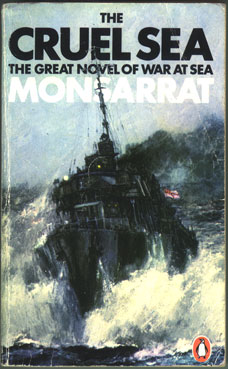 I was given this book by the groom of the wedding we went to in Winnipeg last year. He seemed to have good taste in books, though not prolific. He simply said, "Oh yeah, this is good. You want to read this." It looked a bit daunting at the time (440 pages, small print) and I already had picked up like 25 used books in Winnipeg that weekend. His assuredness and confidence, plus that it was a beautifully aged Penguin paperback, won me over.


 Whew! Made the deadline! And let me tell you this was a bit tight. Some of the other 50 bookers thought it might be fun to
 Though 2008 was the year dedicated to John Christopher, I will still read a book by him from time to time. He was prolific and I have a long way to go before I can say I've read most of his work. He's also just a really good and entertaining writer.


 I added Margaret Millar's name to the little piece of paper I keep in my wallet with books and authors I'm searching for thanks to
 This was an obscure but intriguing little title I found in a pile of books in one of the used book stores I visited last year in Winnipeg. I can't remember the name right now, but according to the groom, the owner ran the bookstore for decades and at some point he won the lottery. He just kept the store going without any real concern for profit. It's a bit of a mess, but a glorious mess with all kinds of fun media to search through, like comics, videotapes, videogames and other random, dusty things in a big sprawling warehouse structure.
 My eye was drawn to this attractive new paperback edition from Penguin (part of a


 Over the holidays, we went out to the teeny
 I was at home over the holidays and really in the mood for a good, British mystery. My dad recommended this one from my parents' excellent collection of paperback mysteries and it definitely satisfied my needs! I had seen this book lying around for years and I always thought, mainly because of the early '70s and genericy mystery cover that it was perhaps a decent read, a nice little find by my parents that they thought good enough to not let go of. Turns out it is actually a classic of the genre, well-received upon publication and considered today among aficionados to be one of the best of these kinds of mysteries.
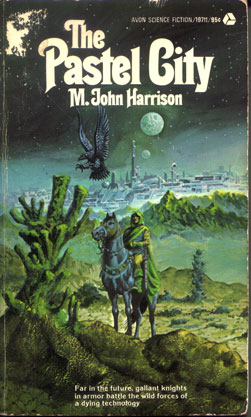 Doc gave me a beautiful old paperback copy of this under-heralded sci-fi classic. It's one of his favourites from his youth and he wanted to pass it along. You could technically put it in the post-apocalyptic genre, but it's truly a fantasy book. It's so far beyond the collapse of our modern empire that other civilizations have already come and gone. The advanced technological remains still exist in the ruins of the past and the unearthing and using of this old tech by a handful of what become, in effect, magic users, is the only PA trope that separates Pastel City from true fantasy.
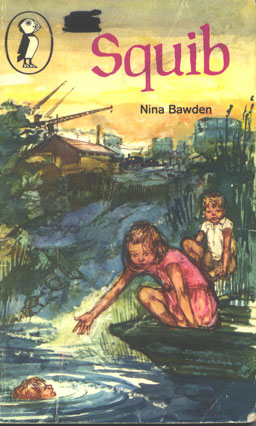 I found this one as well in Winnipeg. When I was a kid, we used to read a lot of British children's books, like The Box of Delights, Swallows and Amazons and even a ton of Enid Blighton (which I guess was looked down upon by certain people). These books always seemed to have a dark side to them and this became more explicit when I started reading the books aimed at adolescents from England. I remember in particular one that was called The Cage or The Cave or something like that which starts out with a guy waking up in a dungeon having no memory of who he is. He slowly meets some other people who are there also missing their memory. The book is about them exploring the place, finding out what is going on and who they are. It turns out they were all juvenile criminals and the place was an experiment in psychological manipulation and rehabilitation. I remember it being quite dark.
 Whoah! I've got whiplash from slamming the brakes so hard on my book reading! I was whaling away with all the summer travel and being away from the distractions at home (i.e. the internet) but I hit a wall this winter. To be fair with myself, there has been a lot of productivity in other recreational realms (gaming, cooking, building and fixing stuff), but I really should have put away the 50 by now.
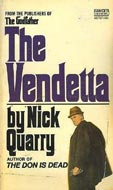 I found this book in Winnipeg, looking for The Don is Dead by Nick Quarry on behalf of Lantzvillager. He will have to explain how he found out about this author, but I'm glad he did. This is good, solid, workaday crime writing that was enjoyable from start to finish. à
 These well-known Napoleonic-era naval adventure books have been tempting me for years. I kept going back and forth with the slight hesitation that they were dumbed down and written for a mass audience. You have to be so suspicious of books that are really popular as they usually suck. On my trip to


 Posts


