 One more classic in the PA genre, Alas, Babylon falls into the short-term category, where the novel follows the events of the cataclysm itself and the immediate aftermath. In this case, it is a very realistic Cold War nuclear exchange. In some ways, Alas, Babylon is more of a Cold War novel than a true Post-Apocalyptic novel. Though in content it is in every way an "after" novel and a really good one, I suspect that the primary goal of the writer was to address what many considered a very real possibility of the time rather than to explore an alternate future of our collapsed society.
It all takes place in a very small town in Florida. The protagonist is a young lawyer and Korean War vet from an old local and upper class family. He is a bit down and unmotivated, taking out a lot of women and drinking bourbon in his coffee every morning. His brother is a high-ranking intelligence officer and he sends him a coded message that basically says the shit is going to hit the fan. Within a day, the hero in a disorganized scramble tries to prepare for the oncoming nuclear war. He also must take in his brother's wife and two kids.
The preparations and the small town's reaction to his change in behaviour are portrayed in some detail. The theme is this guy trying to get his head around what he has to do and realizing how much of his life and the lives of those around him is totally dependent on the civilized technological infrastructure. The town is portrayed as being even more clueless than him. A black family lives on his land and they are shown to be the most resourceful because they have been kept at such a low level relative to the white society. They know how to fish, farm, get clean water from the aquafer, cook local flora and fauna.
When the bombs do hit, it's quite exciting and really well done. You see it all from the protagonist's eyes, from a distance because there are no direct hits near the town. This isn't a case of total and sudden chaos, because the town stays intact. But radio and television service stops as do incoming deliveries. The first thing to really go is the local economy. I will stop going into geeky detail here, because a lot of the pleasure of the book is watching it all come apart. It really is very thoughtfully done.
Of all the other PA books I've read, Alas, Babylon makes me think of Earth Abides the most. Both are from an American perspective, from very similar times. The major difference is the timescales. But they are saying similar things. Our society rests on a very large and fragile framework. Though this book has greater faith in our human and American traditions, suggesting that with work and organization we can bring them back.
There was one thing that struck me was how incredibly removed from nature the people of this town in Florida are. They sound worse than we are today. For example: "Before The Day, except in hunting, or in war, a five- or ten-mile walk would have been unthinkable." Really? I find that surprising. Also, a woman says that they are going to have to go back to the "old-fashioned" way of feeding babies, breastfeeding. I know that they were insane about their doctors in the 50s, but I assumed most people still breast fed.
An excellent book. I strongly recommend it.
Here is Mt. Benson's better written review. We look at it with very similar perspectives, but I think his point that Pat Frank "doesn't question whether a codified society will survive; he wants to assure us that it will take a firm hand to guide us there" is well made and does differentiate Alas, Babylon from the more final Earth Abides.

 I must enter this review by letting everyone know that the author is a friend of mine. She's closer to my sister, but we've hung out enough that my objectivity may be in question!
 I confused John Christopher with Christopher Priest when I picked this up. No harm done since both are great writers of around the same age and touching upon very similar genres. John Christopher is best known for his children's sci-fi books, like The Tripods trilogy which we read and loved in elementary school. I see that he has a very long career as an adult sci-fi writer before that, as well as just being very prolific under a bunch of other pseudonyms as well.
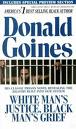 Donald Goines was a black author who wrote novels about black life in America in the 70s. While his books are clearly fiction, he experienced and saw most of what he wrote about. And those things are rough. I don't know how they were published at the time, but they are currently released by


 I read this once before, the beautifully drawn Bernie Wrightson edition, but I don't remember it well. I was probably too young to get through the early Victorian (or is it pre-Victorian and what was that period called?) language. Now, however, I thrive on the stuff.

 Shame the Devil is the fourth book of the Washington Quartet. Here are my reviews of the
 The little book troll of Mount Benson gave me this book (for my birthday, I think) a couple years ago. I have been slowly reading it one story at a time in between novels. Howard's short stories are so turgid and dense that you don't want to read one right after the other. It's best to take each story as a little novella on it's own and get right into it.
 I found this book at the local thrift store. The sub-title is "A Story of Cannibalism in an Open Boat" and it has real pictures of a cool old freighter as well as the old salts who were on her. It's an old book, yellowed pages, dust jacket long since gone, part of the "Lowell Thomas Adventure Library". I learned later that Lowell Thomas was a promoter, radio announcer and general publicity guy who was very well known in the 20s, 30s and 40s. He is credited for making famous the story of Lawrence of Arabia. I put this in context because it was weird to me that he is credited as the author of this story, considering that he only wrote the first chapter and the rest was written by Fred Harmon, the guy who actually lived the story. It's funny, because the first chapter is really floridly written and almost discouraged me from continuing. Fortunately, the rest of the book is really clear and direct. As Thomas (slightly patronizingly) says "an extraordinary simplicity and graphic power, with that strength and reality which a man unschooled to writing and to literary artifice can achieve when the impressions of some fearful crisis have graven themselves on his brain."
 I'm kind of surprised that I had never heard of Tim Powers before now. He's made his mark in sub-genres that interest me and yet his name hasn't come up until this year. It did come up because his books are considered to be one of the major inspirations for the tabletop RPG


 Posts


