Friday, May 09, 2008

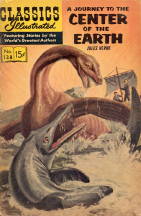
10. Journey to the Centre of the Earth by Jules Verne

Journey to the Centre of the Earth picture

Again, a really cheap buy. I probably should have done my research first (actually probably should have sucked it up and read the original in french) because I'm pretty positive this is one of the many badly-translated, brutally chopped english versions of Verne's books. His books were translated as children's books and had a lot of their heart removed from them. It was only recently that proper, faithful translations had been released and I'm pretty sure this wasn't one of them.

It was still an interesting book that moved forward very steadily and intriguingly. It is taken from the perspective of a young man who follows his scientist uncle to discover the centre of the earth. There is a lot of traveling and not a lot of conflict, but the voyage is quite fantastic and the ideas imaginative, so you get caught up in it. I think I owe Verne a second, proper read.

Wednesday, May 07, 2008

9. A Story of Days to Come by H.G. Wells

A Story of Days to Come pictureThis is a short (as many of his novels are) H.G. Wells novel that I found somewhere while traveling. It has a hilariously wrong yet accurate cover of a man and woman fighting off a dog in some ruins. It's wrong because though this scene actually happened, the picture looks like a Vallejo-esque barbaric fantasy. In the book, it is two wimpy future city-dwellers who, dissatisfied with modern life, make out for the country. At one point, they do get attacked by dogs, but the scene emphasizes how hopelessly unprepared they are for life outside of the city. I really should have scanned that cover, but I left it in the free bookshelf in the laundry room of my mom's apartment. Somebody took it so maybe it got read again, which would make it worth it.

The plot follows a young couple who fall in love. The woman had been promised to a rich but unattractive industrialist, but she is in love with the idealistic young man and chooses him instead. The industrialist goes about ruining the young man. It takes place in a future where the countryside has been almost entirely abandoned by humans. Agriculture and fuels are produced by automatic machines and everyone lives in vast cities, with an extreme social and economic hierarchy. The story is a romance but also a condemnation of man's separation from nature and the skills of survival. It is also an opportunity for Wells to do all kinds of interesting speculation on technology, the future and how it will affect human society.

It's a fun, quick read, with some crazy ideas. Wells was a man of his time but beyond it as well. The class structures in the book are strongly Victorian but still don't seem wildly off (though one could argue that nothing has really changed for us since the Victorian age in terms of class). The tech is much farther off course, though much more the fun for it. One cool conception he had is a giant ring of moving platforms inside the city. The rings on the inside and outside move at 5 miles per hour. Each consecutive inner ring moves at 5 mph faster so that by the time you get to the middlemost ring, you are moving at 70 miles per hour. You can step from ring to ring quite easily because the difference between each ring is easily manageable, thus allowing you to move short or long distances quite quickly.

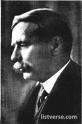
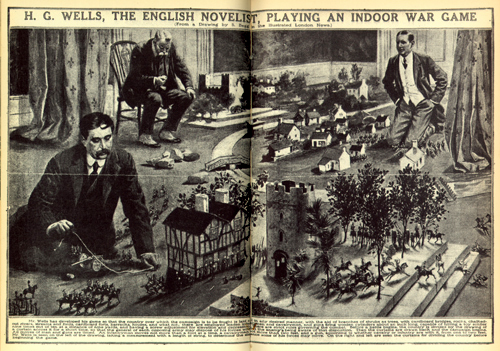
H.G. Wells is as cool as Evil Spock:

Wednesday, March 05, 2008

In honour and gratitude...

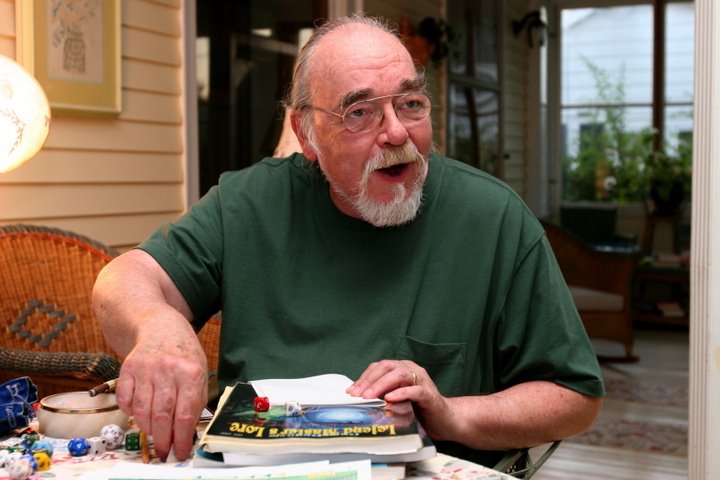
We interrupt the regular review of books for a moment of silence to remember and thank the man who gave us the tools to step into the books themselves, be the characters and live in those worlds. Thank you, Gary, you gave me a whole hell of a lot. May you rest in peace and roll well on that great table in the sky.

Gary Gygax picture

Gary Gygax 1938-2008

Globe & Mail obit

Wednesday, February 27, 2008

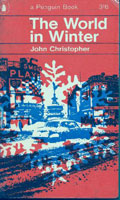
8. The World in Winter by John Christopher

The World in Winter picture

I went through a lot of mild ups and downs with this book. I think that I approached it believing I had Christopher pegged and I think that was a mistake. The premise of this post-apocalyptic book is that the world gets colder and colder until the previously powerful northern countries crumble and the equatorial nations become the new powerhouses. But I'm already getting ahead of myself, because the first section of the book is much more personal and limited in scope. It's about a tv producer and his relationship with another couple (of which the husband has an affair with the protagonist's wife). It's here that I felt like we were going to be spending a lot of time in that weird 60s british guy sexual anxiety zone.

Fortunately, the book veers off and ends up going in a lot of interesting directions. It proceeds to show the life of expat europeans in Africa who have suddenly become second-class citizens (that's putting it mildly; they are actually desperate refugees, forced to begging, prostitution and servitude). This is really fascinating and I would love to see a longer and more in-depth treatment of this kind of reversal of class and power in the world.

The third section than becomes an adventure, where a team of Nigerians try to go back to frozen London and claim it for themselves. They take hovercrafts and follow a similar route across the English Channel that the hero of a Wrinkle in the Skin took on foot when it was waterless.

Because of the three-part structure, a World in Winter is less focused than a Wrinkle in the Skin and you get less detail of the kind us PA fanatics look for. But it also keeps the book moving along and the reader intrigued. I was very satisfied in the end.

Here's MtBenson's take (with a good storyline summary).

Here's a link with some other cool editions of the paperback.

Wednesday, February 20, 2008

7. After the Rain by John Bowen

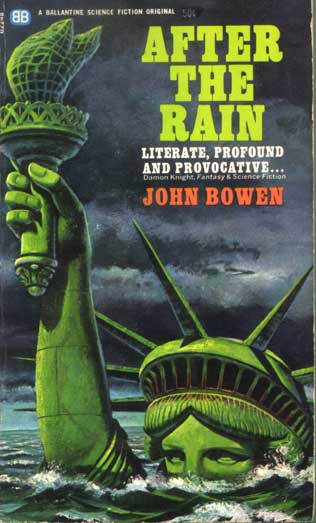
After the Rain picture

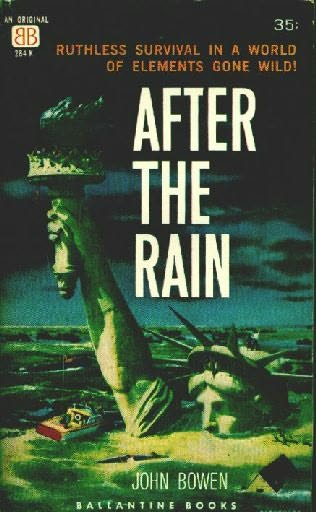
After the Rain picture


[For you paperback geeks out there, the image on the top is the version I found, a reprint from '65. The one on the bottom I found at the Fantastic Fiction page for the book and I suspect is the original cover. I find it interesting how thematically close they are, almost identical, yet they hired an artist to redo it. Why? And where are all these artists today?]


From the back cover:

The British are a hardy island people. At least two aspects of this country are world-renowned - the astonishing number of high calibre writers they produce, and their climate. AFTER THE RAIN is an impressive combination of both. In fact, Angus Wilson says: "If you like cataclysmic novels John Bowen's AFTER THE RAIN is as exciting as any deluge you can hope to find: but if you think deluges are too trivial, John Bowen has a surprise for you: his novel turns out to be satire of the first order."

I share this blurb with you, dear readers, because I found it gives an interesting peek into the marketing and mindset around this kind of sci-fi when it was published. The paperback I found is a reprint from 1965 (the book was originally published in 1959). I guess even back then the british authors had a certain reputation for writing "cataclysmic novels" (the latter is also an interesting term; I wonder when "post-apocalyptic" came about?).

If you haven't figured it out already, the cataclysm in this case is a non-stop, worldwide rainfall that soon floods the entire planet. The incessant rain and society's reaction to it is over quite quickly and most of the story takes place on a raft. Here the hero and a young girl he had met before join up with another group who have a full stock of Glub, an all-purpose food substitute. They are led by a guy called Arthur who first is the only one to demonstrate will and leadership. He then decides to become a god, then the head priest of that god. There is a lot of anxiety over the young girl hooking up with the simple bodybuilder guy on the boat (again with the 60s british sexual inadequacy; what was up with these guys!?).

As you can perhaps sense, After the Rain, falls into the allegorical category of PA literature. It takes a little while to get there and there is some humour and tragedy along the way (and a very good and disturbing scene of a mountaintop refugee camp from the rain), but the primary mission of the book seems to be about society and religion and how man may start over. Once again, this book made me think of Earth Abides. It skims along very similar themes. I kind of got into the book, in the end, because the characters were interesting and I wanted to see where it would all go. It also has a good sense of humour. I would have preffered a truly gritty and detailed look at what would happen to our world if it never stopped raining. We have enough allegory in the world today. When it comes to the end of it, I want details!

I did very much agree with the ending, which had the seemingly dull-witted bodybuilder kill the Arthur-god for going too far. It was a triumph of practicality and simple morality over excessive theorizing. Too bad the author didn't make the same choice at the beginning.

Here, I found a quote by him, where he admits as much, "My second novel, After the Rain, began as an attempt to do for science fiction what Michael Innes had done for the detective story: I failed in this attempt because I soon became more interested in the ideas with which I was dealing than in the form, and anyway made many scientific errors."

He had a fairly prolific career in television, including writing a screen adaptation of Patricia Highsmith's A Dog's Ransom! I would love to get my hands on that. His biography can be found here (and it's where I found his quote as well).

Here's Lantzvillager's review, with a very different and cool cover.

Monday, February 11, 2008

6. Alas, Babylon by Pat Frank

Alas, Bablyon pictureOne more classic in the PA genre, Alas, Babylon falls into the short-term category, where the novel follows the events of the cataclysm itself and the immediate aftermath. In this case, it is a very realistic Cold War nuclear exchange. In some ways, Alas, Babylon is more of a Cold War novel than a true Post-Apocalyptic novel. Though in content it is in every way an "after" novel and a really good one, I suspect that the primary goal of the writer was to address what many considered a very real possibility of the time rather than to explore an alternate future of our collapsed society.

It all takes place in a very small town in Florida. The protagonist is a young lawyer and Korean War vet from an old local and upper class family. He is a bit down and unmotivated, taking out a lot of women and drinking bourbon in his coffee every morning. His brother is a high-ranking intelligence officer and he sends him a coded message that basically says the shit is going to hit the fan. Within a day, the hero in a disorganized scramble tries to prepare for the oncoming nuclear war. He also must take in his brother's wife and two kids.

The preparations and the small town's reaction to his change in behaviour are portrayed in some detail. The theme is this guy trying to get his head around what he has to do and realizing how much of his life and the lives of those around him is totally dependent on the civilized technological infrastructure. The town is portrayed as being even more clueless than him. A black family lives on his land and they are shown to be the most resourceful because they have been kept at such a low level relative to the white society. They know how to fish, farm, get clean water from the aquafer, cook local flora and fauna.

When the bombs do hit, it's quite exciting and really well done. You see it all from the protagonist's eyes, from a distance because there are no direct hits near the town. This isn't a case of total and sudden chaos, because the town stays intact. But radio and television service stops as do incoming deliveries. The first thing to really go is the local economy. I will stop going into geeky detail here, because a lot of the pleasure of the book is watching it all come apart. It really is very thoughtfully done.

Of all the other PA books I've read, Alas, Babylon makes me think of Earth Abides the most. Both are from an American perspective, from very similar times. The major difference is the timescales. But they are saying similar things. Our society rests on a very large and fragile framework. Though this book has greater faith in our human and American traditions, suggesting that with work and organization we can bring them back.

There was one thing that struck me was how incredibly removed from nature the people of this town in Florida are. They sound worse than we are today. For example: "Before The Day, except in hunting, or in war, a five- or ten-mile walk would have been unthinkable." Really? I find that surprising. Also, a woman says that they are going to have to go back to the "old-fashioned" way of feeding babies, breastfeeding. I know that they were insane about their doctors in the 50s, but I assumed most people still breast fed.

An excellent book. I strongly recommend it.

Here is Mt. Benson's better written review. We look at it with very similar perspectives, but I think his point that Pat Frank "doesn't question whether a codified society will survive; he wants to assure us that it will take a firm hand to guide us there" is well made and does differentiate Alas, Babylon from the more final Earth Abides.

5. Pendulum by John Christopher

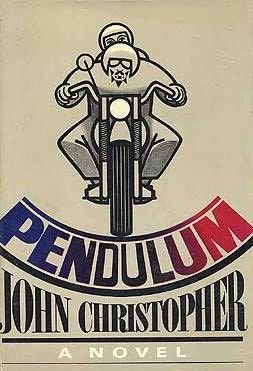
Pendulum picture

I was about 3/4 of the way through another book that I lost while visiting Buzby for a weekend. He kindly lent me Pendulum by John Christopher (in a beautiful first edition hardback), who is warming up to be the author of the 1st quarter of '08 among our group of bloggers. I was trying to avoid reading the same genre, or author without a break in between, but I realize now I had no significant reason for doing so. I'm feeling pretty post-apocalytpic and feeling pretty John Christopher these days, so I may well start the White Mountain trilogy after this.

Pendulum is really a classic example of early 60s english apocalyptic anxiety. It has the great combo of the fear of social chaos and sexual violation. The apocalypse is gradual here, economic collapse combined with an overly powerful youth culture. As England falls apart, the youth grow stronger and stronger. It starts out with student protests, but accelerates as the "yobs", working class youth, turn to violence and robbery. In time, civil infrastructure collapses entirely and cities and towns are controlled locally by gangs on motorcycles and scooters.

The protagonists are a family living outside a university town. The book focuses particularly on the patriarch, a succesful developer and his sister-in-law, who is having an affair with a pretentious professor and supporter of the students. Christopher emphasizes her psychological development, particularly in regards to men. It's all done through the lens of the early 60s, and Britain and I can't tell if the portrayal is true. It is interesting and though she is annoyingly forgiving, the men around her are portrayed quite critically through her eyes.

It's too early for me to say if this is an obsession with Christopher, but one of the strong themes in Pendulum that also shows up in A Wrinkle in the Skin is rape and how women are subject to sexual violation once the protective structures of society are gone. This threat is always hovering around in Pendulum, subtle but very disturbing and it creates a lot of tension as things go bad. I'm not quite sure what to make of it, because you sense that Christopher may lack some distance himself from the issue. It seems to threaten him as a man, perhaps.

Another thing that I think is worth discussing in Post-Apocalyptic literature is how the time frame is handled. Does the book deal with the disaster and immediate aftermath or does it go for the longer view, like Earth Abides. At first, I thought Pendulum was going to be very immediate, but it actually leaps ahead several times. It made the novel deeper for me and it allowed Christopher to take the social degradation to a very interesting place. The youths and their wild behaviour is portrayed through the eyes of educated, upper-middle class males for the most part and thus gives the book a very conservative tone. But the way the story develops moves the book beyond just being a caution against youth left idle and too strong.

A really interesting book and an excellent addition to the stable.

Wednesday, February 06, 2008

4. Conquistador by S.M. Stirling

Conquistador pictureMt. Benson turned me on to this author. I suspect he has a contingency of nerdy fans who like his combo of cool ideas, detailed technical specifications and manly action. Conquistador is about a WWII vet who accidently opens a gate to another dimension in the basement of his Oakland phone in the late '40s. He goes through it. 70 years later, in a near-future bay area, a forest ranger discovers an impossible california condor in a bust on some endangered species smugglers. He follows up on the case, eventually discovering a complex conspiracy. It turns out the vet has discovered an alternate dimension where colonization never took place. He slowly builds up an empire there. His empire is having it's own political problems and they are spilling back out into our world. The alternate dimension is an ecological paradise, never having been touched by progress. The forest ranger, who is the protagonist gets caught up in their war.

The set-up is cool because the whole thing takes place in northern California, in both worlds. And Stirling has done his research. So you get stinky, crowded, polluted, modern Bay Area juxtaposed with the untouched version. It's not totally untouched, though, as the newcomers bring with them the same kind of diseases the original colonists brought, with the same effect on the native populations. They also have an old-school white male mentality and maintain a society that reflects that. It's hard to tell where Stirling stands on this issue. Sometimes you get the sense he is being critical of it, but other times there is a conservatism there that one often finds in the nerd world.

And speaking of nerdy, this book is definitely for the geeks. There is an excessive attention to detail and an exaggerated emphasis on the main hero's manliness. The two paragraph, detailed description of his weightlifting routine was a great example of where the author was trying desperately to let us know that he knows all about weightlifting by telling us about things that a real weightlifter doesn't even pay attention to. But hey, I'm a geek myself and I mostly appreciated the attention to detail. I'm getting older, though, and I have less time. Stirling is just pushing it. I imagine if the details went a little longer, I might not have had the patience to make it through the end.

As it was, though, it was an enjoyable read with a really cool setup. I think I'll probably get around to his post-apocalyptic trilogy because if he applies the same kind of attention to a world without engines, it could be quite interesting.

Friday, January 11, 2008

3. Blood is the New Black by Valerie Stivers

Blood is the New Black pictureI must enter this review by letting everyone know that the author is a friend of mine. She's closer to my sister, but we've hung out enough that my objectivity may be in question!

Blood is the new Black (great title, btw) is another iteration of the vampire mythos, this time taking place in the corporate hallways of a major fashion magazine. The hero of the book is a practical but very fashion-conscious young woman who gets an opportunity to intern at an elite fashion magazine in Manhattan before her final year of med school. Though style is clearly in her genes, she has chosen a more pragmatic path after her mother, an up and coming designer herself, abandoned the family for the life of haute couture and sophisticated partying. She is reluctant to take the internship, but finally does.

Of course, things are immediately weird at the magazine. It's a difficult tension because we all know that her bosses are going to be vampires. The suspense and enjoyment comes from the manner in which this vampire myth manifests itself (which is quite well done) and from figuring out who and who isn't a vampire (not so well done). It's an enjoyable and quick read. One sympathizes with the main character and you can really feel the stress of being in such a job even if the nasty bitches that ran the place weren't vampires. The plot moves forward well, though the internal thinking style I found a bit chatty, but I think this probably accurately reflects the constant noise and confusion that goes around in women's heads. One problem I had were the constant references to specific types and brands of clothes that people are wearing. These were very specific. It made it so I couldn't really figure out what anybody looked like. Can't blame the book, though, as this is probably appropriate for the intended audience. I imagine this must be what it's like when my sister reads a Mack Bolan novel.

The manifestation of the vampire myth in the modern, fashion world is fantastic. It cleverly integrates all the vampire clichés, updates some of them and wittily critiques high fashion. This is a bit of a spoiler, but it goes so far to explain how the vampires were responsible for changing our appreciation of the feminine form from the robust, curvy figure of the 19th century to the emaciated, dried out look of today (which fits much more the vampire aesthetic, obviously). There is a lot of this and it is quite enjoyable.

All in all, Blood is the New Black is a good read, which I think will be particularly enjoyed by vampire fans and young, stylish women.

Thursday, January 03, 2008

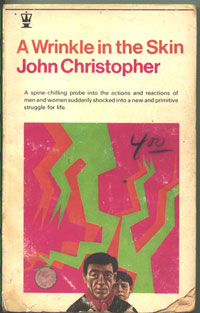
2. A Wrinkle in the Skin by John Christopher

A Wrinkle in the Skin pictureI confused John Christopher with Christopher Priest when I picked this up. No harm done since both are great writers of around the same age and touching upon very similar genres. John Christopher is best known for his children's sci-fi books, like The Tripods trilogy which we read and loved in elementary school. I see that he has a very long career as an adult sci-fi writer before that, as well as just being very prolific under a bunch of other pseudonyms as well.

A Wrinkle in the skin (reviewed earlier at Mt. Benson) is actually at the tale end of his adult writings. It explores (and perhaps concludes) similar areas as No Blade of Grass. It's about a widower who lives on the island of Guernsey (a British Crown Dependency in the channel, closer to Normandy) growing tomatoes. There is talk of terrible earthquakes around the globe and within 5 pages the narrator is in one. But this is a mega, mega earthquake. I don't want to give away how big it is, but I was quite surprised at certain points. The story is about him making his way back to Sussex to find his daughter who was at school there. Along the way he struggles with the dangers of the new, ruined world. The chief danger, as usual, is other humans.

I found this book to be a page-turner. I was anxious to find out what would happen next and there is a strong feeling of threat throughout. His descriptions of the devastation are vivid and captivating. Also, the hero is cool. He's removed and semi-competent. There is none of the writers' crutches of frustratingly stupid behaviour. I was so enjoying the post-apocalyptic scenario that I didn't realize that I was also becoming caught up in the emotional journey of the hero and his relationships with the other survivors around him. I ended up finding the book very satisfying overall.

An excellent addition to the post-war British PA genre. Note the scanned cover of the edition I found.

1. White Man's Justice, Black Man's Grief by Donald Goines

white man's justice, black man's grief pictureDonald Goines was a black author who wrote novels about black life in America in the 70s. While his books are clearly fiction, he experienced and saw most of what he wrote about. And those things are rough. I don't know how they were published at the time, but they are currently released by Holloway Press, an LA publishing house that specializes in black literature. You can often find them for pretty cheap in used bookstores. Goines is a great writer. His plots can be a bit obviously structured and his style employs techniques frowned upon by "literary" types (he often tells rather than shows), but shit happens in his books and he makes it seem real and immediate. And he pulls no punches. It borders on the sensationalistic, but never goes over because you believe it when you are reading it. I warn you though, there is some seriously harsh shit in his books.

Knowing this, I was particularly hesitant to pick up White Man's Justice, Black Man's Grief because it all takes place in prison. My fears were well-founded as there are some extremely disturbing scenes of male rape (shit that I hadn't even conceived of, which is bad). But the story is primarily concerned with the hero, who gets thrown in the county jail for possession of a concealed weapon, and two friends he makes, a white guy and a younger black guy. They join together because of a shared ethos of honour and together they handle the challenges of power and materials that go on in the county jail. The general theme of the book is that if you are black, you are screwed in the U.S. justice system. I doubt things have changed all that much since this was written in the early '70s.

A quick and enjoyable read, though if you're squeamish, I'd recommend picking up one of Goines books where the rape and violence takes place on the streets of the ghetto, rather than in the prison cell (though why this is less disturbing, I'm not really sure).

Monday, December 31, 2007

2007 wrap-up

Self-Criticism look back at '07
Well, a really pathetic finish to what started out as a torrid year of reading. I do have some very good excuses, but ultimately, despite them, I think had I just focused a little more and spent less time noodling around on the internet I could have easily gotten the 50. My excuses were that I was in school full time and the final semester was really busy, with a group project to graduate. Everybody seems to agree that group projects are always a nightmare and this was no exception. On top of that, there was a last-minute real estate Step to Maturity in December. So reasonable excuses, but still, if I had spent those 10-20 minutes just reading instead of arguing on some obscure forum the role of narrative in roleplaying games, I probably would easily have reached my goal.

This year, though, I really did get some great reading done. I finished the awesome (though sadly not truly completed) Amtrak series. I got into George Pelecanos, a great find and got a taste of Dennis Lehane and Michael Connelly, also very promising. I read some must-read sci-fi authors, like Theodore Sturgeon, Robert Charles Wilson, Tim Powers and Arthur C. Clarke. And I found a few gens here and there, like the Wreck of the Dumaru, Among Madmen and Conquest in California. Finally, it was a big year for me for Christopher Priest and Chuck Palahniuk, both of whose writing has given me a lot of enjoyment. The truth is that, despite the crumbling of civil society and the general idiocy level of most of the population of the developed world, there are still tons of great books out there and great authors still producing excellent writing and story. I am thankful for their hard and creative work.

Congrats to Others
Kudos to Print is Dead, who just kicked some serious ass this year. Not only did he read 62 books, but he also brought in a wide range of titles, introducing me to some sci-fi authors I hadn't heard of, as well as keeping me up to date on some interesting graphic novels. Honorable mention to June 23rd, with a solid 27 and to the steady MtBensonReport, who pulled through a tough and distracting year with some interesting titles (though with his all-time low of 15 books read, he's definitely going to get some good draft picks this year). Another Honorable Mention to LeBraconnier, a newcomer who started off strong, but had a quiet 4th quarter as he worked towards bringing a new reader into the world. And finally, I can't end this year without recognizing Meezly's strong showing. She's becoming a pretty impressive used bookstore patron herself these days, coming out with an armload of titles I've never heard of.

Looking Ahead
As for next year, I am shooting again for 50. I'll be working fulltime, but no more school (assuming I pass all my classes in the final semester). So it should be doable. We have a strong new addition to the meme, Doc Holaday, who has already posted a bunch of interesting books to read from his own past and looks, based on past productivity I have seen from him in other cultural contexts, to be quite strong. Finally, I hope we can see more from Buzby this year, who brought a lot of excellent non-fiction to the table in 2006. He has a good excuse for his no-show in 07 (another new reader on its way), but I think he will be able to step it up this year.

Good luck on '08 everybody! Let's do this!
46. Right as Rain by John Pelecanos

Right as Rain picture

A very solid and enjoyable effort. Many of the themes that were present in the Washington Quartet are here in this book, but it being a one-shot allowed me to just get into the story. Pelecano has a strong voice and consistent themes (relationships between black and white men, men trying to get their life back together, inner city economic failure) and I suspect that they may get a bit repetitive. However, so far this hasn't happened for me. One reason is that I agree with his themes. He's clearly an American who is proud of his country, but who is outraged by what has happened to it. He sympathizes with the underdog and the downtrodden and he has clearly seen enough of that to know that's often where the real, hardworking and proud America still exists. Another reason is that his characters, the main and the secondary ones, are cool and entertaining. The main guys are badasses in the right, subtle way and he has all kinds of rich secondary characters, like redneck meth farmers and corrupt cops.

I'm a fan of Pelecanos, but I'm going to space out reading his books. Maybe one every 6 months, maximum.

45. Ripley Under Water by Patricia Highsmith

Ripley Under Water picture

This is the 4th book in the fantastic Ripley series. I actually was suprised to see that there are 5 books in the series. I've been avoiding the Ripley series in the last couple of years, just because I have gotten so much pleasure from her stand-alone books. But I found this in a used bookstore in Berkeley for a decent price and figured it was about time to catch up with everyone's favorite civilized sociopath (or is he?).

This novel revisits the guilt of Ripley's past crimes as an American couple moves into his small french town and start intimating that they know what he's done. This moves into a campaign of subtle and not-so-subtle harrassment that forces Ripley to react. You definitely need to have read the previous Ripley books to enjoy and follow this one. There were at times so many reference catch-ups and backstory explanations that it got a bit annoying. I think it was a while between this and the last one and Highsmith was either reminding herself or her editor made her do it.

Despite these small interruptions from the flow, the book is really engaging. At this point, you've kind of come full circle with Ripley. As a reader, you are totally rooting for him (at least I was), though Highsmith still does a fantastic job of making you feel slightly uncomfortable with this. His opponent seems just as psychotic as Ripley, but he's uncivilized about it, so you hate him. It's hilariously ironic to read Ripley's thoughts about the antagonist and his wife and how abnormal and psychotic he thinks they must be.

The whole Ripley series is a study of morality. She pushes the boundaries of what is acceptable, taking the reader along with Ripley in his love of fine foods, good music, pleasant conversation and the french countryside as well as his penchance for a little murder or corpse-hiding when these things become necessary.

What is weird to me is how when the first Ripley movie came out, there was this big flurry of "re-discovering" Highsmith, with lengthy articles in (where else) the tiresome New Yorker. As if her literary legacy had completely vanished. But her books were being constantly published in the 80s and 90s and you can still find tons of used copies in non-movie branded versions. I suspect that the mystery-reading community (especially in England) has always considered her to be a mainstay. It's just that suddenly money in the form of a big movie found her and now "real" literary critics have decided that she has now surpassed the lowly depths of her genre and is allowed to be elevated to their lofty heights.

If you have never read any Highsmith, you definitely should. As I say, her books can be found in decent quantities in most used bookstores. If you are going to read the Ripleys, start at the beginning. They are a greater commitment, but definitely worth it. But any of her other books are just as rewarding and sometimes much darker and more disturbing.

Here is the order of the Ripley books:

The Talented Mr. Ripley (1955)
Ripley Under Ground (1970)
Ripley's Game (1974)
The Boy Who Followed Ripley (1980)
Ripley Under Water (1991)

Holy disaster! I see that I made a terrible error. Ripley Under Water is the last in the series! I assumed that it was the penultimate one based on the listing I found inside two books. Wow. That screws me up. Now I am going to have to scramble to read The Boy Who Followed Ripley and then try and fold it under the last one in my brain. Not easy to do, people. This is what you get when you just buy books willy-nilly without a plan.

44. Gamesmanship by Stephen Potter

gamesmanship picture

My dad recommended this to me. He told me that when he was at UBC in the 50s, Stephen Potter came to do a lecture. He described him as a small, unassuming looking man who spoke very quietly and soberly, but by the end my dad laughed so hard that his ribs hurt.

It's a manual on how to defeat your opponent without actually being skilled at a sport or cheating. The games are british popular sports from the early middle of the 20th century: lawn tennis, croquet, billiards, golf. It's a very slim manual, with a few hilarious diagrams and instructions on how to have the more sympathetic injury, or how to create an inflated reputation. The humour is sometimes very dry and couched in very different cultural mores, but the spirit is the same today and this book will appeal to anyone with a competitive spirit. I laughed out loud many times and I will definitely use some of the techniques here.

He also has a book called Lifemanship that I definitely want to read.

I recommend it highly.

43. Survivor by Chuck Palahniuk

survivor picture
I've read enough of Palahniuk's books, that I am starting to get a sense of his style. Sometimes there is too much style in his writing. It becomes clever and precious. However, he so far has always laid his style on a solid foundation of story. Things happen in interesting ways in Palahniuk's books. This is certainly the case with Survivor, where I enjoyed most of the ride, but at times felt a bit like I was plodding through the repetitive parts to find out what happened next. In the end, it won me over. This book has some really crazy ideas in it and pretty imaginative over-the-top stuff goes down. It's worth a read.

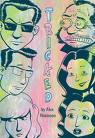
42. Tricked by Alex Robinson

tricked picture
I really don't know anything about the context of this graphic novel. I just found it in the english section of the comic book wing at the bibliotheque nationale. It had a nice, solid line style and what looked like an engaging storyline from the few snippets I skimmed.

The story follows six characters in their individual threads. They all take place in or around a major midwestern city (Chicago?) and as the narrative progresses, you start to see the gradually increasing connections between the threads. Each story is intriguing and the characters interesting. And the payoff was, at least for me, satisfying.

A good read. Pick it up if you see it at your local comic shop or library.

Sunday, December 02, 2007

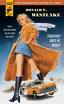
41. Somebody Owes Me Money

somebody picture

I read this book actually about a month ago and completely forgot about it. It had been in my on deck lineup for a while (possibly through the Mt. Benson report). I'm a huge Westlake fan, particularily his Parker books under the Richard Stark Pseudonym. His earlier novels often show little flashes of the granite hardness and cynical criminal knowledge of that incomparable series, so I always like to read them. Somebody Owes Me Money was much more in the light vein, with a lot of emphasis on the life of a humble NYC cabbie and gambler. It was wrapped around a not that intriguing mystery and the kind of clever idea that the murdered guy was the protagonist's bookie who owed him on a big win. In order to get paid, the hero has to solve the mystery. It passed the time. Got me to #41.

In looking for a picture for this book, I'm a little surprised to discover that Hard Case Crime is re-publishing it. I'm not sure it merits it. But I'm glad for any extra money that gets into Westlake's pocket. He deserves it. The copy I read is an old Signet paperback from 1971.

Friday, November 16, 2007

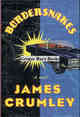
40. Bordersnakes by James Crumley

Bordersnakes picture

Well I really fell off the trail these last couple months. I blame roleplaying games. Way too many cool freebies to download. Though there is reading and story in these publications, I tend to not read them from beginning to end and rarely complete them. If I did, I might consider counting them here. Worse, they contribute to my internet-driven inability to concentrate on one thing for extended periods of time. So realizing that I'm getting near the finish line (and that Print is Dead is clearly on the way to taking this year's championship), I'm pushing myself to get back in gear.

This colourful-covered, easy-reading crime book from 1996 looked to be a good place to start. I picked it up at the only english language used bookstore east of McGill, S.W. Welch's. The owner, who reads a wide range of crime books himself (and likes the Parker books), said that Crumley's books were pretty good and well known. I was a little surprised I'd never crossed the paths of detectives Milodragovitch and Shugrue before.

I think I jumped in late in the series. The two detectives have split up and are out of the game, but get back together to right individual wrongs. The plot becomes very complex, revealing that these wrongs are wrapped up in their pasts and may be connected. I'm being deliberately vague here because it was all kind of complex and at times a bit confusing. Crumley is one of those crime writers who makes little leaps of logic and expects his readers to follow along. I'm too lazy to do that, especially when I didn't have much invested in the characters. I think jumping in at the end of these two characters' stories was a factor here. But not entirely.

This book is very violent and sometimes over the top. I like violence and excess, but I don't like sadism and excess for shock. Bordersnakes walked a thin line. The first half is really a fun ride, with the two of them driving all over texas and mixing it up with a range of freaks, criminals and weirdos. But it gets darker and nastier and less realistic in the second half, while plummeting into the darker sides of the characters themselves. For me, this went too far into self-indulgence for me and got really nasty, with a very detailed and horrific exposition of a rape scene. It was just too much. The fact of it was enough. The detail felt pornographic and indulgent. The author lost me at that point.

I'll keep an eye out for the earlier books and if I find them cheap and am stuck in an airport or something, I may pick them up. I suspect the earlier books may have been cleaner and tighter and less extreme. Bordersnakes moves fast and there is lots of good action, so it was a good way to ease back into the 50 book race.

Saturday, September 22, 2007

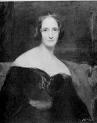
39. Frankenstein or the Modern Prometheus by Mary Shelley

Mary Shelley pictureI read this once before, the beautifully drawn Bernie Wrightson edition, but I don't remember it well. I was probably too young to get through the early Victorian (or is it pre-Victorian and what was that period called?) language. Now, however, I thrive on the stuff.

Frankenstein is an amazing book, especially considering the stage in literature that it was written. I imagine that readers in the early 19th century must have been quite horrified by the scenes when the monster appears. In terms of the horrific things he does, punches really aren't pulled. All the loved ones get killed, innocent children and women included. Also, the monster is not slow and shambling. He's super fast and dextrous, jumping out of windows and climbing up rocky bluffs with ease.

My take on this book is that it is a condemnation of humanity. I suspect my own position on this pathetic species is colouring that interpretation. But she does a good job of showing us humanity's selfishness and cruelty through the eyes of an outsider and she portrays Dr. Frankenstein as at best morally equivocating and possibly even the bad guy of the story. You really do sympathize with the monster.