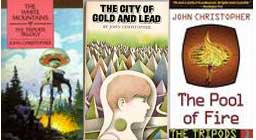
Got these through the 50 books network. Jarrett found the first one and sent it on to the Lantzvillager, who passed it on to me with the second one as well. I found the third (in a special reprint with a new forward from the author) at the bibliotheque nationale. I am compressing all 3 in one post because my two predecessors did a better job than I in providing the overview of the plot of each book. In short, it is the story of a young man brought up in a post War of the Worlds earth, where humans are kept docile by a "capping" ceremony done to them when they reach puberty. Giant metal tripods patrol pastoral and sparsely-populated human lands. The young man avoids the capping and discovers a cell of rebels. He joins them and works to take down the alien oppressors.
I found these books to be fast, a bit shallow, but thoroughly enjoyable. I think the lack of depth is actually the lack of "boring stuff" that most 13-year old boys would not find interesting. In that view, these books are extremely tightly structured. It does get richer, though. I found Christopher's portrayal of the aliens nuanced. At first, you hate them, but you also get enough of a glimpse of them that you can't hate them. Since their behaviour very much reflects our own human colonization (of other humans and animals), you can't ultimately hate them without hating humans. Christopher is smart like that. He doesn't let his readers off easy, which is great for adolescent boys who just want to kick some alien ass (though there is a good amount of that as well).
The period where the heroes are in the alien city is quite disturbing and frightening as well. It's all been quite well thought through. The other thing I enjoyed was the pastoral nature of the world. The lack of technology and competition for resources kind of makes the alien-controlled earth a medieval fantasy land, which Christopher does a great job of describing. He throws out enticing details like food in a market stall or modes of dress that efficiently add richness to the atmosphere.
These really are fantastic books and I strongly recommend them for anyone looking for a gift for a young reader (probably better skewed towards the males).
Lantzvillager's review of the first and second books (I guess he hasn't finished the trilogy yet!)
Jarrett's review of the first, second and third books

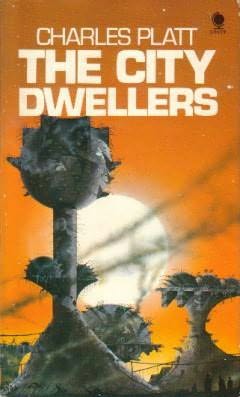 Found this one at a crazy, disheveled used bookshop way out on Mont-Royal. In the basement floor they had a few bins of english books, mostly crap from the late 80s and 90s, but I found this old british sci-fi book. It was thin and nicely yellowed, perfect for my travels to come. I didn't really know much going in, beyond that it was about characters in growing and dieing cities and it had some nice written language at the beginning.
 I have toyed with Donald Hamilton in the past. It was a reading encounter with great promise that led to a real deflating letdown. He is best known for the popular Matt Helm series of manly paperbacks found in drugstore racks in the 60s and 70s. His early books were also said to be a big influence on the Parker books (written by Donald Westlake under the nom de plume Richard Stark), otherwise known as the best crime books ever. There were one or two books in particular whose titles I forget that I did read and they really did kick ass. I was so psyched because Hamilton had written so much more and they are so easy to find. I even had hope that the Matt Helm series might be competent. Unfortunately, something happened to Hamilton along the way and the other books I read by him had lost the tight, cold intelligence that had attracted Westlake. They were, instead, pandering to the audience (obvious macho tropes) and, far worse, demonstrated inefficient and emotional character behaviour. So I had to let the other Hamilton books on my on deck shelf and let go of that relationship.
 I picked this one up at the Kitsilano branch of the great Pulp Fiction bookstore in Vancouver. The British packaging caught my eye and the blurbs made it sound like it might have the right stuff. The protagonist is a female private investigator in contemporary London. Bad Company might not have been the best place to start since the heroine spends the whole time kidnapped, but it was an entertaining and well-written read nonetheless. The London underworld is richly portrayed and the lowlifes, from the stupid, inexperienced thugs who pull off the kidnapping to the serious hard and well-dressed ones who are trying to stop them as well fit well into the British empirical mold. The ending was a bit anti-climactic, but I think realistic. I'll be keeping an eye open for other Liza Cody books.
 This is a short (as many of his novels are) H.G. Wells novel that I found somewhere while traveling. It has a hilariously wrong yet accurate cover of a man and woman fighting off a dog in some ruins. It's wrong because though this scene actually happened, the picture looks like a Vallejo-esque barbaric fantasy. In the book, it is two wimpy future city-dwellers who, dissatisfied with modern life, make out for the country. At one point, they do get attacked by dogs, but the scene emphasizes how hopelessly unprepared they are for life outside of the city. I really should have scanned that cover, but I left it in the free bookshelf in the laundry room of my mom's apartment. Somebody took it so maybe it got read again, which would make it worth it.

 One more classic in the PA genre, Alas, Babylon falls into the short-term category, where the novel follows the events of the cataclysm itself and the immediate aftermath. In this case, it is a very realistic Cold War nuclear exchange. In some ways, Alas, Babylon is more of a Cold War novel than a true Post-Apocalyptic novel. Though in content it is in every way an "after" novel and a really good one, I suspect that the primary goal of the writer was to address what many considered a very real possibility of the time rather than to explore an alternate future of our collapsed society.
 I must enter this review by letting everyone know that the author is a friend of mine. She's closer to my sister, but we've hung out enough that my objectivity may be in question!
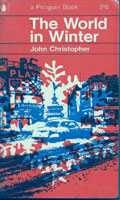
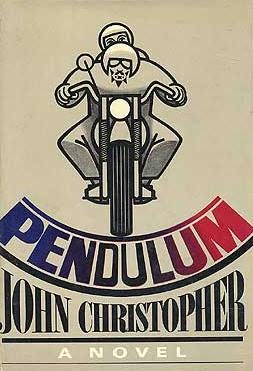
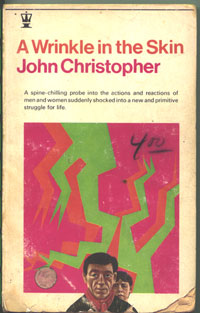 I confused John Christopher with Christopher Priest when I picked this up. No harm done since both are great writers of around the same age and touching upon very similar genres. John Christopher is best known for his children's sci-fi books, like The Tripods trilogy which we read and loved in elementary school. I see that he has a very long career as an adult sci-fi writer before that, as well as just being very prolific under a bunch of other pseudonyms as well.
 Donald Goines was a black author who wrote novels about black life in America in the 70s. While his books are clearly fiction, he experienced and saw most of what he wrote about. And those things are rough. I don't know how they were published at the time, but they are currently released by


 Posts


