Saturday, December 31, 2005

58. An Affair with the Moon by David Gilmour (and end of year summary!)

[note: end of year summary follows this write-up so that I can keep my book count consistent with my blog posting count.]

Affair with the Moon pictureI probably should have waited a little while longer before picking up my second novel by Gilmour, (Here's the first) but I was looking for a quick and entertaining train read. Affair is about the up and down friendship between the protagonist, who is a semi-slacker upper class Torontonian and his wild, charismatic friend. In an interview, Gilmour said that his books are all about his search for true love. Until his most recent publication, where, according to him, he realized he discovered the most pure love in the form of his son, all his books are about the failure of that search. An Affair with the Moon tracks his friendship with Harrow Winncup, beginning in their fancy private school and onwards through adult life where Harrow gets involved in music, drugs and eventually a scandalous murder.

The love theme comes to the surface of the narrative from time to time, sometimes even explicitly. Gilmour is toying with the notion of two good male friends being like lovers. I didn't buy it. It felt forced to me, overly psychological. The story is strong, but the stronger emotional theme, to my mind, was the protaganist's relationship with X's mother, who for various class reasons, hated him and forced him out socially. The narrator's anger seemed much more real when expressing the resentment created when a woman (mother in this case) separates male friendship. Those homoerotic overtones seem false, created to appeal to the female and/or post-modern reader, especially coming from such an overtly heterosexual writer. Gay is gay and that kind of homosexual romantic love and the love between two men who are friends are two very different things.

The book moves along nicely, with the similar witty and dark asides that Gilmour is so good at. It isn't quite as funny as Sparrow Nights, but it gets into slightly darker territory. I'm curious to see how Gilmour continues with his study, but judging by the two books of his that he's read, he expresses the love of a man for a woman better than that between friends.

End of the year summary

I close this 50 books meme with a great deal of personal satisfaction. I'm not into memes particularily, but when Hannibal Chew passed this along to me, it caught my attention. I can't remember exactly why, perhaps my subconscious recognized that it would be a helpful tool for me. I'm one of those people who considers himself a reader. I read a lot when I was young and I read fast. I got into books. This died down considerably in college, where I lost the desire to just read (too much forced reading, too much bullshit surrounding reading). I was aware of it at the time and it wasn't until 3 or 4 years after graduation that I started reading books again. So I was still considering myself a reader in the decade since. But I actually wasn't reading all that much. I always had a book going, but sometimes it would stay closed for weeks. The increasing power of the internet distracted me far worse than television had ever done. I think I implicitly realised that 50 books in a year (about a book a week), would be the path of fire through which I must cross in order to actually merit the title of "reader".

I have crossed that path and what I have learned is that for me to continue to be a reader, it is going to take the same kind of vigilance, discipline and constant self-awareness that an alchoholic uses to stay off the bottle. One day at a time.

chart
If you look at a chart of my reading rate throughout 2005, you'll see a good start in January, a slow drop-off into spring, near cessation in summer with only a strong burst in August (thanks to a couple of weekends and a trip to the Gaspésie) to keep me alive. When autumn came, I got so busy with school that I only read 2 books each in the months of September and October. Something spurred me at the end of November, made me realize that I had to start busting it soon or I wouldn't make it. Again, I have to give a lot of credit to the Mount Benson Report, whose consistent, steady progress kept me focused on the passage of time. I had caught up to him very briefly at the end of the summer (at 32 books, I think), but then he quite quickly moved by me and I saw the truth of the parable of the tortoise and the hare.

Furthermore, the books that I had read had mostly been really good. They triggered long-dormant interests in genres, authors and specific books that I'd always been curious about. The Ballards, the Phillip K. Dicks re-opened a love for science fiction and all the ways the world can go in the future and thus got me interested in good new sci-fi. Just like physical training, I found my reading skills increasing. I could read faster, for longer periods and was retaining more. During the last part of the year, I was just tearing through books, driven by the tight schedule, but more importantly, riding the momentum of great stories and crazy ideas.

Coming out at the end of the year, having read 56 books, I feel I have learned a lot. The total of all this reading is more than the sum of its parts. As for the parts, I can now honestly say I have some understanding of Ballard, Philip K. Dick, a taste for the tone of Russian literature, a solid introductory foundation into contemporary science fiction, a good survey and starting point of modern english-Canadian authors and many important literary puzzle pieces that were previously missing in my picture of the world.

As for the total, well I'm not sure yet. I think the dividends are still calculating themselves in my mind and soul. Practically speaking, I know this has been a huge boon in my writing, both in motivation and in a realization of how much learning I still have to do. To consume such a range of imagination and craft is humbling. I may have some smidgen of talent, a good education, a bit of life experience and an open enough mind. Not a bad start, but I need training. If I'm lucky (and this is really pushing things) I could be considered the Toshiro Mifune character in the Seven Samurai, strong and loud, wearing the stolen armour and weapons but I've just run into a bunch of guys who could cut my topknot off while mending their kimonos.

Because, Damn, there are some writers out there! I won't even address the sheer quantity of good material these authors produce (which you don't want to think about too much anyways). I was forced to pause several times at the ability of a good writer to capture something (a moment, a feeling, an action, a description, a behaviour, a character) with a combination of words and just re-read that sentence or phrase. It's almost magical. If you look at the writing closely enough, you can build up arguments about the choice of words, the structure, the order, the rhythm that makes it so effective, but there is some invisible power going on that connects the words to your brain and makes them take off there. That is a miracle, that we have such a power in our consciousness, to be able to look at some words on a page and derive a profound sensation from that, so profound that it can be as exciting as the action itself. We are lucky creatures indeed.

So I'm going to push forth again this year, resetting the counter to zero and shooting for another 50 books. Aside from the manifold benefits I have listed above (which I hope will continue to develop in new, interesting ways) I also just have tons of more books that I want to read! Thanks for your support everyone (and all the great suggestions) and congrats to all of you who participated. I see that beyond me and Hannibal, most of you get around 20 to 30 which is still no joke, especially considering your burdens of fulltime employment. I hope you all keep posting write-ups whether you shoot for 50 or not. They were very helpful and enjoyable to me.

57. The Crystal Shard by R.L. Salvatore

shard pictureThe Crystal Shard is the first book in the Icewind Dale trilogy of the Dungeons & Dragons based series that takes place in the Forgotten Realms campaign setting. Geeked out yet? Good, because this was the book that sent Mr. Mond on his path towards that Satanic game. He was curious how it would be perceived by an adult who had already read a lot of that genre, to determine if his own feelings for the book were due to it's merits or his own sentimentality.

Simply because of the heavy branding, I felt a bit hesitant. But when Mr. Mond actually gave me a copy as a present, I dived right in. At first, I found some of the sentences a bit simple and felt a bit overwhelmed by way too much exposition. I was worried the book was aimed at adolescent boys who slaver over every little bit of world detail or background. But the story picks up it's pace and there are a lot of pretty cool characters. Furthermore, the plot is sufficiently complex to keep you interested, but well-structured so you don't get lost. It has lots of pretty well thought out regional strategy and local politics. Once all these elements came together and started moving forward, it made for a very satisfying read. On top of that, there are lots of cool magic and fantasy moments, where Salvatore does a great job of providing cool detail and context. The halfling character, an unwilling politician, has a gem that allows him to influence others. It ends up being both a major plot point and a great tool for revealing the character. There is also a great backstory of the creation of a powerful, magical war hammer that is really cool.

I had a great time with this book and would pass it on to others who are fans of the genre. I would read the next in the series, but I wouldn't rush to get it. It's nice to know that they are out there and if I'm looking for that kind of entertainment, there is a quality source of it. But it is firmly ensconced in its genre and the tropes of medieval fantasy can be emotionally limiting. I also have this sense of leaning over a cliff (or maybe starting to climb up a immensely long ladder) when I think about all the books you could end up reading, all the characters, all the maps, all the locations that would fill your brain. It makes me hesitant to get too much farther into this world.

I'll send it out to one of you. Mr. Mond has made a convert!

Friday, December 30, 2005

56. A High Wind in Jamaica by Richard Arthur Warren Hughes

wind pictureThis was on my parents' bookshelf for as long as I can remember and my dad mentioned it several times as one of his favorites. It's about a group of english children who get kidnapped by pirates when leaving Jamaica for England sometime around the turn of the century. It's an amazing book, all told from the voice of an adult who sees things the way the children do. It has a similar tone to some of the english children's adventure books like Box of Delights or Swallows and Amazons but you as the reader can tell the whole thing is totally grounded in reality. It's the way the kids see the world that makes it all so fantastic and dreamlike.

There is also an interesting critique of colonialism and the wavering moral certitude of the British Empire just after its peak. I really don't want to say too much about what happens in the book because a lot of the pleasure is in just experiencing the narrative for yourself. Strongly recommended. A quick read that will take you far from yourself.

Friday, December 23, 2005

55. Dorsai! by Gordon R. Dickson

Dorsai! pictureIn my ongoing effort to read as much classic sci-fi as possible, I accepted this recommendation from my friend, Mr. Mond, whose father, an electrical engineer and silver age sci-fi aficionado (i.e. old-school nerd), recommended it to him.

It's the story of Donal, a young man from the Dorsai race, a planet of warriors in a galaxy of post-space colonization humans. The Dorsai hire themselves out as mercenaries. The relationships between the worlds are governed by contracts, basically a skill-sharing arrangement where contracts on labour are traded. So if you're a smart scientist, you can contract out to a planet that needs scientist. They in turn may provide (as the Dorsai do) good warriors.

Donal turns out to be extremely skilled, so good that most of the story is about him quickly impressing his superiors and making his way higher and higher in power. He is clearly geared for bigger conflicts and he becomes a central player in a war between who governs the contracts. This is one of those books where the scale is huge, but the book is quite short. A lot happens in few pages. I think this marks a lot of the sci-fi from the 50s and 60s, where authors were free to expand on epic cycles in great sweeping narrative, without getting too down and dirty with the detail. These days, most sci-fi books seem to have a lot more pages, and anything large in scale takes at least a trilogy before someone controls the universe.

This book was so popular that Dickson spun it off into a much larger series, called The Childe Cycle or the Dorsai Series, which deals with the notion of humans evolving into something beyond their current form. This theme is just touched upon in Dorsai!

It's a good read, quick and well put together. I found it more enjoyable as a military action book, where you get to see a serious ass-kicker kick ass. I can see how it would appeal to young men. There are some almost fascistic elements, or at least moments where the deaths of millions of civilians is basically treated like a good military strategy, though ultimately Dickson is addressing much bigger ideas. Still it made me wonder where he was going. I'll have to read more into the series to find out.

Wednesday, December 21, 2005

54. A Gathering of Old Men by Ernest J. Gaines

Gathering pictureAnother grab at the library. This time a direct recommendation from Mike who was actually standing right there!

It's the story of a small parrish in Louisiana in the late 70s that is still pulling itself out of its history of slavery. A white foreman is shot by an old black man. The old guy is joined by a dozen of his peers, and the young white woman who owns the land he works. Each of them brings a shotgun fired once and claims that they did it. A standoff ensues that slowly unveils the history of pain and degradation as well as the intransigence of the various groups who live in this area: the poor blacks, the rich whites and the cajuns.

The book is structured so that almost each chapter is narrated by a different voice, giving the reader all the viewpoints. I found it really got interesting when it leaves the location of the standoff and follows the young football star brother of the guy killed. He represents the younger generation who wants the family to let go of its desire for revenge and move forward from its old traditions. There is an incredibly tense scene when he returns to his house and tries to convince his father to not go get revenge. The house is filled with all the hangers-on, supporters and just plain troublemakers who await the decision of the family patriarch (who has already been portrayed as a scary dude).

We forget the brutality of slavery and how it's really not that far away in time. This book, as well as being a rich portrayal of a complex region, reminds us of that.

Monday, December 19, 2005

53. Titan by John Varley

Titan pictureContinuing my foray into classic Science Fiction, I took up the recommendation of my friend Jeff, who not only put forth Titan but sent me a cool paperback copy of it in the mail. This is the first book of the Gaea trilogy, concerning a living planetoid shaped like a donut that orbits one of Uranus' moons. The living area is on the inside of the outer wall of the donut and a crew of an earth ship ends up there. The story is them discovering the world and then trying to figure out who runs it by making their way to the hub.

It's an amazing world, both on the planetar level and the space level. Inside of Gaea, there are all kinds of wild flora and fauna. This part of the book almost makes it like a really cool fantasy world. But Gaea itself is a crazy space concept (and I imagine one that is explored further in the later books). It's a nice blend of both sci-fi and fantasy, both elements of which are pretty mindblowing. I imagine it was even more so when it first came out in 1979.

I had my complaints in the first half of the book. Some of the characters were painted a bit broadly and thus become kind of annoying. They also spend a lot of time being all angry and not believing, an attitude we don't see so much these days fortunately. Look, if you're on the planet and shit is weird, you're going to accept it. This being all freaked out is a simplistic way to make a character and have conflict in a book. But once the main quest to get to the hub got underway, we get to see a bit more of the characters subtler sides and the story propels itself forward.

I wanted to review the science fiction field withough getting caught up in too many endless series, and now I've found myself having started my third set of books that I want to follow up on! (Starfish and Hyperion being the other two). But I shouldn't complain. There is some great science fiction out there.

Thursday, December 15, 2005

52. Happenstance by Carol Shields

Happenstance pictureCarol Shields is considered one of Canada's best writers. She died last year and there was a lot of press about her life and work. I heard most of her novel Larry's Party read on CBC and quite enjoyed it. I checked out what they had at the Library and decided upon this one because it was such a neat concept. Happenstance is actually two books, back to back (physically, you have to flip the book over to start the other story). Together, it is about a week in the life of a married couple. One book is the husband's story and the other is the wife's story. So it's looking at the relationship through the two different perspectives.

The couple in question are a middle-class couple in suburban Chicago in the early 80s. He is a professional historian at a think tank and she is a housewife who has recently become quite succesful at quiltmaking, to the point where she is going to a quiltmaker's convention in Philadelphia. The story begins with her getting ready to leave and ends when she gets back.

I started with the wife's story, because it was the real "front" of the book. It was enjoyable, if a bit neurotic. Carol Shields goes deeply into the thoughts of the wife and it was richly imagined. The wife is a lifetime housewife who is just starting to branch out with her quilting. It's not that she had no identity before. On the contrary, she is portrayed as a solid and independent individual, despite her social role. It's more the unfolding of her consciousness and mind as she becomes more creative and finds herself alone in a new social milieu. It's engrossing to watch the story unfold, both what is happening around her at the convention (which is quite fun, actually; the quiltmakers are a pretty rowdy bunch) and inside of her.

After finishing the wife's story, I was quite psyched to see the husband's take on things. Since they are physically apart for most of the book, you don't actually get a play-by-play analysis of the same situation seen through the two sets of eyes. Rather, you get to see the husband as he sees himself, compared with how the wife sees him and you get to see how the husband sees the wife, now that you have a feel for her. The differences in the way they see each other is actually quite large. Their entire worldviews are different. But by the end, you get the feeling that people can be very, very different and not even really know each other in a certain sense and yet still be deeply linked and extremely important for one another.

The husband, though, comes off as much more neurotic and self-conscious than the wife. He's constantly worried about every stupid little social situation. At first, because the wife is so stressed about her flight, you think she's the worry-wart, but when you read his story and how every stupid little thing freaks him out, you kind of find him a bit of a loser. I feel that Shields doesn't really understand men, unless this is how men were in the 80s (and they were pretty lame then, it's true). She goes to great lengths to suggest that men don't keep many long-term friends, while women do. She also tries to get us to believe that this guy has only ever fantasized about his wife. Not. Finally, there is a really jarring scene where the guy comes home and the 3rd quarter of a football game that he really wanted to watch is underway. He heats up some soup from a can and suddenly the game is almost over! He only gets to watch the final goal-line touchdown attempt. A quarter and a half in four minutes. Not even with a Tivo. It's clear that Shields had no idea about a football game. And she describes it from his perspective like it's all just a jumble of arms and legs. A goal-line stand may seem confusing to someone who has never watched football, but if the guy was a fan, he would have known what was going on. Her editor must have been a woman also. She went too far, flew too close to the sun. If you're going to try and think like a man, don't get into the sports unless you know what you're doing. It'd be like me trying to write about a woman picking out jewelry. I wouldn't dare try.

Still, it's a big challenge to write the opposite sex, especially if you are going deep into their thoughts. This is a pretty impressive book and has some good stuff in it. For my personal taste, there was just way too much worrying about stuff and obsessing over things. I'll try some of her later books at some point, but I need a little bit of good old-fashioned narrative first.

Saturday, December 10, 2005

51. Human Resources by Floyd Kemske

Human Resources pictureA random grab at the library, Human Resources is about a middle manager whose company undergoes a re-engineering by a vampire. It's an interesting concept and the author is interested both in the history and character of the vampire and by the nature of the modern corporation. It was the latter aspect that most appealed to me (and I see from his publisher's website that these themes are central to Kemske's other books as well). Unfortunately, it was all too surreal and didn't really go beyond looking at how the changes affected the psyche of the middle manager. A lot of the dialogue was very stilted, to the point that I thought it might have been translated from another language. Part of it might be that I just emerged from the depths of Middlemarch and part might be that Kemske is deliberately trying to write a fable, but I still found it off-putting. The main character was also excessively naive and clueless. I don't necessarily expect him to believe his company is being taken over by a vampire, but when your workmates are acting like zombies and their clothes smell bad, you're going to say something. I think this idea could have been done much more subtly to a more interesting end. I may give some of his other books at least a skim through because he is at least looking at the modern nature of work critically and interestingly. It's the delivery that seems to be the problem.

Thursday, December 08, 2005

50. Middlemarch by George Eliot

George Eliot pictureWho
is
your
DADDY!!!!

Yeah boyee. Where there is a will there's a way. I was really in the pit of despair back there in September. I don't know what got me going, but I got it done and am a much better person for it. I have completed the 50 book meme. And I intend to do it again next year. At the end of the year, I'll write an overview about the whole thing and how it affected me. Now, let us return to the text at hand.

Middlemarch is a classic of english literature and a bit of a symbol of something virtuous around my house as I was growing up. My sister read it when she was in her early teens, demonstrating her subtler and more persevering mind. My mother brought it up on the phone again a couple weeks ago, thinking that I had read it. I felt I needed to make my 50th book a big one. War and Peace would have been pretty impressive, but I was a little tired of the Russian thing and it was checked out.

First of all, this is a ripping good yarn. George Eliot can tell a story. Both the complexity of the narrative and it's unravelling are masterful. Her command of the english language is on a level that just doesn't exist today. She was obviously talented but also the result of a much more rigorous (though far from perfect and exclusive) educational system that makes me cringe to think of the watered down and mediocre methods with which we train our children today. Think of an inverse-time basketball metaphor. The best writer of our time is to Jane Austen as the best basketball player of her time would be to Michael Jordan. She would bitch-slap any contemporary opponent off the page. Check this shit out:

Caleb was a powerful man and knew little of any fear except the fear of hurting others and the fear of having to speechify.

Ka-jang! One sentence, one rich character.

Or how about:

The fact is unalterable, that a fellow mortal with whose nature you are acquainted solely through the brief entrances and exits of a few imaginative weeks called courtship, may, when seen in the continuity of married companionship be disclosed of something better or worse than what you have preconceived, but will certainly not appear altogether the same.

In your face! Try to put that sentence together on your own, 21st century "writer". [I can think of several males of my own acquaintance who would do well to have those words tattooed on the inside of their upper forearm, in order that they may be constantly referenced and kept foremost in their minds and hearts.]

It took my soft brain a while to acclimatize to the more complex turns of phrase and I must confess that I read a lot of the first half in a semi-distracted state. However, as I got caught up in the narrative, I found the reading flowed more easily and the writing became a real joy.

Now on to the substance. I can not fault the contents of this book except from my own limited, masculine perspective. From that perspective, though, I might suggest that Middlemarch be subtitled "Silly Rich Women and the Men Who Are Compelled To Marry Them." The characters are richly drawn and the revelations of the depths of their characters and the changes to those characters are a joy to read. But the characters themselves can be pretty annoying. I'm sure there are arguments to the historical context and the role of women in upper class, rural england that justify and explain their behaviours, but that doesn't satisfy this readers desire to step in to Middlemarch and slap Dorothea in the back of the head, saying "He's a bitter old man and will never satisfy you, so take off the hair shirt and go make some friends."

To be fair, Eliot paints their character flaws so well and so deftly in relation to their circumstances, that you have to believe these people would have acted the way they did. But I'm just not all that interested in people struggling to find love amidst a rigid social structure. Especially when they are surrounded by that awesome British countryside right at the dawn of the railroad.

Most of the novel concerns Dorothea and her quest for love, but also follows closely the spoiled Rosamund and her hard-working, idealistic but also spoiled (by class) husband. These stories were interesting, but I think I would have rather spent over half of the 900 pages following Mr. Caleb Garth around as he made innovative improvements to the farmers' cottages and their agricultural techniques. Now that was a cool character. Perhaps with another 200 pages devoted to following Monk the St. Bernard on his travels on the Brooke family estate. He only gets two measly mentions in the whole book!

Reading Middlemarch was a revelation though. I can see the pernicious influence it had on my sister at a very young age. While I was reading Sgt. Rock and Conan Doyle and recognizing the value of being able to outflank a german machine-gun nest and making my way in disguise around the waterfront, she was reading obsessive details about the color and fabric of women's clothes, the importance of having the right kind of dinnerware and the power of women talking together in drawing rooms. I was worried about the influence of those women's fashion magazines, but I can see now these British classics of romantic literature were far more subtle and insidious.

Tuesday, November 29, 2005

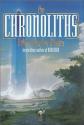
49. The Chronoliths by Robert Charles Wilson

The Chronoliths in the Ring book picture
Wilson is another Canadian science fiction author (I also heard him interviewed on The Arts Tonight on CBC). They seem to need to mention that he was born in California but moved to Canada at a young age, grew up there and currently lives in Toronto. Did he not take Canadian citizenship?

The Chronoliths takes place in the near future and is the story of a man who was present when the first chronolith appeared in Thailand. These giant crystal pillars just appear, one by one, either in the remote countryside or later in the middle of Asian cities, destroying everything around them. According to the inscriptions at their base, they are memorials to battles that take place 20 years in the future. As they continue to appear, they disrupt the world, with their physical destruction but more with their psychological impact. Societies begin to brace for this unknown world tyrant who appears to be taking over the world from the future. But as the world adapts to this future threat, it starts to create the conditions that will make it happen.

Caught up in this conceptual time struggle, the protaganist leads us through the development and how it impacts his own life. The appearance of these giant memorials are like a destiny he can't avoid and they mess with him and his family in direct and indirect ways as much as they affect the earth. The book follows both storylines, though more of the impact is with the psychology of the narrator.

It's an interesting book and an intriguing premise. The story plays out well, keeping you engaged with suspense and interesting characters. The conceptual element and the way the potential time paradox is resolved is satisfying as well. I found it just a bit dark. The mood was sort of sombre and regretful throughout, which may have been appropriate. It just didn't make me feel super excited. There were also a couple of small little errors that stood out for me, like the suggestion that downtown Baltimore had gone to seed during the protaganist's lifetime (when it's pretty common knowledge that that happened in the second half of the twentieth century) and a misuse of the term syllogism.

Overall, though, Robert Charles Wilson is a skilled writer and his story delivers. If all his books have such a sombre tone, I might not be so interested. Otherwise, I'll check out his other works. There are some good Canadian sci-fi authors!

Monday, November 28, 2005

48. Brown Girl in the Ring by Nola Hopkinson

Brown Girl in the Ring book pictureNola Hopkinson was recommended by Peter Watts on his excellent website as "the woman who climbed into the future and saw way too many white guys in spaceships, and did something about it." I also heard her on the CBC and she had some interesting stuff to say about science fiction. She's a Toronto native of Caribean descent. Brown Girl in the Ring is her first novel.

It's about a young Caribbean woman living in downtown Toronto in the near future. The city's core has become a walled-off place where the poor live. The upper classes have fled to the burbs, leaving the the inner city to criminals like Rudy, the gang lord who runs the place. Rudy get a commission to find a good human heart to replace the Premiere's dying one. This is some kind of transgression because organ donation has been made illegal and people rely on pig farms for their organs. This is the area where the book really suffered. Hopkinson's depiction of this dystopic future was, to my mind, simplistic and flawed. It also seemed to stem from some weird conservative viewpoints. Voters (in the suburbs) were fighting against the pig farms because they considered them inhumane, while the premiere hired criminals to find a human heart. I get the point, but it seems unrealistic and exaggerated. Furthermore, the whole reason for Toronto's economic collapes was because the world put a trade embargo on Ontario for a certain kind of wood that was on native land. So it almost seems like she's blaming the natives! I'd have to read more of her novels to see if this kind of politics of resentment is a real theme, or if it was just the incompletely thought out future of a first-time novelist (which is perfectly acceptable).

The story itself is okay, about the girl dealing with her new baby, her lame boyfriend and her witch-doctor grandmother. You kind of new where it was going to end up. What really shone, though, was the depiction of ritual magic and the role of the old African and Caribean gods. That was really cool and Hopkinson didn't pull any punches. It kind of seems that this book was targeted for young adults, but there was some nasty stuff in it. And the way she describes the various gods as they take form by "riding" a human host was incredibly visual and evocative.

Overall, Brown Girl in the Ring suffered from being a bit simplistic, but there was enough pretty cool material to warrant checking out Nalo Hopkinson's other work. She is a black woman sci-fi writer and she obviously has drawn heavily from her own background and spirit and that is an important and necessary addition to a genre that must continue to evolve.

Saturday, November 26, 2005

47. Nobody Runs Forever by Richard Stark

Nobody Lives Forever book pictureI'd been eagerly awaiting this book, the latest in the Parker saga, to come in to the library. Parker is a cold-blooded, efficient heister in a series of books written in the 60s and 70s by Richard Stark, who is actually Donald E. Westlake. They are far and away the best crime books and in my opinion, some of the best series of books ever. The thing is, Parker doesn't fuck around, like so many other supposed crime books (especially American ones) that are diluted with whiny prevaricating, inefficient behaviour and general lameness (and this is saying nothing about movies). What made the Parker books so cool, was that deep down they were about going against the man, about independence from any organization that wanted to impose its rules on you, be it the cops, the mob or the company you have to work for. The last in the first iteration of the series, Butcher's Moon is a climax of anti-authoritanism, where Parker takes it hard to the outfit and houses them royally. Start with The Hunter (the first Parker book, which was turned into the movie Point Blank) and keep going.

Unfortunately, Richard Stark started writing the Parker books again in the late '90s and they just weren't as good. They were watered down, Parker was doing stupid things like talking to people and walking around in disguise. They were decent enough books, but nothing compared to the heights reached in the first set. I didn't feel too critical because Westlake is getting older and a lot of his toughness was probably the result of the anger of a young man (which we see in several of his other books, such as Killy). Though, The Axe, one of his recent books about a downsized guy who goes around killing his potential competitors for jobs, was pretty hardcore. Anyways, I stopped reading the new ones unless they fell into my lap, as they did at the library.

I read Breakout in August and it wasn't bad. It was solid but not spectacular. I'd say it was on the level of some of the less great in the first series, such as the Black Ice Score. Well I'm very happy to report that Nobody Runs Forever is really quite good. Parker is back in form. The side characters are interesting and the heist is very cool. Usually the heist take place in the middle of the Parker books. This one is all about the build up, as Parker and the guys he's working with try to hold all the loose ends in place as the other weak humans involved slowly break down. The end of the book is a gripping timeline as Stark takes us through all the actions of the characters involved step by step. As a reader, you're not sure which of them is going to fuck the whole thing up, or even if they will. It's very tense. There are also two really hardcore kickass moments where Westlake shows us why he calls himself "stark". When he writes tough, he doesn't blink and it can be quite startling. I don't know if he's gotten grumpy again in his old age, or if this is his last Parker book so he gave it his all, but I was quite happily surprised at how much a return to the form of the original series this was.

I'd like to recommend it to you, but as I've said before, you really should read the original series first.

Thursday, November 24, 2005

46. Starfish by Peter Watts

Starfish book pictureI'm very psyched about this book. It's the first one of the whole year that got me really excited. I grabbed it off the shelf at the library because the cover looked cool and it was by a Canadian author. It claims to fall under the heading of "hard sci-fi" whatever that means. I think it's just because it has a lot of science in it.

It's about a group of psychologically damaged people who have been genetically altered and put into a deep sea station where they are supposed to be handling the maintenance of these generators taking energy from powerful hydrothermal vents. These vents are supplying a lot of the energy to the world. The people running the project found that certain types of victims of abuse were the only ones capable of existing in such an oppressive atmosphere. They are modified and trained so that they can swim around.

So basically, you've got a pod of psychos who are practically amphibious. But what happens is that they start to discover that they are much happier outside of the pod in the ocean. They start to adapt to it and it changes their personalities. On top of that, the reasons for them being down their start to get really interesting, which I don't even want to get into. Suffice it to say that this book deals with a lot of cool themes: a dystopic society, complex psychological relationships, accelerated human evolution, morality politics and biological plague. It's taut and fast-moving, with really cool science and tech concepts. Most of the action takes place underwater, which is described beautifully (as is the characters' slowly developing empathy and eventual dependence on the environment). But there are tantalizing hints of the world on the surface.

This book stands on it's own, but I think the series continues and I'm psyched.

Highly recommended. Very psyched to have discovered this author.

Tuesday, November 22, 2005

45. High Rise by J.G. Ballard

High Rise book pictureI must deliver a mixed report on High Rise. First, it's a great book. I strongly recommend that you read it if you haven't already. It's a dark and complex exploration into the deterioration of bourgeois civilization, in the form of a giant self-sufficient high-rise for upper middle and middle class professionals. Hierarchical social groups begin to devolve into warring clans. I don't know if he's critiquing western bourgeois society or mankind in general, but Ballard's prognosis is dark. Quite quickly, men are ganging up on the weak, killing their dogs, barricading hallways, marking their territory with urine. The women become status property, something to protect, or form matriarchal gangs of their own. He really takes the idea to the limit and the last few chapters are delicious in their excess.

However, in the context of Ballard's other work, there is not a lot that is original in High Rise. That's why I'm giving it the mixed review. He pulls out so many elements, especially from his first four post-apocalyptic novels, that I felt for a lot of the book that I was going over the same ground. The mysterious patriarch is in both The Drought and The Wind From Nowhere. There are many other examples, and probably the differences in how he presents these themes and iconic characters would be worth analysis. It's just that I felt I'd been treading over the same ground and that Ballard hadn't taken things much farther.

However, the ending redeemed a lot of my concerns, First, it was wildly entertaining (Wilder, has business suit reduced to cutoffs, fly open to expose his genitals, body covered in tribal lipstick patterns, fighting his way to the penthouse apartment from the first floor). Second, though he didn't really push his theme farther, he committed himself to it. He made it pretty clear that this is where he believes our consumerized and sheltered society will end up.

Read it.

Saturday, November 19, 2005

44. The Duel by Anton Chekhov

The Duel book pictureI'm pushing things a bit considering The Duel a book, but it's more a novella, even a very long short story, but it is published alone and is thus literally "a book". Chekhov is one of those authors that I would sort of pretend to myself that I kind of new about but would never (except perhaps when really drunk or in my 20's) have expressed this out loud. After reading The Fixer and after being quite rewarded by getting through Oblomov last year, I'm starting to find Russian literature interesting, even entertaining. They are a bizarre people, judging by their literature and the one Russian friend I had (my strongest memory of Dima, my old workmate in the Chain Division of Western Books, is him standing next to our delivery truck, holding a bag of his own puke in the air, saying "Do I look suspicious?") and I can see why a certain segment of young academics fall in love with them and go off to Russia to study.

The Duel is about a small group of the gentry in an isolated seaside town. One of them, Laevky, has fallen out of love with his mistress, but he's such a pathetic, ineffectual person that he can't do anything about it. Another character, an agressive opinionated zoologist constantly attacks Laevky verbally behind his back. The duel is almost an afterthought to the study of the two men and the people around them. In the end, everybody seems flawed but ultimately pleasant and gentle. It's a very different tone from The Fixer. The only cruelty (and even that is too extreme of a word) is more a result of the inevitable conflicts of life and society and human flaws than any deliberate malevolance.

I had thought Chekhov was more about intrigue, plotting and nasty machinations, dark studies of human conflict. This is only one story, but from the introduction, it sounds like Chekhov's books were very sympathetic to his characters. He himself sounds like an amazing person. He came out of poverty, supported his family by writing, became a doctor and wrote and treated thousands of poor people for free before dying at 41 of tuberculosis.

I'll read more Chekhov for sure.

Friday, November 18, 2005

43. Sparrow Nights by David Gilmour

Sparrow book pictureThis author was interviewed on Sounds Like Canada (the interview will probably be up for a couple more days) because he just won the Governor General's award for literature for his latest book, A Perfect Night to Go to China. He was a lively and straightforward speaker and quite funny. Up until this latest book, his theme has tended to be about sex, older men and younger woman. He also said how he rigorously edits down his prose, to make it as lean as possible, a strong advertisement for a writer when one is at the final lap of a 50 books project. Plus, I need to get some CanLit here.

I picked up Sparrow Nights at the library again and immediately got into it. It's a modern novel and I mean that in the sense that it's contemporary and adult, hardback with a fancy looking cover. It makes you feel very grown up and today reading it. It's basically the story about a slightly unhinged french lit professor and his recovery from a breakup with a younger woman. It's really about getting over heartbreak. The story and theme are not particularily original (it seems that most everybody has gone through the same feelings his character did, but usually in their 30s. I sure hope that it won't happen again in the 50s!), but his writing style and observations are hilarious. He's raunchy and critical and speaks with the angry, clever voice of the intelligent victim, whose last resistance against defeat is simply the colour of his own personality. There were several moments where I laughed out loud.

I'll definitely pick up some of his other books. I'm curious if the style will be as distinct and yet have a different voice.

Strongly recommended.

Thursday, November 17, 2005

42. What Is History? by Edward Hallett Carr

What is History? book pictureThe principal of the school I'm teaching at lent me this book, when I we were discussing ways to approach the 10th grade history class I'm covering for the month of November. It's a series of lectures from the early '60s by a Cambridge professor and covers very broadly the history of the study and philosophy of history.

He looks at the relationship between the historian and history, the relationship between historical facts and theories, the place for morality in history, the role of accident and causality in history, the concept of history as progress and how these notions have changed through time. It's an excellent survey of historiography, seen primarily through examples of European historians in the 18th, 19th and 20th centuries. He is a moderate and progressive thinker, arguing for a balanced approach to history that takes into account both sides of the various arguments:

"The historian and the facts of history are necessary to one another. The historian without his facts is rootless and futile; the facts without their historian are dead and meaningless. My first answer, therefore to the question What is history?, is that it is a continuous process of interaction between the historian and his facts, an unending dialogue between the present and the past."

He builds from these balances and develops a rich and nuanced overview to the state of history today, with a progressive conclusion that calls for historians and society to recognize the dynamic state of change in the world and not stay stuck in the structures of the past.

I studied history in college, so most of the ideas in this book were not new to me. Some of them I studied quite explicitly and others were implicit in whatever else was being studied. But I never had a chance to read them all summarized as an overall study of the discipline in such a concise, clear and well-written manner. Had I the patience and the mental sophistication to read this book in my first or second year, I would have had a much better appreciation of the discipline as a whole and my mind would have been much better prepared to approach the work. I think this is an excellent book for someone who likes history and politics but hasn't really studied it in any depth. It will open your eyes to very important concepts of interpretation and give you a much more sophisticated understanding of what you are being told about history when you read it or see it in other media.

Personally, I was also quite inspired (as you can probably tell by the length of this posting) and it made me feel that desire to just focus on one historical period and study the shit out of it. Unfortunately, I also still seem to have real difficulty reading non-fiction, where I just phase out for whole paragraphs, even pages and have to force myself to re-read them several times. I had it in college and it hasn't gotten much better (though my motivation to read the material has). I'm just a distractable person and in these wired days, there is too much competing information. So that dream of intense, focused scholarship is one more on the Theoretical Project World shelf. But I'm happy to know that my love of history is still there.

As for the class I'm subbing, I have to cover 100 years of material (including Canada's three most significant political developments) in roughly 12 hours of class using only a skinny textbook that has whittled out anything but the most basic facts. So we're taking notes and memorizing.

Tuesday, November 15, 2005

41. Sundiver by David Brin

Sundiver book pictureI'm trying to get a few popular science fiction novels read and this was the first of the Uplift series that seems pretty popular. For some reason, which may have had to do with the physical binding of the book more than anything else, it took me a while to get into Sundiver.

It's an interesting concept. Its all about aliens and posits a universe where all sentient beings were brought into sentience (or uplifted") by another sentient species. There are complex codes of social dependency based on who uplifted whom and everyone is searching for the species that first uplifted the others (the Progenitors) now lost in the mists of time. The humans are an anomaly because they appear to have uplifted themselves, though the dogma of the other species claims that they were uplifted and then abandond.

Sundiver is about a human-sponsored trip to the sun and the politics and intrigue that takes place on the ship.

The universe is pretty interesting and the politics around uplift are quite rich and well thought out. The sci-fi stuff is pretty wild too. Theres lots of flying around in the sun's atmosphere and cool descriptions thereof.

The main character was really interesting as well, because he had a split personality, which he kept under control with extreme mental discipline. His "Hyde" personality was also the ass-kicking one, so he would release it every now and then when he needed to be a badass. Pretty cool concept.

Unfortunately, other than the main guy, the characters were very difficult to get a handle on. They didn't behave consistently and their dialogue seemed to jump all over the place. It was sort of supposed to be like that, because it turns out their minds were being messed with. Also, the big mystery that was going on in the first part of the book seemed so obvious, It was unbelievable that nobody was aware that something weird was going on.

Cool concept and a well-developed universe, but it just didn't grab me enough to want to continue on in the series.

Sunday, November 13, 2005

40. The man in the High Castle by Philip K. Dick

The Man in the High Castle book pictureI've always wanted to read this book and Buzby's recent review spurred me to action. I picked it up at the Library.

I love the idea of the alternate history where the Allies lost the Second World War. It would be fascinating to see how the Japanese and Nazi governments ran the world and Dick does a great job. What I found really interesting was the aesthetic and philosophical affects that Japanese occupation had on western North America. I don't know if he made it all up or if he studied the Japanese psyche, but it seemed pretty convincing. The upper class Japanese are very focused on the relationship of designed elements to existence and spend a lot of time philosophizing on them. There is no current abstract art. Everything is functional or carries some connection to the past. There is a great scene where a Japanese collector spends hours on a park bench trying to understand a piece of jewelry that has no purpose other than its design.

The Nazi leadership and how their internecine struggles play out are also really cool. I like that he put Bormann as the next leader of the Reich after Hitler. There are some very disturbing ideas here. The Nazis drain the mediterranean and make it farmland and they basically destroy Africa.

Ultimately, I'm not sure where the plot ends up. It pulls away from the various narratives, which are mostly fully grounded in the reality he creates and suddenly makes the reader self-aware and questioning of that reality. I'm not sure where to go with that. It definitely begs further analysis.

My only complaint is that the female character, though as interesting and complex as all of Dick's characters (he does a great job of writing peoples internal thought processes), kind of falls apart in a way that doesn't ring true. She suddenly becomes an unhinged female that really smelled of the way that women were perceived in the period when he wrote the novel. He may have had some greater purpose in portraying her in this way, where she almost becomes schizophrenic when confronted with the notion that her boyfriend is a Nazi spy. But it came off to this reader as not quite forward-looking as good sci-fi should be.

Still, Dick had an amazing mind and having read The Man in the High Castle has made me much more interested in the body of his work.

Friday, November 11, 2005

39. The Fixer by Bernard Malamud

The Fixer book pictureI picked this one up because The Assistant by the same author was on the Time top 100 list, but they didn't have it in the library. I read that that one, this one and a third were considered Malamud's classics and that he was considered a classic writer of Jewish literature. Thought I should know more about him.

The Fixer is about a poor Jew in Tsarist Russia at the beginning of the 20th century. He lives in a small village and decides to go to Kiev. By luck, he gets a job in a brick factory in a part of town where Jews are forbidden. A small child is brutally murdered and the Fixer is framed for it, his Judaism revealed and is the main reason he is scapegoated.

The rest of the book is him in jail, awaiting an indictment, being treated more and more cruelly. The terrible things that are done to him, and the anti-Semitism portrayed is almost farcical. Unfortunately, it rings very true. I don't know much about the history of this period. The Fixer inspires me to learn more. You hear so much about the Nazi persecution of the Jews and only rare references to the pogroms in Russia. My own great-grandparents fled Byelorussia in 1905 to come to Canada.

But the way Russia is portrayed in The Fixer is shocking. People are easily convinced that a Jew would kidnap a small boy, bleed him ritually in order to drink his blood in a religious ceremony. He's separated out from the rest of the prisoners, kept under constant guard, chained to the wall. High-ranking priests give evidence that Jewish rituals that require Christian blood. It's the kind of book that makes you very angry when you read it. It is almost to the point where you start to feel towards the Russians as they seem to feel in the book towards the Jews! This made me a bit suspicious of the bent of the book, though I think it is much more complex than just a polemic against Russian anti-Semitism. One thing that I am convinced of, every time I read a Russian novel or a book about Russia, is that Russians may have the consistently most brutal history towards themselves.

As a novel, it is engrossing and moving. You spend a lot of time with the fixer's (or Yakov Bok, which is his name) thoughts, which I usually find boring. But he goes over his past and questions the value of god and suffering in the world in a way that gets into your soul without you having to do a lot of intellectual struggling as a reader. I'm not sure what conclusion to make, though I would say there is some teeny hope for humanity (or Jewmanity, at least) but it is buried way down deep in a mountain of suffering.

Note that this review is informed only by the book. I go now to do some internet research on Malamud and what others have to say about The Fixer.

[10 minutes later: Okay, just found out this book was based on a true story. Holy shit.]