Ah summer vacation, so much time to read. I can't remember why this was on my list now (I really need to start noting where my recommendations come from) and was happy to find it at a used for a reasonable price. I was also ready to take a deep dive into an absorbing 600-page epic.
Unfortunately, this book didn't really deliver. I was never attracted to Clive Barker, mainly because I am not a horror fan but also because the Hellraiser movies always seemed a bit simplistic and watered down for me, mall horror for the trendoids. Horror books from the 80s also often seemed slightly pornographic where the story was just a delivery vehicle for the titillation of sex and violence. I was however, like many of my generation, a huge Stephen King fan. He delivered on the characters and situations and often the actual horror seemed secondary to the story. I was hoping to have a similar experience here.
The story starts out promisingly with a middle-aged loser guy, Roland Jaffe, stuck in a job in the dead letter office in Omaha Nebraska. His dick boss forces him to go through all the lost mail and pull out anything of value. At first, he is resistant but since he had been fired from so many jobs, he does what he is told. After a while, though, he starts to discover a hidden communication, a world of people grasping for some other world. By being in the center of the postal world, he is able to glean through scraps of people with hints of it that there is some other power out there. He even starts to accrue some of this power to himself and when his corrupt boss, stupid but cunning, begins to suspect something, he kills him, burns the building down and starts on a journey to find this Art, as he calls it.
A lot happens in the beginning part of the book, so much that it felt rushed. Jaffe ends up a powerful near-spirit in battle with his nemesis, both trapped in the caverns at the bottom of a small town in Simi Valley. Here is where most of the rest of the book takes place. Unfortunately, the storyline keeps going, with more characters and more foundation being laid for the ultimate battle. Normally, I would welcome a continuing storyline, but it becomes hard to tell what the story is and who are the main players. Characters that seem central to the mythology disappear and others that have no real background suddenly become prominent. The revelation of the background cosmology also feels sort of arbitrary and never grabbed me. It's shame because the portrayal of the town is excellent and he really captures that cheap pseudo-Christian bourgeois morality of the 80s. Nothing solid is made of it and by the end I was just sort of reading to get through it. Finally, the use of the word cunt felt excessive and arbitrary (or just put there to be titillating; what 16-year old girl refers to her own "cunt"?)
I am not sure why this book is so loved that it deserved a big reprint. It's not badly written and there were some freaky ideas and cool moments, but as a whole it just didn't hold together and I certainly wasn't satisfied. My wife tells me she liked Weaveworld a lot better, so maybe I'll give that a try but so far my opinion on Clive Barker remains skeptical.
Friday, June 28, 2019
Tuesday, June 25, 2019
40. Love Lies Bleeding by Edmund Crispin
I am specifically on the hunt for The Moving Toyshop by the same author, as recommended by Kenneth Hite, but found this one in an Amsterdam used bookshop as a decent proxy. It turns out that the detective is the same and that this story takes place ten years later than the Moving Toyshop (without any spoilers thankfully, just a passing reference from a tertiary character).
Loves Lies Bleeding starts off very British and very promising for me. It takes place at a second-rate public school where the headmaster and headmistress of the affiliated girls school are discussing the distressed state of one of the latter's students. Already, the language is really rich, dry and quite funny. It felt like a slightly older and more verbose version of Michael Gilbert. The masters are a motley lot, described with a cynical but affectionate regard by the headmaster. The next day the girl disappears and soon after that, two masters are found dead, murdered by a .38. Fortunately, the headmaster's old acquaintance, Gervase Fen, Professor of English Language and Literature at Oxford and amateur detective had previously been invited to deliver the end of year speech. He works with the headmaster and the local constabulary to unravel the mystery. Along the way, we get a very British and entertaining cast of characters, a comprehensive and fulfilling portrayal of the school and environs and an exciting hunt through the forest and a final car chase. I enjoyed everything thoroughly except the mystery itself, which was a bit too convoluted for my limited attention span. The last twenty or thirty pages went into excruciating detail first about the logic of Fen's deduction process and then a narrative about what actually happened, at which point, I didn't really care anymore, especially as we barely got to know the culprits before they were revealed. For real mystery fans, I think this would have been all pretty good stuff. As it was, the overall writing (though perhaps a bit excessive on the obscure vocabulary and adverbs) and characterization of people and place were very much what I look for in this kind of book, so I am extremely glad to have Edmund Crispin added to my list and my search for the Moving Toyshop will continue in earnest.
Monday, June 24, 2019
39. Old Man's War by John Scalzi
I had been meaning to read this book for a long time and finally found a used paperback copy while in Amsterdam at this odd coffee shop that had piles of books on the sides of a staircase for sale or trade.
Old Man's War was a big hit and put Scalzi on the sci-fi map so I won't go into too much detail about it. Briefly, it's the future where earth is plodding along after a few wars, but more or less the same. However, out in space, humans are constantly waging war with other races and colonizing planets they can win or keep. The recruitment plan for the Colonial Defence Force is pretty unique. When a human on earth reaches 75, they can choose to sign up where somehow they are made into space soldiers. What actually happens to the recruits is kept secret and none of them ever return to earth.
The first part of the novel is the story of one of these recruits, widower John Perry, and part of the fun is learning what happens to him after he signs up. The second part is him learning about the universe and all the various battles going on (also quite fun). While there is no single storyline, there is a romantic narrative that I won't reveal that was also quite satisfying and emotionally fulfilling.
This book is heavily influenced/inspired by Starship Troopers (which I really need to read). I question a bit its position on war and colonialism. Though there is some interesting soul-searching on the why of what these soldiers are doing, it is all ultimately hand-waived away by the excuse that all the other races are violently colonizing planets as well. It's a questionable thesis, given when this book was written in 2005 as America ramped up its foreign involvement in the wake of 9/11. Despite this, it's not a simplistic or jingoistic book, just feels a bit too embedded in the American exceptionalism that defined this period.* In spite of this, or perhaps because of it, this book is really fun reading. It moves along zippily and there are some great aliens (all of whom get fragged) and excellent battle scenes with unique tactics. I could imagine this was well read among actual troops. I'll be keeping an eye out for his other books and the two sequels to this one.
*Doing some internet reading, I see this issue has been heavily discussed. I found this essay to be a nice encapsulation of the debates and an excellent, more balanced and nuanced analysis of the book itself.
Saturday, June 22, 2019
38. The Long Way Home by Margot Benary-Isbert
Another random find from the library sale. Really an odd book. I can't tell if it is because it was translated from German or if this is the way it was intended. It is oddly straightforward, almost simplistically told. There is also no tension or conflict. It is just the story of a young boy, Christoph, who sneaks out of East Germany in the '50s and makes his way to America where he starts a new life. As a baby, an arriving American G.I., Larry, found him while searching a cabin and snuck him food which helped him survive. That same G.I. ended up becoming friends with his adopted mother, the schoolteacher who had been hiding him and he promises to make him his adopted son when the boy is old enough to leave.
This is basically what happens. we learn about the families he meets going through Germany, the other children on the boat to America, his time with a family in Chicago and eventually his new life on a farm in Central California. He is an appreciative and open-minded boy and the reader gets to share his perspective on his journey and the world around him. He misses his home and is surprised by the wealth and culture in America, but also loves the freedom and the independent, hard-working spirit of the people. I don't know, I lapped it up. It was just a really nice, positive story with pleasant descriptions of taking care of the goats and learning to ride and making new friends and his relationship with the other members of his new family. There is an exciting forest fire at the end, but it is all told in such a direct, pleasant way that you kind of know nothing seriously bad is going to happen.
I once picked up a Polish hitchhiker on Vancouver Island and he was drinking goat milk and was quite enthusiastic about how good goat milk was for you. If there was one lesson in this book, it was that goat milk is really good for you. Christoph's main goal is to get some goats in his life, like he tended as a boy in Germany. Anytime anybody has some health issues, they are healed by steady drinking of goat's milk. I think I'm going to give it a try.
Hmmm, doing a bit of research, I have learned the Benary-Isbert's books were fairly succesful in their time and were primarily read by younger audiences. She has several other books, including two about a family struggling in post-War Germany (The Ark and Rowan Farm) whose characters have small parts in The Long Way Home. They sound similarily comforting and absorbing, so she will have to be added to the list!
Saturday, June 15, 2019
37. Flashpoint by Dan J. Marlowe
For some reason, with these American men's paperback crime books, I like the crime but not the espionage. Partly because morally they assume that the CIA and FBI are basically good guys as these were intended for a mostly conservative white male audience. They also just feel a bit contrived. With the straight crime, the morality is pushed to one side and you stay within the realm of reality, more or less. Flashpoint is a mix of both and I thus only halfly enjoyed it. Dan J. Marlowe often walks this line and I definitely prefer him on the crime side.
For convoluted reasons of having to deliver money to somebody, Drake ends up on a private plane full of high-rollers on their way to Vegas. It gets hijacked and brought down in the desert (with some quite nasty violence here). So now Drake needs to go and get back the money he was delivering. It turns out the hijackers are arab extremists who are committing these crimes to fund a bigger project of some kind. The FBI agent who Drake worked with in a past book tracks him down and uses him to infiltrate the gang (which he doesn't want to do but sees it as a way to get his money back).
The rest of the book takes place entirely in and around New York City. There is a really silly side story where he befriends a rich runaway waif who is hooked on tea and tries to save her. She of course gets brutally murdered by the bad guys. The bad guys are preposterous and the job involves heisting some nuclear material was pretty goofy as well, but it had some fun moments and didn't take itself too seriously. Not on the top of the pantheon of Dan J. Marlowe books, for sure.
| There is a beautiful Turkish woman in the book, but none of it takes place anywhere near a middle eastern window like that. |
Monday, June 10, 2019
36. The City of Gems by Joanna Trollope
I picked this up at the library sale. It is the semi-fictional tale of the last monarch of Burma framed in the purely fictional (I believe) story of the European Colonials involved in their collapse.
Trollope paints an engrossing and fairly critical picture of the small gang of expats in Rangoon. Though there are some decent characters, all of them are basically there to take advantage and exploit the resources. I know the broad strokes of how Britian did this. Reading about it in a story with all the details brings out how fucking awftul it all was. The British trade with the monarch for the right to harvest the teak forests and dig up the ground. In return, they bring them European "treasures" and try to curry favour with the capricious queen. When it seems like the French are making a move to get these franchises, the British send in the navy, depose the king and queen and install their own rule. This all actually happened. What separates it from an outright invasion and in some ways makes it even more outrageous is how they justify it all with legal legitimacy, laws they already decided on. Truly fucked.
Anyhow, it was an entertaining story, oddly easy-going despite the stakes and I learned some history
Thursday, June 06, 2019
35. Horizon by Helen Macinnes
I kind of feel that I need a cuff in the back of the head for having only read Helen MacInnes at the age of 50. She is a giant in the field of espionage thrillers. Now that I have read one of her books, I can say that it is at the very least as competent and entertaining as many of the other mainstream authors of that genre. I am not sure why I neglected her before. I honestly want to say it is the same reason I hadn't read any Alistair Maclean, that she was just too mainstream and popular. It is entirely possible though, that there was an unconscious bias in that she was a woman. I can say that Horizon was easily superior to both the Maclean's I read (except HMS Ulysses), though those were his later works and generally considered inferior.Horizon starts out in an Italian prison camp near the end of WWII, at the very northern end, near the border with Austria. I knew very little about Tyrol, though I had vague memories studying the conflicts there during the war. As portrayed richly by MacInnes, it is is its own culture, more Austrian in language and culture, but still considering themselves independent from both Italy and Austria, as well as oppressed by both. The whole beginning sequence is great, where the protagonist, two-time escapee is planning his third, when the local guards abandon their posts and the men take over the prison. He is weirdly conflicted because his escape chance was ruined and it is suggested that he is kind of a rebel in general and just wanted to be on the run rather than reunited with the army. He was a painter in peacetime.
Instead, he gets sent up to the South Tyrol to hide out there and act as a liaison for a potential allied invasion, to ensure they meet with the right local people (those waging a quiet resistance against the Italians and now the Nazis now that Mussolini's government has collapsed). You get a great portrait, both physical and social of this part of the world. The locals are quiet, independent mountain people. You also get some classic WWII nazi baddies, coming in like they are liberating the Tyroleans from the Italians, but with an even more sinister and aggressive plan to take the menfolk for their last gasp arms productions.
My only frustration with the book was the characterization of the main character. Annoyance and frustration are not pleasant emotions to read about in a book and he seemed constantly annoyed and frustrated right from the beginning, without any real background to understand why. Yes, his escape was thwarted, but so what, the entire prison was liberated. You slowly realize that he is kind of a rebel and the arc of his character is that he finds a positive role to play and comes to accept it. It just wasn't developed on a sound foundation so you don't really connect with him. The locale, other characters, intrigue and action were all really good, so it is forgivable. Good stuff and a new author for me to pick up.
Tuesday, June 04, 2019
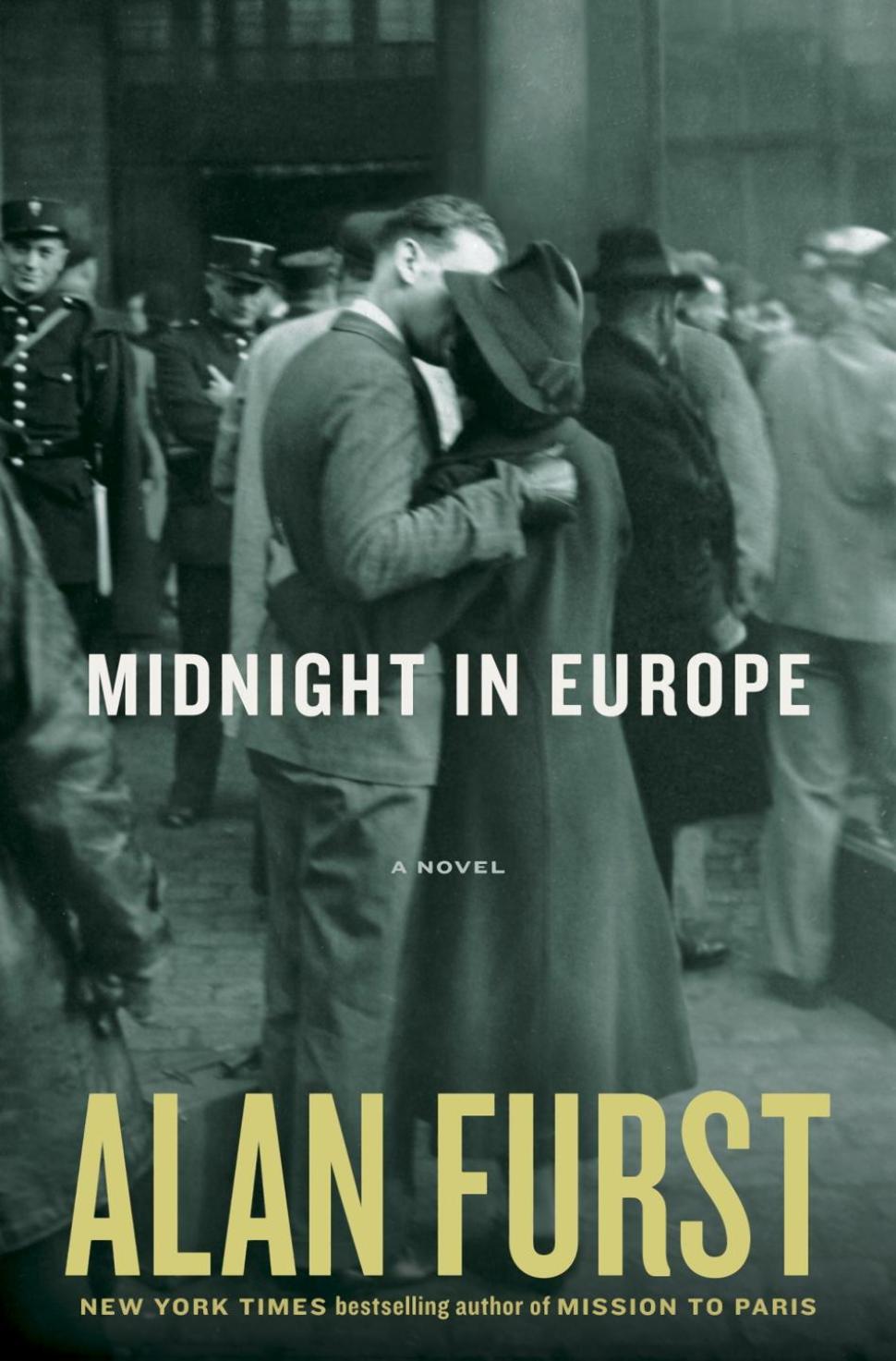
34. Midnight in Europe by Alan Furst
This was a very nice palate cleanser after a few more difficult reads. It is a middle-aged pre-WWII espionage fantasy for the sophisticated male, artfully written and absorbing, with great details, but ultimately light and unchallenging. Coming from me, this is not a criticism. I expected something a little darker and jarring, as an oncoming fascist takeover of the world tends to deliver. Everything here is smooth sailing. Cristian Ferrar is a Spanish ex-pat and successful lawyer in Paris at the end of the 1930s. He flies to New York from time to time and has pretty cool love affairs there and in Paris. He slowly gets drawn in to espionage in support of Republican Spain and this leads him on various adventures, each a pretty cool little spy vignette with great locations, characters and neat little details. This was all thoroughly enjoyable for someone who is a fan of the period and genre. It is very skillfully written, digestible without being overly simplistic. The actual history is interspersed as well in a way that despite the lightness of the whole affair, does not fail to remind us of how awful we can be and how bad things got. I think in another time, this book could be consumed entirely guilt-free, but given the all-too familiar shadow of fascism menacing the early 21st century, I think that current authors of this period need to deliver a bit more bite. That being said, I am happy that he has quite a few other books out there waiting for me the next time I need such a pleasant diversion.
Note, I picked this up for a dollar at the book sale of the Grande Bibliotheque. It along with another copy of the same book were being retired from circulation.
Sunday, June 02, 2019
33. Black Fox Running by Brian Carter
This was a very exciting little find, though now I can't remember exactly where. It falls perfectly into my pastoral animals adventure sub-genre (need a better name) and though a bit slow for me to read, was a moving and engrossing story that is going on the shelf.
It's the story of Wulfgar, a large and powerful fox living in Dartmoor after the end of World War II. As it say in the preface, Brian Carter "knows Dartmoor intimately and for years has been a very close observer of foxes and other animals". It shows. There is a really nice hand-drawn map (though quite small in detail, so that at this age I needed to really squint to read it) and the text lovingly details the animals, insects, plants and agricultural life of this region. At times, he went into such detail, with very specific names and terms to the point that I kind of lost the thread. I love the literature of British rural life, but I am not a nerd about it and having very little room for facts left in my soul, this kind of detail is lost on me. It is not a knock on the book at all, just to point out that it took me a long time to read it because of this. Better informed readers would find this element a positive, because even when I didn't know which bird he was referring to, it still felt very evocative and transported you to that place. I really need to do a trip to this part of the world, if it hasn't all already been developed over.
Though much of the book is Wulfgar's life as a fox, there is a strong narrative thread. Scoble, the shell-shocked trapper is obsessed with Wulfgar and as his life slowly succumbs to alchoholism, disease and the psychological ravages of surviving the trenches of World War I, he wages a horrific war against all the little creatures and foxes especially. There are some interesting class issues that are well portrayed, as the local gentry retard Scobles cruel ways, as they want the foxes kept alive for their sport. Interestingly, the two most sympathetic humans are a young boy who loves nature (and of course is treated as being a bit simple) and an American ex-fighter pilot coming to the country to recover.
At first, Scoble and his mad dog Jacko are portrayed as real monsters and they do some horrible things. There is also conflict between him and the American. But by the end, you almost feel sorry for him. His end underlines a quiet but powerful theme against war that elevates this book beyond the simple ecological message.
[Note on the slow output for the month of May, NBA playoffs were intense with the Warriors gunning for their 4th championship title with this team plus me playing a lot of basketball and daughter activities getting more varied. Social media usage was down, so can't use that as an excuse.]
Tuesday, May 14, 2019
32. Ship of Fools by Katherine Anne Porter
Whew, this was a novel! I picked it up at Chainon basically just because it looked old. I did see it was a bunch of people on a ship and it takes place just before the start of WWII so that also piqued my interest. But damn, this was almost 500 pages of small typeface with 3 chapters! Plus, it's the NBA playoffs so my reading time is limited. Excuses, excuses, but I made it through.
The story is about a second-rate German passenger ship leaving Mexico in 1939 taking a motley group of weird expats back to Europe. There is also a large group of Spanish sugar cane workers in steerage, sent back home after their industry collapsed in Mexico. There are so many characters that the book has and needs not only a roster at the beginning but a list of cabins and who is in them. Most of the first class passengers are German, Swiss and Swedish, but there are four Americans (an unmarried and tortured couple and an angry engineer from Texas and a divorcee), several upper class Mexicans, a Spanish dance troupe, Cuban medical students and a lone Jew. They all have their own storylines and they overlap. The larger narrative is how the Spanish dance troupe sows chaos on the ship, ostensibly for their own material gains as they are thieves, pimps and prostitutes and just general scammers, but also with a general cultural contempt for the Teutonic uptightness of the Germans. They have two children who are just totally wild, constantly trying to throw things and animals overboard, stealing stuff, doing childish incest in the lifeboats and generally horrifying the "civilized" upper class Europeans.
Racism is ubiquitous. The Germans at the captain's table talk freely of eugenics and purification of society. One of the storylines is a young German man of good social and genetic standing who is returning to his Jewish wife. The discovery of that fact causes a big scandal and he is forced to sit with the lone Jew (whom he despises). Really, there is not a single likable character in this book, though they are all interesting. This is a savage, scathing portrayal of Western society at this time. I think I would have enjoyed it more had it not been written in 1945. It feels every so slightly like there is a bit of hindsight schadenfreude going on here and I wonder how this book would have actually been written before the war started. It is based on Porter's own experience on an ocean liner, so I am not questioning the authenticity of the portrayal overall. It is just a bit too firm and consistent in its portrayal of the Germans and their view utopian view of their Fatherland.
If there is a climax, it is the second to last night before they finally arrive in Europe and the dance troupe hosts a party which gets out of hand. Some of the conflicts and desires that have been brewing across the Atlantic come to fruition. Nothing particularly new is revealed about the characters, for whom the reader has already developed a pretty solid distaste. They have been well developed, though and there is nothing false or exaggerated about their narratives end. Each character leaves at the various stops in Spain, France and England with the final destination in Germany.
Not mindblowing, but an interesting portrait of a group of people at a very specific time in 20th century history. Porter herself led quite an interesting life and you wonder how much of her is in the sophisticated, self-possessed and slightly lost divorcee character, Mrs. Treadwell.
Sunday, April 28, 2019
31. The Babysitter by Andrew Coburn [Part 3 of the Maternal Anxiety Horror trio]
The Babysitter both disappointed me and exceeded my expectations. It disappointed me simply because it is not at all the genre I assumed based on the cover and title. It exceeded my expectations because it is a brooding, hard almost noirish mystery that is quite good. It's a great find and was an enjoyable read but It doesn't fit into this series at all! I guess part of my assumption about its genre was that I found it with The Crib and The Babysitter (parts 1 and 2 of this now badly named Maternal Anxiety Horror series) both of which are clearly horror novels. Does this not look like a horror novel cover to you or could it also be mystery?
The Babysitter starts in media res with a stunned John Wright being interrogated by police in his own home after returning from a night out to find the babysitter dead in the hallway her head bludgeoned in and their 14-month old baby missing. It's the 70s and John and his wife Merle had left their ad-copywriting jobs in Boston to come to one of the bedroom communities surrounding it. We learn quickly that the babysitter, whom John met at the local college where he taught, had actually lied about her name and background. Her real identity is a mystery as is the fate of the baby.
The authorities who arrive are manifold and useless at best. The FBI are particularly malevolent and the couple feels they have to act on their own. Their investigation takes them to various interesting locations around this part of Boston. The location is strong here and there is a cast of characters similar to Denis Lehane book, though toned down. The backstory, as it plays out is intriguing and takes the reader into some dark places to meet some pretty low characters. It has a desperate, brooding atmosphere. It's a hot summer and there is an aggression in all the dialogue and everyone seems uncomfortable. The style is laconic so I felt a bit distant at first, but after a while as the plot got more complex and interesting, it felt appropriate for the mood and it drew me in.
The Babysitter does close this series with a bit of a whimper thematically. The sacrifice was worth it, however, for an obscure and enjoyable discovery. I will now return to my regular non-programmed reading schedule.
![]() |
| The NYT Book Review should have clued me in that this wasn't horror. |
Friday, April 26, 2019
30. The Nursery by David Lippincott [Part 2 of the Maternal Anxiety Horror trio]
Now this is more what I expected when I started this mini-reading series of mass market horror paperbacks with a maternal anxiety theme. It is lurid, silly and kind of nasty, definitely targeted at the "babysitters and housewives" market. However, like The Crib, this one also does not actually provoke much maternal anxiety. It is much more aligned with the social critiques of young women's independence and sexuality of the time.
We start with 17-year old Jennifer Delafield of Park Avenue, with a controlling, envious mom and an easily manipulated dad. She is finishing up at Mrs. Chambers School for Girls and soon to be at Smith, when she decides in angry rebellion to elope with her 20-year old boyfriend. They drive to Chiver, Maryland a town whose industry is built on marriage due to laxer laws. Hidden off the main strip of tacky neon marriage establishments with cheap promotions, they find a beautiful old Victorian named Blossom House with an amazing orchard and an elegant little sign indicating Justice of the Peace. The couple that greets them, Henry and Harriet Griggs, is odd, but friendly. He is a charming round man with white hair while his sister is gigantic. After the brief ceremony among the blossoming apple trees, the couple invites them to share a celebratory drink. Things go downhill.
So first of all, this book is not subtle at all. The basic narrative I shared with you above is actually way more spoiler-free than the actual first few chapters of the book. The author straight up tells you stuff. So we know already that Harriet Griggs was brutally fatshamed in school and treated like shit by her dad and thus hates all men and pretty girls. [You can't totally blame her with lines like "To Jennifer it was remarkable that so large a woman could move so softly, but she remembered hearing once that fat people could be incredibly light on their feet and therefore made good dance partners—as long as you remembered to judge them by their dancing and not their appearance." Where in the early 80s did she learn that?!] Each chapter starts with an excerpt from Harriet's diary. It is really simplistic and obvious stuff. Also, the point of view jumps around quite a lot, revealing perspectives and diffusing any intrigue. You will have a scene with Jennifer worrying about something and then dismissing it in her mind and in the next paragraph Harriet's thoughts which reveal that Jennifer should be worried (and then some!) and often even a line from the author saying basically the same thing. It is almost like a bad voiceover in a low-budget horror movie from the 60s.
I spend a lot of time on it because this approach is very different from what I am used to reading and I suspect more in line with this sub-genre. It does not detract much because the real pleasure here is in the bonkers set up. Basically, the old couple drugs the drinks, separates the newlyweds and put Jennifer in an upstairs cell that is gussied up to look like a little girls bedroom. Harriet sits on her and shaves her pubes (because she refuses to do it herself) and then forces her into this contraption that flattens her breasts. After a few days of isolation, she is introduced to the rest of the third floor, 11 other young women all forced to pretend like they are 12-year olds. It's creepy and gets creepier when cuddly Henry comes around. Yikes!
The rest of the narrative is Jennifer trying to deal with her situation, while we slowly learn about the backstory and some of the other girls. The pacing of the suspense is inconsistent, but the upstairs scene is like a crazy jail narrative, with alliances and power struggles between the girls while they also try to deal with their captors. Quite entertaining. The ending is absolutely bonkers. Like really so preposterous and crazy that I had to exclaim out loud. [So bonkers that I am going to share it with you at the end of this post.]
This is really not my jam. I am into action, not cruelty; fighting not torture and I like a happy ending. I'm simple. This book is not extreme, but the money shots here are all around cruelty and torture done to the main character (and her husband). Aside from the shaving, she gets starved, beaten and dentisted (this is the perfect moment for a Joe Bob Briggs-like roll call of shit that happened) as well as having to deal with creepy Henry. And of course there is psychological torture. Gaslighting is Harriet's M.O. as she tries to break each girl down and especially Jennifer.
I am also not sure what the message is here. There is clearly an emphasis on the parrallels between Jennifer's complaining that her parents kept her in a prison compared the real prison she ends up in. Her sexuality and independence seem to be set up for some of punishment, but she is also quite strong-willed and demonstrates some virtue and character development in befriending one of the other girls who used to be a prostitute.
Oddly, there is an empty link floating out there in some bookseller databases for a The Nursery 2: Jennifer's Revenge. There is so little actual data and the date is the same as this one, that I suspect it is just wishful thinking. Anybody know if there really was a sequel?
The Ending
So Jennifer starts to win over the other girls and together they work to disrupt the Griggs' control over them, with the ultimate goal of her escaping and freeing the rest of them. The visit of lowlife Cousin Larry (who renovated the third-floor prison for Harriet and Henry) almost disrupts their plans, but Jennifer improvises and manages to make it out of the third floor. There is hiding and chasing and then she gets out. Stunned and stumbling in daylight, she sees a rental car parked along the road with the door open and still running. Desperate, she jumps in and starts to drive. She's free, finally free! But wait, from the backseat, Cousin Larry pops up. He'd been hiding there (and we knew something was up because the author keeps having Harriet tell us how the escape is all actually a part of her plan to finally get Jennifer) and has a can of gas and his zippo. I told you it was crazy. So as Jennifer is driving, he pours the gas on her and lights her on fire. She can't get out because the inner door handles had already been loosened and they fall off, but guess what neither can Cousin Larry! That's right, Harriet's master plan kills two birds with one stone, by eliminating hateful Jennifer and Cousin Larry who knew too much. The car, burning from the inside, goes screaming into town and gets plowed by a semi.
Already my jaw was on the floor, but wait, there's an epilogue. The scene begins at a plastic surgeon's office, peeling away the layers of bandage from the face of a young girl. Jennifer did not die in the crash! She ran burning and stumbled into a kindly young doctor's office. The doctor for reasons that make zero sense, did not tell anybody and instead healed her and then found the best doctors to reconstruct her face. She has totally lost her memory and falls in love with her saviour. She doesn't want to know about her past because even thinking about it starts to make her panic. They decide to get married and find a lovely old house. As she approaches the door, she starts to freak out, but then the door opens and it is some other couple. Phew. The nice doctor (who lived minutes away from Blossom House) and the amnesiac reconstructed girl live happily ever after.
There is a final epilogue after that which is the Griggs, who have now moved to Big Sur, changed their last name and still do the marriage business. It was not directly implied nor contradicted whether or not they were still also doing the kidnapping business. Very weird final moment, though:
![]() |
| Certainly impossible for me to know. Is this some horror trope? |
Tuesday, April 23, 2019
29. The Crib by Paul Kent [Part 1 of the Maternal Anxiety Horror trio]
I found The Crib in the fruitful St-Viateur free shelf, along with two other thematically similar 80s horror paperbacks, The Nursery and The Babysitter and several V.C. Andrews. At first, I only took one of them, but back at home the missed opportunity of such a find started to gnaw at me. I was somewhat inspired by the paperback community on Twitter as well, as I thought they would appreciate seeing at least a picture of them. So the next time I was on St-Viateur, I checked the shelf and fortune smiled upon me as both other books were there.
At first I was just going to take a picture of them, but once I had them in my hands and saw their beauty as artifacts, I couldn't let them go. You really have to love the parallels in these three books, published across the span of a decade (The Babysitter 1979, The Nursery 1983, The Crib 1989). As well as the obvious thematic similarities, they are all named The "something" and all written by authors with really boring white guy names. And once I had them, I realized I can't parade their covers around without actually reading them. Turns out The Crib was so much fun, that I've decided to read them in baby stage order (Crib, Nursery, Babysitter) and share my findings here. So I present you the first ever Olmans Fifty Three-Part Maternal Anxiety Horror Special!
We start with The Crib itself. The first half was at worst competent and it held my interest until things started to pick up in the second half. It ended up quite exciting with a complex and well thought out back story. The entire premise is sort of obvious and you figure out quite quickly what is going on (though not the precise details, which are cool), but that didn't spoil the fun. The Crib far exceeded my expectations and is going to be a keeper.
Dr. Stuart Rice is an epidemiologist who used to be a practicing surgeon. One night in April, his wife wakens him to his neighbours' desperate call; their child has stopped breathing. From this dark beginning, Stuart is reluctantly drawn into investigating the baby's death, perhaps as his only way to help. He learns that other distant members of the same family had also lost babies to SIDS, at statistically disproportional rate than should be normal. The research and work that Stuart does as he digs deeper into the patterns of baby deaths is the competent part of the first half. Some may find research and investigation action dull and I don't know how accurate it was, but I enjoyed the inside peek at how the W.H.O. organized and distributed its data in the 1980s, the discussions with his buddy the M.E., his visits to the public library, meeting with the new data academics where he actually gets a database programmed for him! All this rational attempt to explain is entertaining enough to get around the basic fact that it is obviously the crib that is doing this. At times you are kind of banging your head against the book going, dude, it's The Crib! What is truly hard to swallow is that anyone would want to re-use a crib that a baby had died in, but especially one where thirteen children had died, all on Easter and each of their names is carved into the wood slats of the crib! I know it was the 80s where we weren't so obsessed with child safety, but come on.
Despite this whopper, The Crib maintains your suspension of disbelief. And it gets fun. The narrative here is much more akin to a men's action book, though more cerebral, than true horror. Stuart is characterized as a hunter or predator, honing in on the solution to the mystery. His narrative as he goes farther afield the closer he gets to the truth is alternated with the back story of the piece of wood going backwards in time as it travels across the world and history to its origin. If I tell you the wood used to make the crib was around 2,000 years old and seemed to have some kind of dark stain on it, do you think you might have a sense of what that might be? You learn that info and more a quarter of the way into the book and it's not until the last page that what the reader has long since known is thrown out like a shocking reveal. Dr. Rice seems smart but perhaps sometimes can't see the forest for the trees.
The Crib is imperfect, but well put together and ultimately entertaining. Turns out Peter Kent is Canadian, an ex-doctor who wrote and lived in Vancouver. I think this is his only book, which is too bad. Also turns out that it is kind of collectible. Paperback copies on Abe Books in good condition going for $30-40!
![]() |
Maternal Anxiety Horror trio |
At first I was just going to take a picture of them, but once I had them in my hands and saw their beauty as artifacts, I couldn't let them go. You really have to love the parallels in these three books, published across the span of a decade (The Babysitter 1979, The Nursery 1983, The Crib 1989). As well as the obvious thematic similarities, they are all named The "something" and all written by authors with really boring white guy names. And once I had them, I realized I can't parade their covers around without actually reading them. Turns out The Crib was so much fun, that I've decided to read them in baby stage order (Crib, Nursery, Babysitter) and share my findings here. So I present you the first ever Olmans Fifty Three-Part Maternal Anxiety Horror Special!
We start with The Crib itself. The first half was at worst competent and it held my interest until things started to pick up in the second half. It ended up quite exciting with a complex and well thought out back story. The entire premise is sort of obvious and you figure out quite quickly what is going on (though not the precise details, which are cool), but that didn't spoil the fun. The Crib far exceeded my expectations and is going to be a keeper.
Dr. Stuart Rice is an epidemiologist who used to be a practicing surgeon. One night in April, his wife wakens him to his neighbours' desperate call; their child has stopped breathing. From this dark beginning, Stuart is reluctantly drawn into investigating the baby's death, perhaps as his only way to help. He learns that other distant members of the same family had also lost babies to SIDS, at statistically disproportional rate than should be normal. The research and work that Stuart does as he digs deeper into the patterns of baby deaths is the competent part of the first half. Some may find research and investigation action dull and I don't know how accurate it was, but I enjoyed the inside peek at how the W.H.O. organized and distributed its data in the 1980s, the discussions with his buddy the M.E., his visits to the public library, meeting with the new data academics where he actually gets a database programmed for him! All this rational attempt to explain is entertaining enough to get around the basic fact that it is obviously the crib that is doing this. At times you are kind of banging your head against the book going, dude, it's The Crib! What is truly hard to swallow is that anyone would want to re-use a crib that a baby had died in, but especially one where thirteen children had died, all on Easter and each of their names is carved into the wood slats of the crib! I know it was the 80s where we weren't so obsessed with child safety, but come on.
Despite this whopper, The Crib maintains your suspension of disbelief. And it gets fun. The narrative here is much more akin to a men's action book, though more cerebral, than true horror. Stuart is characterized as a hunter or predator, honing in on the solution to the mystery. His narrative as he goes farther afield the closer he gets to the truth is alternated with the back story of the piece of wood going backwards in time as it travels across the world and history to its origin. If I tell you the wood used to make the crib was around 2,000 years old and seemed to have some kind of dark stain on it, do you think you might have a sense of what that might be? You learn that info and more a quarter of the way into the book and it's not until the last page that what the reader has long since known is thrown out like a shocking reveal. Dr. Rice seems smart but perhaps sometimes can't see the forest for the trees.
The Crib is imperfect, but well put together and ultimately entertaining. Turns out Peter Kent is Canadian, an ex-doctor who wrote and lived in Vancouver. I think this is his only book, which is too bad. Also turns out that it is kind of collectible. Paperback copies on Abe Books in good condition going for $30-40!
Friday, April 19, 2019
28. A Comedy of Terrors by Michael Innes
I believe I found this book in the free shelf on St-Viateur. I've seen Michael Innes name around a lot, but have never actually read anything by him. I took this one on the appeal of the British parlour mystery. It definitely delivers on the sub-genre, being about an upperclass family meeting on their estate that is now surrounded by business and industry. Unfortunately, the book itself just wasn't all that good. The writing was overly complex, trying to be more classical but, at least to my ear, ended up being convoluted and counter-intuitiive. The plot was weak and without any emotional punch: an uncle gets shot through the window but doesn't die; the family all snipe amongst each other so any of them could have done it but nobody has a really strong motive. Some of the characterizations, in particular the two smug, superior youngest members of the family, were funny and at times the nasty wit made me chuckle. I suspect that Innes may have been trying on a style here. It didn't work for me. I will check up on him and see what else I can try.
Sunday, April 14, 2019
27. The Picture of Dorian Gray by Oscar Wile
![]() |
| Not the version I read; I liked the cover |
I shouldn't start off with such negativity, but wanted to get it out of the way. The rest of the book is really amazing and no question that this book's classic status is well justified. The portrayal of Gray's descent into immorality is possibly the template for all future descents we read in literary and genre fiction today. Wilde is fairly subtle most of the time. The worst factual thing that Gray does is smoke opium, but the locations, the characters and their dialogue and the suggestions of worse that Wilde weaves together evokes powerfully the dark night of the soul that tempts us all. The violence and aftermath are also so intense and nasty that one wishes Wilde had veered into doing straight up genre fiction himself. He would have crushed it.
So yeah The Picture of Dorian Gray is a literary classic. I would further argue that it is a foundational text in the thriller/crime genre and you would do well to read it if that genre is your jam.
Sunday, April 07, 2019
26. Cinnamon Skin by John D. MacDonald
I found this first edition hardcover in one of those little neighbourhood book exchange. I love John D. MacDonald but I don't seek his books out because they are so readily available and I like to keep them as fallbacks for when reading choices are limited. I am also wary of the later Travis McGee books. McGee is a philosopher and MacDonald does a lot of social observation and commentary via McGee's voice. His perpetual bachelorhood seems forced by 1982 and you get a feeling that John D. himself senses he is a bit left behind.
Cinnamon Skin starts off convoluted, with a lot of back story referring to a previous book where his friend Mayer had his spirit broken by a psychopath, plus another doomed McGee love affair. There are a lot of characters and narratives in the first few pages and I was slightly offput. But once Mayer's niece and new husband get blown up on his boat with a not very credible Chilean extremist group claiming responsibility, things get going. You know the explosion isn't what it seems and the unraveling (and investigating) of what really happened is quite cool. McGee and Mayer travel to weird little corners of poor white America and Mexico and get involved in a bunch of mini-adventures. The ending is a bit of a letdown as the rich psychological profile of the target of their investigation that MacDonald developos so nicely is not fully exploited in the climax and I felt a bit of a letdown.
SPOILERS
We learn quite early that the husband wasn't actually on the boat, and as they dig into his past, they learn so little about him that he becomes their target. In their hunt for him, it is slowly revealed that he has been serially falling in love with woman under a different identity each time, killing them and absconding with their money. His psychosis was caused by a sex-ravenous Mexican-Italian stepmom who seduced him. His dad caught them, killed her and either shot himself or the son shot him. McGee meets with an old psychologist friend, who explains how that kind of trauma could turn someone into a serial killer (he later gets a verbal agreement with her for some friends with benefits). The straight-facedness of this very implausible explanation was a bit much. It looks Horny Stepmoms as a theme has been around long before PornHub made it a trending topic,
Wednesday, April 03, 2019
25. Binti: Home by Nnedi Okorafor
I feel a bit cheap counting these Binti books separately. They really should be read in a single volume. I think there is a single volume version out there and I believe Okorafor wrote them separately, but the most popular version are these slim volumes that you could read in a day.
As the title states, Binti returns home after a year at space university. She has found her way there academically, if not socially, after her initial struggles and triumphs. The trip home poses greater challenges and risks. She brings Okwu with her, the meduse (a jellyfish like race) that contributed to the massacre of everyone but Binti on the ship to Oomza University. You learn that there had been a war between the white earthlings and the meduse and this was the first time one had come to earth in peace. Binti is sort of a galactic celebrity because of her survival and plea for peace with the meduse, but her family is very traditional and her leaving has created a lot of resentment. Things are complicated.
A lot goes on in this book and at the beginning the style and pacing was a bit too declaratory and fast for me, but I think that is what the young adults enjoy. It gets much deeper as you learn more about her family and background culture and quite intense as she heads out into darker and more mysterious territory in the deserts outside her home and ends in a cliffhanger.
Looking forward to the third and final book in the series.
Sunday, March 31, 2019
24. The Prone Gunman by Jean-Patrick Manchette
I can't remember where I got the recommendation for this book, but it was enough that I bought it new from Dark Carnival. As always, reading a translated version of a french author always leaves me with a little protestant guilt. I also suspect that some of the phrasing that seemed a bit awkward here would probably be more easily accepted in french. His books are short so I may just make that one of my challenges, to find a nice used version of one of his untranslated novels and see how hard it is for me to read in la langue de Molière.
I guess Manchette has the reputation of reviving or at least revisiting the genre of pulp fiction and he is often compared to the french new wave filmmakers, though he came a bit later. The Prone Gunman read pretty much like it could have been from the 50s or 60s. Only some references to music (a Brian Ferry song) really reminded me that it wasn't the 60s. He goes into some detail about clothes and interior decor and these all felt more 60s than 80s, but I think that is because the point he was making about the garish taste of working class people with money. Also, some gun detail that I suspect was not anachronistic. Otherwise, it kind of felt similar to Queenpin, an ersatz pulp.
The other thing that reinforced that was the way Manchette describes the protagonist. He never actually feels any emotions. Only strange expressions on his face suggest to the reader that he might be having emotions. It's very odd and I couldn't tell if this would go over better in translation or if this is a deliberate writing technique to somehow comment on the genre.
Here is the plot: a professional killer decides he wants out. Turns out he always had a plan to work for 10 years, go back to his small town and marry high high school sweetheart. The gang wants him to do one last job and start making his life hell. It gets quite nasty and I wasn't totally feeling it at first. It gets more interesting when we learn about his backstory and he makes his play against the gang. The ending is weird, though.
Not a bad book, but I need to read more of his work or somebody else's deeper understanding than mine to properly appreciate it, I suspect.
Friday, March 29, 2019
23. The Last Enchantment by Mary Stewart
![]() |
| Image stolen from much better review here. |
It wasn't a huge deal as The Last Enchantment stands on its own. This is the chronology that lines up most closely with the Knights of the Round that we know in popular culture and medieval history. Arthur pulls the sword at the end of the second book and here we have his victories, his consolidation of power in England, Camelot and the betrayal of Guinevere and all that. Mary Stewart adds and changes a ton from the original source material (not that I know it well; she has a handy afterward where she lays out all the differences).
The Last Enchantment is all about Merlin. He was the narrator in the first two but the story felt less about him than Arthur and the goings on around him. Here, though Merlin remains his extremely humble self, and even loses much of his power, it is really his story we are reading here. He travels all over England, meets cool characters, does some good spying, continues to guide Arthur while encouraging his kingly autonomy, falls in love, gets buried alive, gets to have a brief, wonderful retirement in an ideal British cottage and so on. It's all very satisfying and quite moving at times. You get the feeling that Stewart really wanted some nice stuff to happen to Merlin and though there are challenges, she really gives it to him. He's just a great dude in this book.
I've read quite a few of her other gothic thriller novels and it is really something to compare them. I don't have enough material, nor enough of an understanding of the gothic genre yet to really understand her work. What stands out to me is how different the characters behave and think in the Merlin books than they do in the thrillers. My current belief is that Stewart is a really good writer and she has freedoms with male characters that she did not with female ones. Merlin is thoughtful, even worrisome and quite romantic, yet he never seems to behave or think in the excessively doubting and anxious way her female characters act and think. Likewise, there are some serious great ass-kicking moments, both in real physical action but also in psychological and social conflicts. Stewart is very British and she is up there among the best thriller writers in knowing how to subtly display superiority or high skill in really exciting ways. I often found this lacking in her gothic thrillers, where the heroines would pull back or be passive while the male secondary character did something bold (though often not subtly). She clearly has the writing skill. Was it because these books came later or because the protagonist is male? Again, very unformed and possibly erroneous thoughts but something to keep an eye on as I continue reading her books.
Tuesday, March 19, 2019
22. Frankincense and Murder by Baynard Kendrick
I now cannot remember from whom I received the recommendation to read Baynard Kendrick. His name has been on my hunt list for years. I finally found two hardcovers at Dark Carnival which I normally wouldn't buy but the threat of that gem going out of business has me buying anything of interest they may have (which is a lot) so I picked them both up.
I would not say that I was disappointed with Frankincense and Murder (nice little title btw), just a bit non-plussed. It's a good mystery but felt very workaday, something that is part of a series that might have been a decent TV or radio show back in the day. It's very New York City mad-men period, which I am starting to find less and less interesting (partly because I am trendily anti-trendy but also because the inherent sexism and erasure of anybody who is not white honestly starts to get me down; like seriously dudes were just straight up marrying their secretaries).
Despite these concerns, it is a well-written mystery and the detective being blind really makes the detection cool and interesting. There was also some very specific and detailed look into the perfume manufacturing industry that I quite enjoyed. The financial forensics were less interesting (though wow tax rates and assumptions about them have changed vastly!) and despite two people and a dog getting murdered, it never felt like the stakes were all that high. That lightness is what made it feel like a decent TV or radio show. I can imagine that Kendrick was a favourite for a lot of people and his latest book was picked up as soon as it came out. I am curious to see how I like the other one on my shelf.
![]() |
| This is from 1961. 91% tax rate! If this is MAGA, I'll take it. |
Subscribe to:
Posts (Atom)