Monday, February 28, 2022

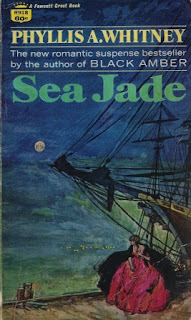
10. Sea Jade by Phyllis A. Whitney

This is the gothic romance/thriller that made me have doubts about the genre.  I am hoping that this was a badly formed example rather than just me not liking the tropes.  It was quite maddening.  Miranda Heath, young woman recently orphaned returns to her father's business partner's mansion in New England against his wishes because she is economically desperate.  Though old Captain Obadiah Bascombe welcomed her, when she arrives, everybody else, including the huge dog and the ragamuffin girl all seem to hate her.  She has to unravel the mystery of her own past, defeat her numerous enemies with demure yet firm niceness and discover which brooding, inscrutable male she actually loves.

I guess the appeal of these books to readers is the weakenss of the protagonist.  I don't know, I really struggled with it.  I get it at first that she is at a total disadvantage and is forced to marry Brock MacLean, the bitter, stormy yet of course oddly attractive heir apparent (and son of the murdered third business partner) as well as put up with his complete bitch of a mother and the totally rude and inappropriate housekeeper (who is bitter at Miranda because her mother was working class and married into her "betters").  But when in the big early twist, she is awarded complete control of the shipbuilding business and thus has power over all of them, instead of whooping ass on them all, she is super apologetic and cedes everything to Brock and tries to make diplomatic overtures to the two uptight women.  I want a book where she slaps the shit out of her mother-in-law and stabs the housekeeper in a hand with a fork until she apologizes and gets dinner on the table fucking pronto.

Worst of all, though, is the romance.  Brock is just an asshole.  He's not straight up cruel, but treats her like a nuisance and patronizes her about almost everything even though she is usually the one on the right track.  There is nothing inherently appealing about him yet somehow she falls in love.  And all the mysteries, once resolved, are just not that satisfying.  Finally, these books always have unreliable narration so you are never sure until the very end who is bad and who is good.  I guess they are written that way deliberately so you can't guess by clues in the text, but it means that when you do find out the truth, it's not convincing because you don't feel confident about any of the heroine's interpretations that led up to it.

Friday, February 25, 2022

9. To Die in California by Newton Thornburg

I actually saw this book in a free shelf in Berkeley but decided against it as my on-deck shelf is so full.  A few days later, my sister brought it home as a joke for me.  I'm glad she did because it ended up being quite a good read.  I wonder if this falls under the category of forgotten book?  It appears to have been quite a big success but I had never heard of it nor of the author.

Normally, a book like this would annoy me, as it is basically a genre revenge thriller gussied up with literary pretentions.  It's written well enough that I got quite into it.  Its literariness was not too pushy and its flaws were those found in thrillers of the period, mainly around the sexual politics.  The book starts out with David Hook, a successful midwestern farmer at the funeral of his eldest son.  Though we get the premise right away, it takes a long time to get to the details.  This is where the literariness gets in the way of the efficiency one appreciates in a good action book from this time.  It's not too annoying because the writing is so good and it does help establish Hook's character.  His son was a great kid, who was going off to college before the draft and then coming home to take over his father's farm.  However, he wanted to travel for a few months and met his end in California, supposedly killing himself by jumping off the cliff of a wealthy young woman's house in Santa Barbara.

The plot and premise reminded me a lot of The Limey, where the protagonist comes out to California to trace his child's death and learns more than he bargained for.  It's pretty clear here, though, that the son truly was a good kid and really did love his father (and Hook is a tough guy but not a criminal himself).  We meet a great cast of early 70s decadent Californians: the upcoming political star, his ugly mannish PR exec, his slutty aristocrat girlfriend, the ex-jock bodyguard and lots of extreme hippies.  Though ostensibly liberal and meant for a liberal audience, this book has the ongoing self-loathing of the coastal elite that we see so prevalent in American culture today.  The progressive politician is a sociopath hypocrite.  All the hippies and gays are hopelessly doped up and lost.  It's the good old salt of the earth family man who is the only real one (and maybe the vet cop).

I was actually quite into this book in the first half.  It has a very satisfying slow burn where you are psyched for him to head out to California and avenge his son.  When you get into the actual plot of figuring out the situation the son got into and trying to reveal the truth, that is also intriguing.  The middle bogs down a bit when the principle characters are established and the reader has a pretty good sense of who the bad guys are.  Here we also fall into the classic establishment fantasy trap of the older man having great sex with a super hot younger woman.  I get the fantasy, but at this point it is just so cliched and sad that it really does undermine anything "literary" in this book.  It's particularly egregious here when he picks up a prostitute and suddenly is able to last super long and surprises her by making her have an orgasm and then she wants to spend the night with him and give him a freebie in the morning.  Insert rolleyes emoji here.

I quite enjoyed it and it was a real page-turner up until the end when it really does get quite depressing.  Though flawed, it will stay with me.  And I'd like to visit Santa Barbara one day.

Did a bit of research and Thornburg was quite successful in his day and ended up dying not very well remembered.  Man, writing is brutal.


Tuesday, February 22, 2022

8. A Battle is Fought to be Won by Francis Clifford

Oof, this is a real war novel.  It felt quite realistic and was stressful and tense to read.  It takes place in Burma during the Second World War and follows a platoon of Karen soldiers led by a British ex-civilian, Captain Tony Gilling.  They are tasked with holding off the Japanese for a day along a strategic road.  It's a short read, basically taking place across two days. Aside from the main conflict with the Japanese, who are ferocious and scary, the big theme in the book is Gilling's weird insecurity around his second-in-command, Nay Dun, a super efficient, inexpressive Karen career soldier.  Under the stress of war, Gilling is convinced that Nay Dun is mocking, contemptuous of him and wants to take over. Gilling is scared and inexperienced and he makes a few blunders, but as you read on his actions belie his self-doubts.  Though he is freaking out the entire time, he does a lot of brave things, prioritizes his soldiers and the wounded and makes the right tactical decisions to delay the Japanese.  

I sympathized with Gillings to a degree.  The fear and panic seemed completely reasonable, especially after the super nasty shit the Japanese do to prisoners (to break the morale of the enemy).  However, his anxiety around his relationship with Nay Dun made him very unsympathetic.  It did seem realistic and perhaps was the subtle real sub-text of the book: the alienation of colonialism.  But if homeboy just chilled out a bit and tried to relate instead of being obsessed with his authority and being a leader, he would have seen the ironic twist that we all saw coming, that Nay Dun actually respected him.  So a frustrating read, at times harrowing, overall really well-written.  Not sure if the style is something that will motivate me to seek Clifford out, but I won't say no if another of his books falls into my lap.


Sunday, February 20, 2022

7. The Shooting Party by Isabel Colgate

I can't even remember where I found this or why I picked it up.  It's about a shooting party at a British country estate in 1913 just before the beginning of the First World War and the beginning of the end of the landed aristocracy.  This is clearly part of a literary sub-genre and one that was once quite popular.  I remember my parents talking with their friends about Upstairs, Downstairs.  What I appreciated about this book, that it really mostly was about a shooting party and went into enjoyable detail about both the characters and the actual work behind the setting up of the shooting (not as much as the masterful The Gamekeeper).  It has a minor and sad climax that moves the book towards its denouements, but otherwise doesn't really beat you over the head with end of the era doom and gloom.  It's just all very well-written and engaging.  I particularly enjoyed the character of Sir Randolph, the Baronet who is organizing the hunt.  He is a classic mixture of powerful aristocratic propriety mixed with privileged eccentricity.  The scene where the radical vegetarian socialist tries to interrupt the shooting and Sir Randolph engages with him to get a deal on having a pamphlet published motivated a re-read from me.

Friday, February 18, 2022

6. Charlie and the Chocolate Factory by Roald Dahl

One of the perks of having a child is to read books to them.  Unfortunately, my daughter has refused until the age of 9 to allow me to read anything but picture books (before she could read) or comic books (once she could read).  I finally somehow miraculously got us on Charlie and the Chocolate Factory.  Well you can imagine how my heart soared with joy when she begged to read one more chapter after a couple of nights to get into the narrative.

Almost everybody knows this book of course, but I would recommend you read it again if you haven't since childhood.  It's so well-written, so impactful in its own little world and just so much crazy fun. The whole first section with starving, freezing Charlie and the starving, freezing Bucket family is so painful that it is almost unbearable and it makes the joy of the turn (when Charlie discovers the ticket), so great.  My daughter was guessing what was going to happen (she is really not into intrigue and mystery; just wants to know what is going to happen) and mostly accurately.  It's not that hard the way the book is structured, but I also feel it is such an ur-narrative of privation and humility followed by reward that it is almost natural to know and feel what is going to happen next.  I'm no expert on the trends of children's lit but Charlie and the Chocolate Factory must be massively influential in the (excessive in my opinion) abundance of narrative that is drowning children in our post-Harry Potter world.  

Wonka's refreshing lack of caring about the well-being of the bad children was written, I suspect, as a tonic against over-protective parents of the early 60s when it was written.  Man, if Roald Dahl could see the parents of today with their leashes and anti-bacterials sprays and arranged playdates.  We are living close to disaster in Wonka's world and it's fun!  Smarter people have written smarter stuff about this book.  I am grateful that I got to re-read it as an adult.

Wednesday, February 16, 2022

5. Strip by Thomas Perry

I found this hardback Bibliotheque Mile-End (now Bibliotheque Mordecai-Richler) discard on the ever-fertile free shelf on St-Viateur and grabbed it because I liked the premise and it looked easy to read.  I guess Thomas Perry is a very successful thriller writer, including having an entire series.  I had never heard of him before.

It starts out great.  A guy who seems to be the protagonist is hiding out in the high cabin on a crane on a major high-rise construction site.  We don't know much about him except that he is on the run and hiding and is capable of breaking into constructions sites to sleep in crane cabins while learning how to operate them solely by reading the manual.  Though the action here was way over the top (he defends himself against 4 thugs and two SUVS with the crane), the writing had a nice stripped-down style with evocative suggestions of skill that I enjoy.  I got a little ahead of myself thinking I had discovered a new Richard Stark, but the beginning had that hardness.

The premise is that this guy, Joe Carver, is new in town and was spending a lot of cash in strip clubs and was thus fingered as the stick-up man who robbed the owner of those clubs.  Quite quickly, the narrative threads spin off in several directions and we follow the quite a few storylines, so many that it is not really clear until the end who is the actual protagonist.  As well as Joe, we follow the story of the savvy and hard but older strip club owner, his driver, the detective investigating and the real guy who did the stick-up.  So what starts out as a focused idea of the innocent badass trying to get the badguys off of his trail and then having to turn to ass-kicking morphs into more of a broad crime mosaic, focused ultimately on the club owner.  It was all fairly enjoyable, though at times quite implausible, especially the recurring ease with which guys got laid by hot and interesting but complicated (putting it mildly) women.

I found the ending somewhat dissatisfying.  It felt mean-spirited from what came before and also had a specifically nasty touch that I also felt didn't quite belong.  So I would have to say from a critical pespective that the book doesn't succeed in landing all the planes it launched and it may have been better to have started out with fewer take-offs.  The Joe Carver character, though he has a partial backstory is almost a maguffin, which is confusing as he starts out the book.  Despite that, it was quite fun to read and a real page-turner.   I also appreciated the detailed view on the backroom workings of strip clubs, felt very realistic.  I will definitely pick up his other books, when I run across them.

Monday, February 14, 2022

4. The Bitter Tea by Gavin Black

There is a great institution in Berkeley called Urban Ore.  It's a giant warehouse that accepts almost anything used and then sells it.  Basically a recycling store, but they do a really good job of curating.  This is where you go if you are looking to renovate a house and do it with nicely built used things.  They also have a pretty large and good book section.  I didn't find any major prizes, but did come up with several semi-obscure mid-20th century British thriller and crime books, including this cool Fontana.  Turns out it is part of a 13-book series starring mildly adventurous Singapore businessman David Harris.

This book starts out with him at a fancy party high in the hills above Singapore when a visiting Chinese dignitary pays a surprise visit via helicopter.  When this guy attracts the woman Harris was talking to, he goes for a little walk in the jungle on the edge of the property.  He happens to be there when shots ring out and then notices a rifle-carrying figure, a figure that he recognizes, fleeing down the hillside.  Stuck in the wrong place and not wanting to get shot by trigger-happy soldiers nor to get interrogated, he effects a sloppy escape, wrecking a car but managing to make his way back to his hotel room without being spotted.  Once at least physically out of this mess, we learn more about Harris's business ventures including the shipping company of which he may lose control when one of the board members dies.

It's a nice mix of traditional espionage in the Asian theatre with some business intrigue.  The emphasis ends up being on the former and it was made interesting by the milieu (it motivated me to read up on Singapore) and the novel situation they generate.  There is some action, but Harris does his work by being shrewd and avoiding trouble. So we get a neat escape from a hospital, a slippery stair trap and a nice fight in the dark that ends with a heavy table being flipped on the adversary. 


Wednesday, February 02, 2022

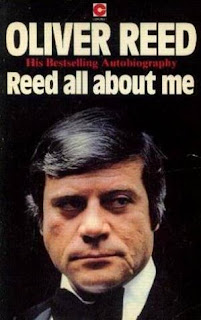
3. Reed all about me by Oliver Reed

I'm not normally a big fan of celebrity autobiographies but this is a coronet and come on, it's Oliver Reed.  I am not a huge fan, but have seen him in several of his earlier Hammers and The Devils.  I started out this book with low expectations and they fell even lower in the first chapter.  Like the bad title, it is full of bad puns and a particularly British male upper-class humour that is just annoying. Fortunately, it settles down into the actual narrative in the second chapter and his backgrounds is actually quite interesting.  He comes from an upper-class ancestry (his grandfather started the Royal Academy of Dramatic Arts) and his uncle was the director Carol Reed).  However, by the time he was born, his parents had been disconnected from any wealth so he was raised with a peculiar mix of upper class culture and working class means.  He also was dyslexic which didn't exist as a concept in British education at the time, so he failed out of school after school.

His narrative is of the self-made actor, who rejected formal training and the theatre for the school of life, learning, he claims, his skill in the army and at pubs, just watching people.  There is no doubt if you see him in anything that he is intensely charming and charismatic as well as quite a skilled actor (could do accents, all kinds of stunts and fights).  Hard to know how much of that was innate and how much from the aforesaid school of life.  He has the reputation of a wild man and heavy drinker, but it does seem that on set he was disciplined and hard-working and the length and output of his career seems to attest to that.

After we get through his background, he shares a lot of stories about other directors and stars, life on the set and his various hijinks.  One gets the sense that though a wild man, he genuinely seemed like a decent person.  He loved animals and ended up despite all kinds of mistresses being in 2 steady long-term relationships (including his second wife who was 26 years his junior).  The one area where he really is not good is his misogyny.  He doubled down constantly on the gross anti-feminism of this period. It sucks in the book and it sucks when he talked about it live.  He actually was generally decent to the women in his life, so it sucks that he was so ignorant and nasty when it came to women actually trying to fight for equality.  A gross stain on his otherwise well-earned reputation for being a great actor and character. 

Wednesday, January 19, 2022

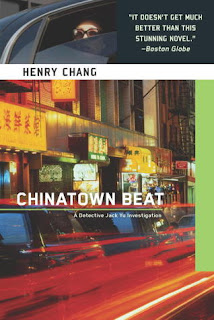
2. Chinatown Beat by Henry Chang

I had this one on my list for a while and found it at Moe's in Berkeley.  Chinatown Beat is part of the new woke pulp and while for me certain elements and tones didn't work, it was still a really good read.  The milieu of NYC Chinatown is excellent, complex and rife with characters.  There is a lot going on and it just skirts the edge of plot complexity that satisfied me while only briefly confusing. 

The strongest part of the book is the setting.  Chinatown was my favourite neighbourhood when I lived in NYC.  I hung out there a lot, but mostly as an outsider, a consumer with some minor insider knowledge.  This book let me see behind the closed doors, into the rich criminal culture I always fantasized about. The plot is a classic noir, centered on the trapped mistress, but there are so many other tentacles wrapped around this core story that it seems much richer.  The protagonist is the detective, Jack Yu, and he is a bit of a bummer.  At times, it felt like the noirishness was laid on a bit thick.  Likewise it gets a bit preachy about anti-Chinese racism.  There was enough "show" of the long, quiet discrimination against Asians, that I didn't think we needed so much "tell" to give the reader the message. There is a subplot of a child rapist that felt out of place and excessively nasty.  I'm not sure what was the point of it, as it never intersected with the main plot.

So I had quite a few misgivings, but they were minor and in the whole, it was a good read.  I will grab the other Jack Yu novels if they cross my path.

Friday, January 14, 2022

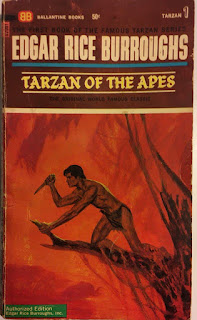
1. Tarzan of the Apes by Edgar Rice Burroughs

I've been meaning to read Burroughs for a long time now, though was hoping to stumble on the first John Carter of Mars.  Instead, I found a cheap copy of this at the great (and thank god still alive) Moe's on Telegraph in Berkeley.  It won't be a big surprise to tell you that this book is racist.  But damn, it's not just racist from 1913.  It's got levels and at times can be kind of difficult to read.  I like to think I'm pretty woke, but also able to recognize historical context and actually read the content.  There is some shit in here though that made me feel uncomfortable, particularily the portrayal of Jane's maid Esmerelda, who I guess was supposed to be a humourous character.  It's the worst stereotype with her eyes rolling around, fainting at every shock and talking in colourful, goofily erroneous language.  Oddly, there is a contrasting moment where the suitor to Jane compliments her and agrees on her calling the jungle lonesome.  Despite that and even though there are super racist portrayals of the African tribespeople (cannibals with sharpened teeth) and even more insane ideology of genetic aristocracy (Tarzan's lineage makes him a gentleman by nature despite his upbringing), it is the portrayal of Esmerelda that I found the most cringey and painful. 

I do understand and even appreciate the core tenet that makes Tarzan so appealing.  It is the fantasy of the shedding of the protective veneer of civilization.  All the scenes of him swinging through the jungle and fighting beasts are pretty exciting (though fuck can we stop killing lions, already!).  I do feel like he doesn't milk it (and none of the movie do either) enough.  When he does return to civilization, he demonstrates his badassedness only twice and they aren't very satisfying.  In the first, the victim is a drunken black guy (racistly described of course), whose wrist Tarzan breaks and then sends packing.  It is described after the event so there is no real thrill.  In the second, he shows a bunch of white hunters how to hunt for real and that is cool, except for the gratuitous lion slaughter.

I am tempted to keep reading them, especially with the truly surprising failure of the romantic ending where he doesn't get Jane.   I also am intrigued by the world building.  I may at least keep an eye out for the second one, but review I read say they get pretty formulaic.  I think this is do for a modern "woke" anti-colonalist re-interpretation.

Thursday, January 06, 2022

2021 Year-end Wrap up

I don't have a whole lot to say about my reading in 2021.  I am suffering from a bit of reading malaise right now and I feel it is biasing my look back at last year.  Also, as I went through the books I read, it feels like each one reminds me of different stages of dealing with covid, as it is so dominating everything these days.  I am proud that I read 74 books but it feels like somehow there was a lot of struggle.  I am not honestly sure how I read that many books as much of the time it felt like I was barely reading or pushing myself to get reading.  I guess the mantra of just getting started and keeping a book open will eventually get the books read.

I read 21 books by women (I thought it was a lot more lol).  This stat was bolstered by great female sci-fi and fantasy authors such as N.K. Jimesen and Robin Hobb (as well as some good old classic mystery authors like Ngaio Marsh, Agatha Christie, Charlotte Armstrong).  I also discovered Georgette Heyer this year (thanks Romance twitter) which is a gift that will keep giving.  Still just over a quarter of my reading being by women needs improvement, despite my excuse that my genre of mid-century paperbacks is male-dominated.

Only 10 books by African-American authors (and 5 of those were by N.K. Jimesen so doing double duty on my diversity goals).  Definitely needs improvement, though two strong highlights there with The Spook Who Came in from the Cold and Razorblade Tears.

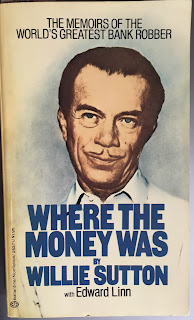
In terms of paperback collecting the huge find was Where the Money Was by Willie Sutton.  The Q Document, though of no real value, was one of my favourite looking paperbacks that will get a warm welcome on my shelf.

Highlights for me for actual reading were the first two Trickster books by Eden Robinson (the only books I read by an indigenous author).  These are outstanding, a wonderful mix of shit-kicking, B.C. urban grittiness with rich and intense fantasy mythology.  Just excellent.  I also really enjoyed Razorblade Tears.  Both are examples of good old genres being injected with new life and creativity by non-white male authors who are also just damned good writers.  Their existence is heartening to me, to know that the basic tenets of the genres I love are not dependent on old cultures of white male dominance.  Also, they are just hell of fun to read.

I also finally got to some classic authors such as Rex Stout, Earle Stanley Gardner and Daphne duMaurier.  The first two were enjoyable but didn't really stay with me but duMaurier demands that I seek out her other works.

No real lowlights except that god-awful Walker Percy mess.  A workmanlike year.  My on-deck shelf overfloweth, so I must read on!

I hope all of you are well and enjoying your reading.  Here's to a better 2022.  Maybe the shitbirds in power will realize that we need long-term investment in the education, health care and the planet instead of production of consumer goods.


Friday, December 31, 2021

74. The Ruby in the Smoke by Philip Pullman

Happy new year!  I found this in a free shelf in Berkeley and thought it would be a nice pallet freshener after the last read.  It indeed was.  This was the rare ocassion when I was glad to learn this was part of a series, as it comes in at an efficient 230 pages and leaves you wanting more.  It's very much in the vein of revisionary British period adventures like Fingersmith (though without the sexuality).  16 year-old Sally Lockman is left orphaned when her father dies at sea.  She later receives a strange warning and in following it, goes on a pretty fun London adventure, with an extended colonial backstory that would fit nicely in a Holmes case.  There is a side plot as well of her finding her way as a strong, practically-educated girl in Edwardian London, making friends and running a business.  I found the ending to be particularly touching, as it involves the love of a father for his lone daughter.  I will be looking for the rest of this series.

Wednesday, December 29, 2021

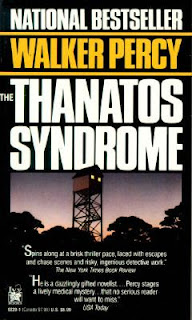
73. The Thanatos Syndrome by Walker Percy

Jesus, talk about a contrast.  After the find of the decade, I thought I would push my luck and grabbed this supposedly "brisk thriller".  I'd read The Moviegoer as a young man stupidly in love with the wrong girl who recommended it and found it okay.  I was hoping for an intelligent, interesting adventure book.  Instead, it delivered on neither the cover promise of a thriller nor the intelligent observations of a respected "literary" author.  The base plot was convoluted, unrealistic, uninteresting and false at its premise.  The literary observations were incoherent and vague, basically the empty, malformed musings of some old white guy who people told was smart too many times.  It's worse than just being empty and pretentious and boring; much of his musings range from cringey to mildly offensive to just gross.  There are multiple (and all unecessary) graphic descriptions of child pornography.  The racial politics are basically racism disguised under the veneer of the informed, yet wryly realistic liberal.  His female characters are ungraspable, especially his wife who is only described, has little or no dialogue or activity.

The plot, as it is, involves a doctor returning to his small Louisiana community after being in jail for 2 years.  There are lots of oblique hints as to why he went to jail, leading the reader to believe a full and interesting backstory will be revealed. This never happens. He soon discovers that his few remaining patients have radically different behaviours and personalities.  We eventually learn of a "conspiracy" to put some radiated sodium in the water that makes people less prone to criminal behaviour or something.  The whole thing is preposterous and boring and somehow connected to a school of pedophiles, which gives Percy his excuse to describe it all.  What's super fucking weird and creepy is that the abusers are all re-integrated into society and given jobs at the new institute for the dying (to replace the euthanasia centers; don't ask) which the protagonist puts together in the denouement.

The worst book I've read in a long time.  Took me almost two weeks to get through.  Feels like the editor said to him or herself "well this sucks but I can just stick Walker Percy on the front and we should sell enough."  The reviewers who said shit like "laced with escapes and chase scenes and risky, ingenious detective work" need their license  pulled.  

Friday, December 17, 2021

72. Where the Money Was by Willie Sutton

The paperback find of the year, arguably of the decade!  I've been scouring little libraries and book stores during these covid times, mainly in Montreal and Berkeley and it has been fun but no real mind-blowing  find until this one.  It was at the free shelf outside of Latina  on St-Viateur among a few older true crime paperbacks.  I have had this one on my list since I started the blog after reading that it was a big influence on Westlake's Parker character.  That is an exciting and satisfying moment when you finally stumble upon a real treasure.  One does a slow motion doubletake in one's head, "is this really what it looks like?  IT IS!!!"

I'm happy to report that the book itself is an enjoyable read.  It's surprisingly long.  Sutton spent most of his life in jail so this book actually has more prison escapes than bank robberies.  In the last third, as he gets older and sicker, he uses legal techniques to try and get out of jail.  This part drags a bit but you are invested so much at this point, that you want to find out what happens.  The best part for me are the bank robberies at the beginning.  It does seem like Sutton was brought into this world to heist banks.  He is like the Michael Jordan of bank robbery.  Beyond the anti-authoritarian appeal of the bank robber, Sutton never used violence and was a charming and stylish guy so he became pretty famous (which helped to get him out of jail early).

The description of the prisons are very informative about the corruption and cruelty at that time and how easily the prison-guard relation can turn into (or maybe always is) abuse.  It was just known that when you got arrested in Brooklyn, you were going to get a serious beating as part of your "interrogation".  When Sutton finally gets arrested the beating is insane (the cops are extra mad because he made them look bad).  Was painful to be reading the descriptions of the brutality in Attica and Sing Sing at the same time that Eric Adams just announced he is going to reinstate solitary in Ryker's.

As I say, I am more of a heist guy than prison escape guy, but the escapes in this book are wild.  There is a failed one trying to find the exit of a sewer tunnel that had me almost nauseous with stress.  Sutton just had no fear!  He goes through a 38" wide tunnel that slowly gets higher and higher with shit and piss and medical waste naked carrying a flashlight and a metal pole.  When there is only like a few inches of clearance and he still hasn't found the exit, so he ducks down and tries to swim for it!  

This book needs a reprint.  Still very relevant today for both fiction and non-fiction reasons.


Tuesday, December 07, 2021

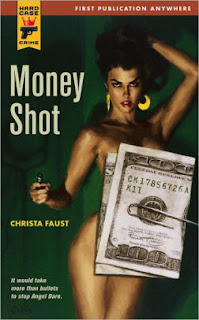
71. Money Shot by Christa Faust

I actually "discovered" (sounds weird, thus the quotations) Christa Faust on twitter via some other film noir fans.  Turns out she is an author of several books and graphic novels, aside from having excellent taste in movies.  I found this Hard Case paperback at S.W. Welch (7$!) and jumped in, needing some good old pulp fiction after the my recent fantasy binge.

I am happy to report this is the kind of excellent updating of classic pulp that we are getting more and more of.  It's basically a revenge story set in criminal L.A. except the protagonist, Angel Dare, is a woman, an ex-porn star and now talent manager.  She gets suckered to come in to do a shoot as a favour to an old director friend, ends up getting sucker punched and thrown in a trunk. We start in the trunk. You keep turning the pages.  I won't go into the plot any more than to say broadly that she has to figure out why this is happening to her, get out of it and then go hunt down the people responsible.  

This book is pretty rough, with sex violence and sexual violence.  Punches are not pulled.  What I really enjoyed beyond the basic ass-kicking premise is that you get a realistic, non-moralistic insider's look at the porn industry. It turns the book from what would otherwise still be a pretty entertaining pulp read into an informative and interesting expose as well  Lots of great (in the book, generally quite seedy and depressing in real life) locations, a wide range of colourful and often fucked-up characters all with realistic little details that lets you feel that Faust knows of what she writes.

I don't know what to say about what a book like this says about pulp and gender.  A smarter person than me should do a side-by-side analysis with Megan Abbott's Queenpin.  For me, it is just refreshing to read this kind of fiction from a female perspective where the women have agency and sexuality that is their own.  Good stuff.

Oh snap, there's a sequel with the same character!  I loved how this one ended, without a big explanation, but the nerdy part of me did want to find out how it all played out.  Very happy to add Choke Hold to my shopping list.

Friday, December 03, 2021

70. The Obelisk Gate by N.K. Jemisin

I had to rush out and buy book 2 I so much enjoyed the first one.  I don't have a lot to say to add to that review.  This one gets deeper into the magic and history and we get a clear track on the big picture plot. I had a couple of plot issues around the way they defended their geode home from the colonizing Sanzed (why didn't they just go full orogeny from the beginning and why was the attack of the stone eaters seen as some big surprise?).  I also found more reliance on unsourced anger as a conflict-creating/story-prolonging device wearisome at times.  If Alabaster and Essun would stop arguing and just talk, we would have had most of the mystery revealed in a few days instead of having all this fake anger and not communicating normally.  When the story picks up in the last third, we don't have time for the anger and again it gets really kickass.  Going to take a short break but will probably pick up the third soon.

Friday, November 19, 2021

69. The Fifth Season by N.K. Jemisin

I found this in the free shelf at the same time as I found The Inheritance Trilogy.  I chose to read the latter first because all three books were in one physical volume (and I could get a 3 for one on my 50 books count ;) ).  I didn't love The Inheritance Trilogy and it put me off of reading this one, even though everybody said it was way better.  I finally took the plunge and I am glad to say everybody was right.  The Fifth Season had all the good stuff that was in the Inheritance Trilogy (excellent worldbuilding, really cool powers and characters) and kept it at the character level, so you got almost all the good stuff.  The power levels get quite high here but the characters are always human and grounded so you can relate.

It takes place on some planet (perhaps ours) that is fundamentally tectonically unstable, with earthquakes, rifts, volcanoes and other fun stuff happening all the time, sometimes enough to destroy almost everything.  There are certain people with powers to control the earth's energy.  Despite and because of their powers, they are feared and loathed, usually killed when discovered or often sold to The Fulcrum a special school for them where they are disciplined and trained and then used as weapons/tools to protect the land from the earth.  There is a lot more going on that I won't get into here, entire histories of various peoples, other creatures and even giant crystal obelisks that hang in the sky.

The book is three narratives, following three different storylines that slowly weave together towards the end.  Like Anne Leckie, this trilogy deals with contemporary issues such as slavery and colonialism (what I endearingly call "woke sci-fi") and integrates them skillfully into the setting and plot, so that you are thoroughly entertained while subtly questioning our own reality.  This is what science fiction is supposed to do.

It's not perfect.  The Syen character has that "angry" trait that I see with a lot of authors where they lean on simplistic anger to add conflict to situations where it doesn't feel natural.  It starts to get annoying in the early and middle parts of the book, where she is always snapping and sarcastic even though anybody at that point would be more resigned and just live with the situation (of being with somebody they don't like).  So much emphasis is put on this anger that when the expected evolution comes (she learns to like and even love the guy), albeit quite novel and interesting, it's not very satisfying or convincing.

All that being said, I still walked to the bookstore and bought the second book so I can find out what will happen next.

Sunday, November 14, 2021

68. Sweet Death, Kind Death by Amanda Cross

Another free shelf find that I had hoped would be an easy 80s mystery read.  It ended up being that, but the first few chapters were a real slog.  The mystery takes place in an academic world and the book was written by an academic for academic-types to read.  There are quotes at the beginning of every chapter and the language is relativel dense, with fairly high vocab for a book of this type.  It takes a while for the situation and plot to coalesce and while we are getting there, there is a lot of discussion about the role of middle-aged women in society that comes in the form of witty, erudite banter between the characters.  I had a hard time getting through this first part.

The protagonist is a New York professor who I guess has a knack for also solving mysteries.  In this case, she is contacted by two men who are writing a biography of a feminist author and professor who killed herself at the lake of the private liberal arts college where she taught.  There was some suspicion that she was murdered, because though she had written and talked of death (including her own), none of her close friends felt it made any sense that she would have done it then.  So the detective/professor goes to Clare College (some conservative amalgam of Bard and one of the other new england women's colleges), ostensibly to head up a task force on whether or not they should have a gender studies program, but really to investigate.

The college set up is really fun.  Though a woman's college, the school is deeply conservative and pretty damned sexist.  Most of the other professors hated the victim because of her independence from the constraints of traditional roles for women.  This book was written in 1984.  I went to a liberal arts college a few years after that which was the peak of the wave of feminism that was the really suppressive anti-sex one.  I was generally supportive of that movement and understood broadly the reasons for its expression.  Reading this book, it really exposed how fucking awful even that late in the game, the patriarchal power structure was.  The arguments against the gender studies program sound so similar to the same bullshit we hear being trotted out in response to the Black Lives Matter movement or climate change.  People in unequal power making any convoluted argument no matter how illogical as long as they can find justification so they get to stay in unequal power.  

Ultimately, the mystery part got all a bit crammed up at the end.  It was kind of fun but we never really got to see the culprit enough to really hate them and thus didn't get much satisfaction at their comeuppance.  This milieu is not really my jam, so I probably won't read any more, but if this one is any indication, it is a well-written and enjoyable series for people who appreciate American academic cozies.

Friday, November 12, 2021

67. Razorblade Tears by S.A. Cosby

I had Cosby on my list but was not in a rush as he is so contemporary, I knew one of his books would come my way.  And indeed it did, as my mom passed his latest to me, including a great article about the author my dad had cut out.  I read the article after having finished the book.  Cosby has a great backstory and his own route to getting published is inspiring.  

He still had a day job at the time of the article, as the handyman at his wife's funeral parlor. The main character in Razorblade Tears is an ex-con who runs his own landscaping business. Cosby puts his knowledge to good use as yard tools and equipment feature heavily in the action. And there is a lot of action. It reminded me a lot of the Spenser books where he and Hawk have to go full commando.  It's a great set-up. Ike Randolph's gay son (whom he rejected due to his own homophobia) and his husband are brutally murdered and he and the husband's white trash dad (who also has his own roughneck past) pair up to get revenge.  They are a great buddy duo, both can fight and do crime and their banter is a mix of well-written repartee and heavier shit as they get to know and appreciate each other.  The bad guys are also a great mix.  He sets up a world that you don't want to end.  I'd love a series with these two.

It's well constructed with an excellent forward pace and fun writing.  I had one annoyance with a plot development where I felt the characters acted out of character and did something stupid (going to the burning house for those who have read it), but otherwise was thoroughly enjoying the ride.  Cosby does a genius trick here by putting forth a classic masculine badass revenge story yet wrapping it around today's social reality.  Homosexuality, homophobia and racism are big themes here, at times ever so slightly veering into the speechifying but otherwise essential elements to the narrative.  He proves that shit can be woke and badass.  The badass is really good, so that helps.  Just some great, creative fight scenes.

Very pleased to see this kind of book coming out today.

Monday, November 08, 2021

66. The Gotland Deal by N.J. Crisp

I found this while vacationing in the lovely and interesting Eastern Townships.  As all Canadians learn, this is where the United Empire Loyalists moved to after the American revolution and thus it has a multi-generational anglophone community.  I was hoping this history would lead to lots of excellent english language used bookstores, but alas I was only able to find one:  Black Cat Books in Lennoxville.  I took a daytrip down there and found it to be a really lovely little store with a nice selection, though not the treasure trove of mid-20th century genre fiction of which I had dreamed.  I still found a few little gems, including this one which I picked up purely on the lovely Penguin design.

It's a solid little thriller, with a setup that I particularily enjoy: the competent tough working urban detective who gets mixed up in politics and espionage that is supposedly out of his league.  I realize now there is a class element here as well, along with the classic appeal of the underdog story.  Sidney Kenyon is the said detective and though definitely on the side of order, also demonstrates a certain human sympathy for the criminals he catches.  The book begins with a seemingly open and closed murder case of a pimp (called a "ponce" here) who murders his girlfriend when he finds out she was selling her services on the side.  This is followed up by an irritating call where Kenyon has to humour an attractive, educate woman who is convinced she is being followed and that somebody broke into her nice apartment to search it.  Kenyon is very cynical at first, but is also attracted to her.  So against his better judgement, he starts digging and of course things get interesting.

It's written in a direct and economic style and keeps moving forward.  Near the end, when we start to get the big picture, it expands into large-scale international politics to a point that was a bit fantastical to me compared to the street-level investigation that went on before.  It never delivered the final bang of the working class cop taking it to the fancy boys at higher-level agencies.  Nevertheless, it was a solid, enjoyable read.